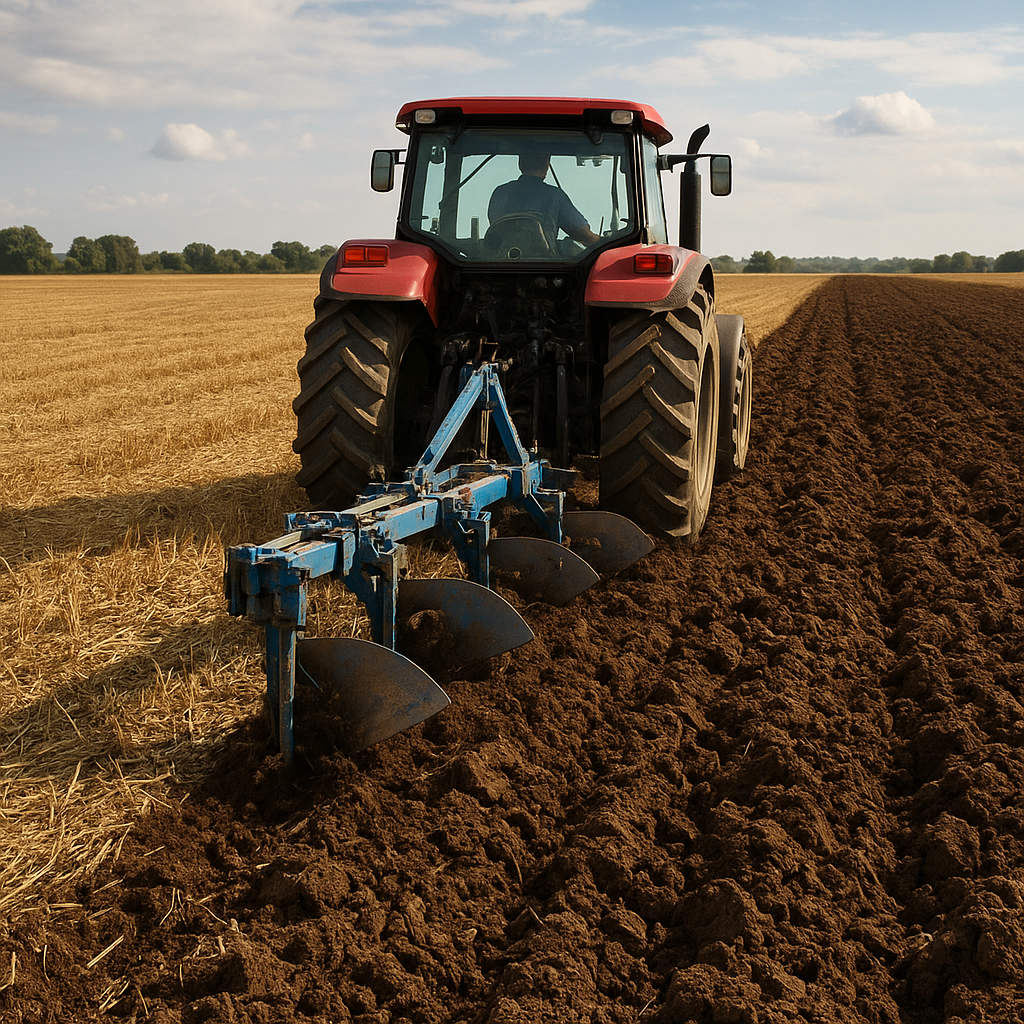
Effective management of crop residue during plowing plays a vital role in maintaining soil health, improving water retention, and reducing erosion. By adopting proven strategies and selecting the right machinery, farmers can ensure that residues contribute positively to the next growing season while minimizing operational challenges.
Understanding Crop Residue and Its Benefits
Crop residue includes stalks, leaves, and root material left in the field after harvest. When managed correctly, this biomass becomes a source of nutrients and organic matter that fuels soil life and enhances fertility. Ignoring residue or improper handling can lead to uneven decomposition, pest harborage, and reduced seed-to-soil contact.
- Conservation of moisture: Residue forms a mulch layer that slows evaporation.
- Enhanced decomposition: Microbial activity increases when residue is optimally mixed into the topsoil.
- Improved traction: Surface cover can prevent wheel slippage on wet fields.
- Reduced erosion: Plant debris shields soil from wind and water impact.
- Steady release of nutrients: Gradual breakdown supplies nitrogen, phosphorus, and potassium.
Understanding these benefits underscores why residue management is more than simply discarding leftover plant material. It is an integral component of sustainable farming practices.
Pre-Plowing Preparations
Before turning soil, it is crucial to assess field conditions and plan accordingly:
- Check residue density: Measure the thickness of leftover stalks and straw to determine necessary cutting or shredding.
- Monitor moisture levels: Plowing at optimal soil moisture reduces clumping and prevents smearing.
- Select appropriate machinery: Disc harrows, chisel plows, or specialized residue managers can be matched to your field’s needs.
- Calibrate equipment settings: Adjust depth, angle, and spacing to ensure efficient residue incorporation.
- Plan weather windows: Avoid plowing when imminent heavy rain might cause compaction or runoff.
Residue Shredding and Distribution
Investing in a quality shredder or rotary cutter helps break down thick stalks into finer pieces, making them easier to mix. Properly shredded residue distributes evenly across the width of plow paths, preventing clumps that hinder seed placement and root growth.
Plowing Techniques for Effective Residue Management
Employing the right tillage techniques ensures that crop residue enhances rather than impedes field operations:
Conventional vs. Conservation Tillage
- Conventional tillage (moldboard plow): Completely buries residues to accelerate decomposition but can expose soil to erosion.
- Conservation tillage (chisel plow): Disturbs soil less severely, leaving some surface residue for conservation benefits.
Optimizing Depth and Angle
Plowing too deep may bring up subsoil with fewer nutrients, while too shallow a pass leaves residue unincorporated. Aim for a tilth that creates a uniform seedbed without inverting the topsoil excessively. Adjust the moldboard angle to slice residues into the earth efficiently.
Pass Sequence and Speed
- First pass: Use a primary tillage tool to cut and turn residue.
- Second pass: Employ a secondary implement, like a field cultivator, to refine soil structure.
- Maintain consistent travel speed: Roughly 6-8 km/h ensures residue is properly mixed without overworking the soil.
Post-Plowing Strategies
After initial tillage, several steps help lock in the benefits of residue management:
- Use a leveling harrow: Creates a smooth surface and breaks up any remaining clods.
- Compact lightly with a roller: Enhances seed-to-soil contact and prevents moisture loss.
- Monitor residue decomposition rate: Soil tests for microbial activity indicate when nutrients become available.
- Introduce cover crops: Legumes or grasses planted soon after plowing capture leftover nutrients and build biomass.
Timing is key: Planting cover crops within two weeks prevents bare soil exposure and maximizes efficiency in nutrient cycling.
Advanced Tips for Maximum Productivity
Experienced farmers employ cutting-edge methods to refine residue management:
- Variable-rate application: Adjust tillage depth on the move based on field maps and residue density sensors.
- GPS-guided equipment: Ensures precise overlap, avoiding missed strips and minimizing redundant passes.
- Residue incorporation with biological inoculants: Adding beneficial microbes accelerates organic matter breakdown.
- Periodic knife aeration: Vertical tillage blades slice through compaction layers without disturbing horizontal residue placement.
Balancing Soil Structure
Maintaining a stable crumb structure supports root penetration and water infiltration. Over-tilling can destroy soil aggregates, while insufficient tillage leaves residue mats that repel water. Strive for a balanced approach that enhances pore space and retains surface mulch.
Common Challenges and Solutions
Residue management often involves troubleshooting:
- Clogged equipment: Slow down and adjust blade clearances; consider anti-wrap guards on plows.
- Pest and disease carryover: Rotate crops and test residue for pathogen presence before full incorporation.
- Variable residue thickness: Perform strip-till passes in heavy-residue zones and lighter passes elsewhere.
- Excessive erosion in high-slope fields: Use contour plowing and maintain a protective residue cover layer.
Proactive maintenance of blades, bearings, and hydraulic components ensures reliable operation throughout the season.
Integrating Residue Management into a Whole-Farm System
Residue planning should align with crop rotation, nutrient management, and soil conservation goals. By viewing residue as an asset rather than a waste product, farmers can:
- Reduce external fertilizer inputs through nutrient recycling.
- Enhance carbon sequestration by building stable soil organic matter pools.
- Improve resilience against extreme weather by preserving moisture and reducing surface runoff.
- Optimize field operations for better efficiency and reduced fuel consumption.
Successful crop residue management during plowing is a blend of science, experience, and the right equipment. By incorporating these tips, producers can safeguard long-term productivity while enhancing field performance year after year.