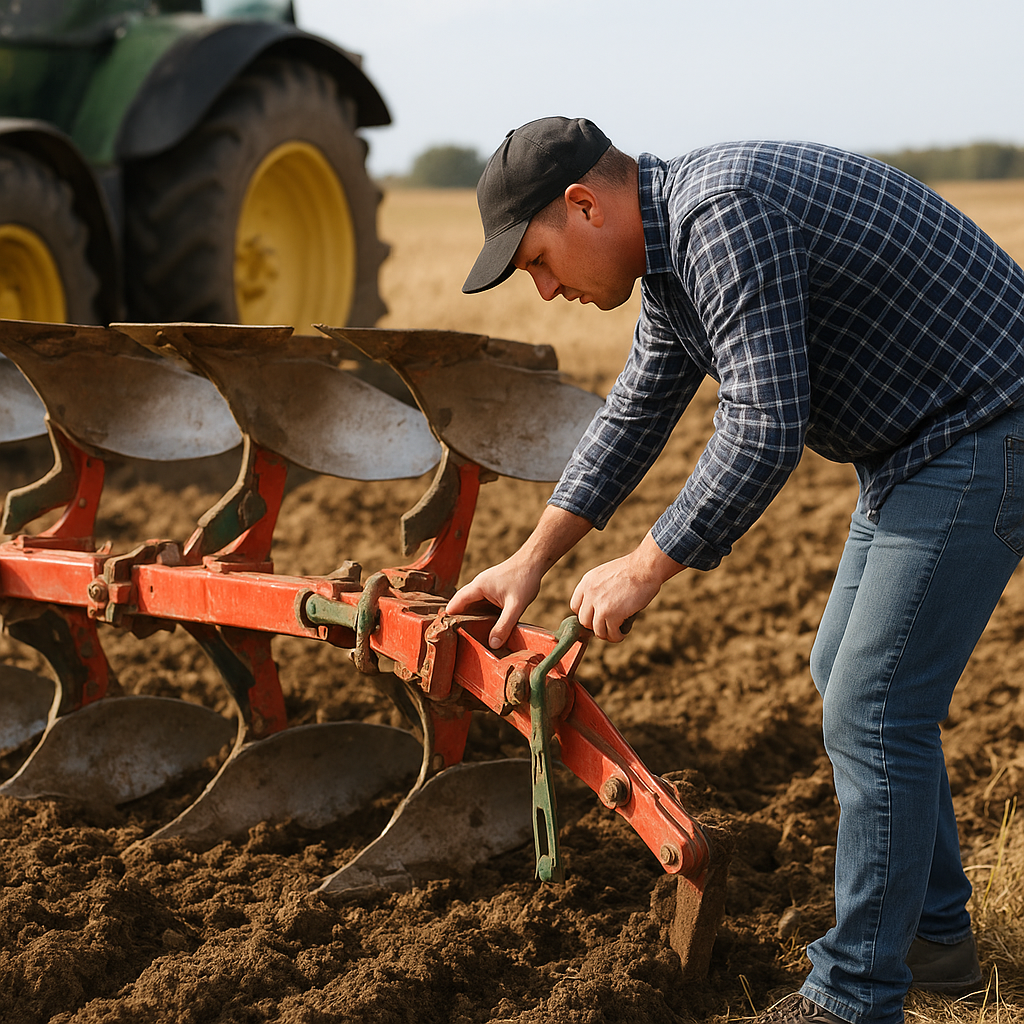
Choosing the right plowing depth can transform your field management, improve crop performance, and reduce operational costs. Achieving the optimal balance between soil health and seedbed preparation requires attention to soil characteristics, machinery settings, and environmental factors. This guide explores essential strategies and technical insights to help you master the art of setting plowing depth for a variety of crops and soil conditions.
Understanding Soil and Crop Requirements
Soil Texture and Composition
Different soils—sandy, loamy, clayey—respond uniquely to plowing. Loamy soils generally allow for deeper penetration without excessive compaction, while clay soils may require moderate depths to prevent clods and poor aeration. Conduct a soil test to determine proportions of sand, silt, and clay. This analysis informs decisions on depth settings that ensure proper root development and moisture retention.
Crop-Specific Depth Recommendations
Each crop has an ideal tillage depth for root establishment.
- Small grains (wheat, barley): 15–20 cm depth promotes rapid germination and root spread.
- Corn and sunflowers: 20–25 cm helps break compaction layers and supports deep rooting.
- Root vegetables (carrots, potatoes): 15–18 cm avoids damage to tubers while ensuring loose seedbeds.
- Legumes (soybeans, peas): 12–15 cm preserves soil moisture without burying seeds too deep.
Adjust depths based on local climate and irrigation practices. In dry regions, shallower plowing can conserve moisture, while wet areas benefit from slightly deeper tillage to enhance drainage.
Equipment Selection and Calibration
Choosing the Right Plow Type
Not all plows perform the same. Moldboard, chisel, and disc plows each have specific advantages:
- Moldboard plows invert soil thoroughly, burying residues and weeds but can be energy-intensive.
- Chisel plows loosen soil without full inversion, reducing erosion and preserving organic matter.
- Disc plows cut through heavy residue and compacted layers, ideal for no-till transitions.
Select equipment based on residue levels, soil hardness, and fuel efficiency goals. For high-residue fields, discs may be preferable, while moldboards suit clean, well-drained soils.
Calibrating Depth Control Mechanisms
Modern plows often include hydraulic or mechanical depth control systems. Proper calibration involves:
- Setting gauge wheels or depth bands to match target depth markings.
- Verifying hydraulic cylinder pressure and stroke length for consistent performance.
- Adjusting hitch height and angle to maintain even land engagement.
Test on a small strip, then measure actual furrow depth with a ruler or stake. Tweak settings until you consistently achieve within 1–2 cm of the desired depth. Regular calibration checks throughout the season ensure equipment reliability and uniformity across the field.
Techniques for Maintaining Optimal Depth
Monitoring Field Conditions
Soil moisture, temperature, and existing compaction levels influence plowing ease and outcome. Use portable moisture meters to gauge readiness—ideal moisture is typically 60–70% of field capacity. Avoid plowing excessively wet soils to prevent smearing and clod formation. In colder climates, consider a shallow initial pass to warm the soil before deeper tilling.
Implementing Layered Tillage
Layered or stepped plowing performs sequential passes at increasing depths:
- First pass (shallow): 10–12 cm to break surface crusts and start residue incorporation.
- Second pass (medium): 15–20 cm for initial loosening and aeration.
- Final pass (deep): Target depth (20–25 cm) to fully fracture compaction layers.
This method reduces tractor slip, spreads residue evenly, and prevents soil upheaval. It also allows you to monitor changes after each pass, adjusting depth increments for field variability.
Using Precision Farming Technologies
GPS-guided auto-depth control systems enable real-time plowing adjustments. Sensors measure draft force, soil hardness, and moisture, feeding data to the control unit. The system modulates hydraulics to maintain consistent depth even on undulating terrain. Benefits include:
- Reduced overlap and missed strips.
- Lower fuel consumption through steady draft loads.
- Improved seedbed uniformity and crop emergence.
Although initial investment can be high, the return in enhanced yield and reduced inputs often justifies the cost.
Troubleshooting Challenges and Best Practices
Identifying Uneven Depth Patterns
Common signs of irregular plowing depth include:
- Visible ridges and troughs across the field.
- Patchy crop stands or germination delays.
- Varying soil moisture retention post-plowing.
To correct this, inspect hitch geometry, ensure even weight distribution on the tractor, and recalibrate depth control components. Inconsistent tire pressures can also cause uneven engagement—check and match pressures on all tires.
Minimizing Soil Compaction
Compaction layers hinder root growth and water infiltration. To avoid creating new pans:
- Perform subsoiling every 2–3 years at 30–40 cm depth to break deep pans.
- Alternate wheel tracks between seasons to distribute load impact.
- Limit passes with heavy machinery when soil moisture is high.
Combining plow depth strategies with crop rotation—especially including deep-rooting cover crops—further mitigates compaction and enhances soil structure.
Adapting to Seasonal Variations
Spring plowing benefits from rapid seedbed warming but risks compaction if soils are too wet. Fall plowing can improve residue decomposition and reduce spring weed pressure. Adjust depth slightly shallower in fall to prevent frost heave of large clods. In spring, deeper passes may be necessary to address overwintered compaction.
Maintaining Your Equipment
Sharp, well-aligned plow shares and points reduce draft forces and ensure consistent depth. Establish a maintenance schedule:
- Inspect wear on shins, points, and moles every 50 hours of operation.
- Grease moving parts weekly to prevent binding in depth-control linkages.
- Tighten frame bolts and replace bent components promptly to maintain alignment.
Proper upkeep lowers fuel costs and prevents uneven plowing due to mechanical issues.