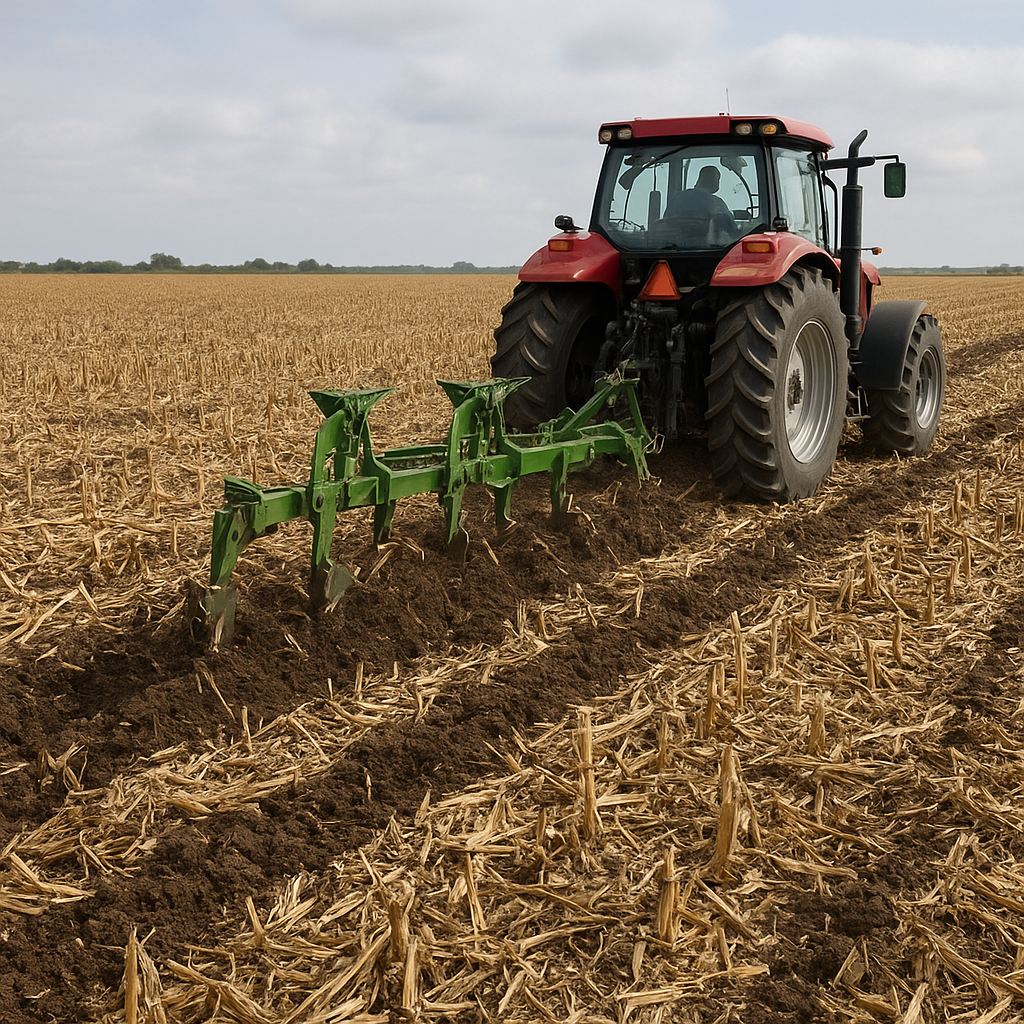
Effective plowing in fields with substantial crop residue requires a blend of **practical** know-how and **mechanical** precision. Managing leftover stalks, leaves, and roots can challenge any operator, but by mastering key principles and techniques, clogging can become a rare occurrence. This guide offers detailed strategies to streamline plowing operations, safeguard equipment, and enhance overall field performance.
Understanding Crop Residue Dynamics
Before heading into the field, it’s vital to recognize how different types of residue interact with plowing equipment. Crop remnants such as corn stalks, wheat stubble, and soybean vines possess unique qualities that influence their behavior under a plowshare.
- Residue decomposition rate: Denser stalks decompose slower, increasing the chance of clogging if not managed properly.
- Residue moisture: Wetter material tends to clump and stick, adhering to plow surfaces and hitch points.
- Residue thickness and orientation: Uniform distribution can reduce the formation of mats that lead to clogging.
Recognizing these factors helps in selecting the proper plow type and settings, laying the groundwork for uninterrupted field passes.
Residue Characterization
Conduct a quick field survey to assess:
- Percentage of ground cover.
- Residue length and diameter.
- Prevalent moisture conditions early in the morning or after rainfall.
Mapping these parameters allows targeted adjustments to plow geometry and tractor speed, reducing the likelihood of clogged furrows.
Equipment Setup and Adjustments
Optimal equipment configuration is the cornerstone of clog-free plowing. A few precise tweaks can yield significant performance gains.
Plow Configuration
- Choose a moldboard or disc plow suited to residue volume and soil texture.
- Inspect shear bolts and replace worn components to prevent sudden failures.
- Apply anti-stick coatings on plow surfaces for smoother residue glide.
Keeping plow parts in top condition and selecting the right design reduces friction, enabling residue to flow cleanly under the share and over the moldboard.
Depth, Angle, and Clearance Control
Three critical settings directly impact residue handling:
- Working depth – Adjust to slice residue shallowly when it’s fresh and bulky; deepen gradually as decomposition advances.
- Plowshare angle – A steeper angle can force residue upward, while a flatter angle encourages passage beneath the moldboard.
- Clearance around the shear and tunnel – Ensure ample space for tangled stalks to move through without wrapping around the frame.
Fine-tuning these elements prevents the accumulation of debris around the plow’s moving parts.
Field Management Practices
A smart approach to field preparation can complement mechanical solutions, further mitigating clogging risks.
Residue Distribution Techniques
Rather than leaving residue in windrows, adopt methods to scatter it uniformly:
- Use straw choppers or flail mowers to shred stalks before plowing.
- Employ a rotary harrow or tine cultivator to spread material evenly.
- Rotate field entry points to avoid heavy residue buildup along repeat passes.
Even coverage ensures residue moves progressively under the plow instead of forming thick mats.
Pre-plowing Treatments
In certain scenarios, additional steps can pay dividends:
- Apply a light tillage pass with a disk or chisel plow to slough off surface residue.
- Allow a resting period after harvest for partial decomposition, lowering moisture and bulk.
- Implement controlled drainage or tiling to reduce surface water and slow-decomposing debris.
These preparatory measures prime the soil-residue mixture, reducing the physical load on the plow.
Maintenance and Troubleshooting
Even with proper setup and field practices, occasional clogging may occur. Rapid identification and rectification are essential.
Routine Inspection
- Check moving parts for residue buildup at mid-day break and end-of-day service.
- Verify that shear pins are intact and replace those showing excessive wear.
- Monitor plow alignment to maintain consistent pressure and geometry throughout the pass.
Regular checks catch minor issues before they escalate into significant downtime.
Common Issues and Solutions
Here are typical obstacles and their fixes:
- Heavy residue wrapping around tines – Increase inter-body spacing or switch to wider shanks.
- Residue packing in furrow bottoms – Reduce working depth or elevate draft to encourage dispersion.
- Excessive side draft – Adjust hitch height to align tractor power with plow load, easing lateral strain.
Addressing these symptoms promptly avoids repeated stoppages and saves valuable field hours.
Advanced Considerations
For operations tackling extreme residue loads or variable soil types, additional tactics can provide an edge.
Chemical and Biological Aids
Enzymatic products or microbial inoculants applied post-harvest can accelerate residue breakdown, reducing volume and moisture retention.
- Choose formulations proven for your crop type.
- Coordinate application timing to match peak microbial activity.
Equipment Innovations
Recent plow designs incorporate features such as:
- Self-cleaning coulters that actively shed debris.
- Hydraulically adjustable moldboard wings for on-the-go adjustment.
- Vibration-assisted shares that shake loose fibrous stalks.
Innovations like these represent the frontier of clog-free plowing and can be game changers for large-scale farms.
Implementing a Long-term Residue Strategy
Integrating plowing tactics into an overall residue management plan ensures sustained soil health and operational efficiency.
- Rotate crops to include those with naturally lower biomass, aiding natural residue reduction.
- Employ cover crops that accelerate nutrient cycling and prevent compaction.
- Utilize precision agriculture tools—GPS, yield mapping, and soil sensors—to fine-tune passes and minimize wasted effort.
A cohesive strategy combining mechanical, biological, and logistical elements will keep clogging at bay and promote healthier fields year after year.