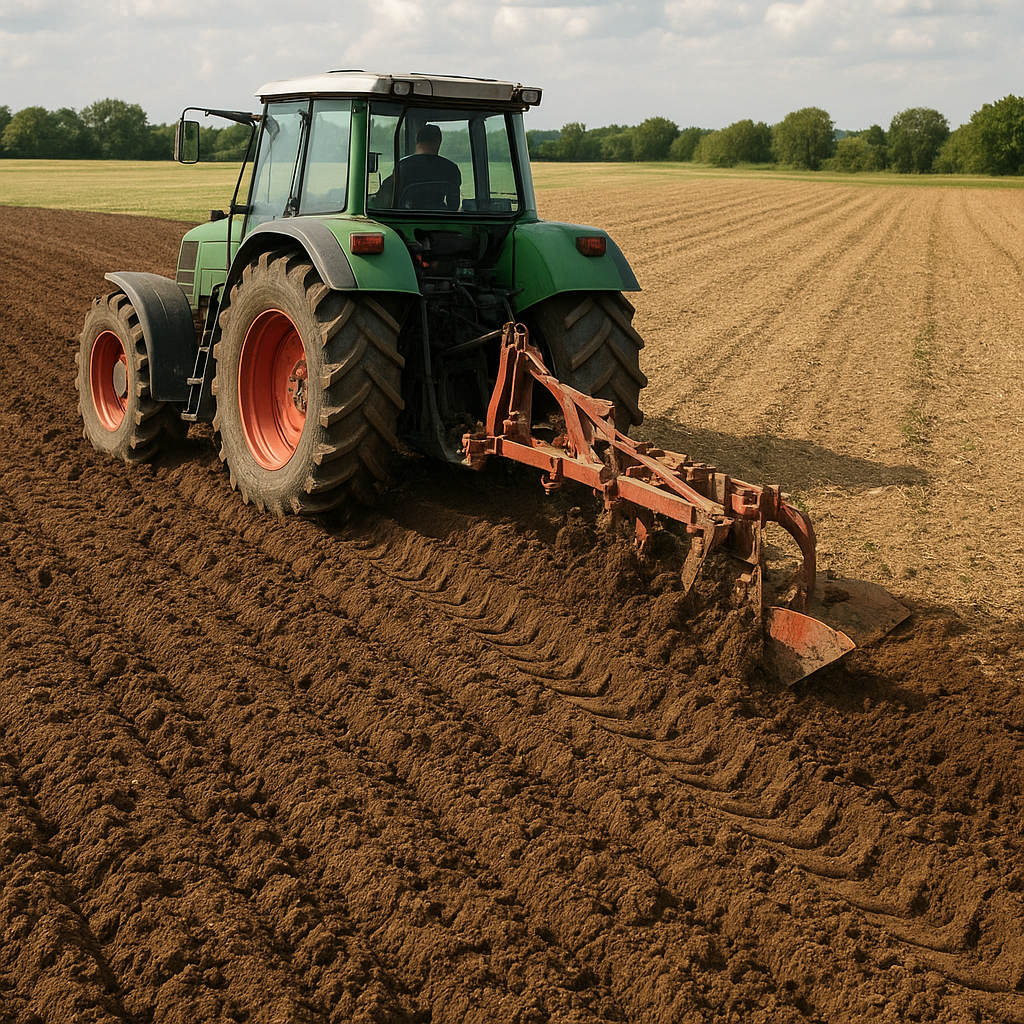
Plowing is a critical step in preparing a field for planting, but achieving a consistently smooth surface can be challenging. Uneven surfaces may lead to water pooling, poor seed placement, and reduced yields. By focusing on proper preparation, equipment choice, and precise technique, farmers can minimize irregularities and enhance overall field quality. This guide offers detailed advice on preventing uneven surfaces after plowing, covering pre-plow checks, best practices during operation, and post-plow corrections.
Pre-plowing Field Assessment
Soil Moisture Evaluation
Before engaging the plow, it’s essential to assess the soil’s moisture content. Overly wet soil can clump and stick to the moldboards, creating ridges and furrows. Conversely, extremely dry soil may crumble into loose chunks, leading to a rough finish. Use a simple squeeze test: grab a handful of soil and apply pressure. If it holds shape but breaks easily when disturbed, moisture is ideal for clean cutting and inversion.
Topography and Residue Check
Walk the field to identify high and low spots. Uneven terrain often results from previous erosion or settlement areas. Mark these zones with flags or stakes. Also, inspect crop residue levels. Heavy residue can choke the plow, leading to inconsistent slices and leaving patches of unturned material.
- Flag slopes, hollows, and ridges
- Remove large rocks and debris
- Balance residue distribution by shredding or picking
Choosing and Maintaining the Right Equipment
Selecting the Appropriate Plow Type
Different plows suit different soil and field conditions. A disc plow is effective in rocky or heavy-residue fields but may leave a rough surface if disks are worn. A moldboard plow delivers a cleaner cut and inversion but requires precise adjustment to avoid scalping or undercutting.
- Disc plow for high-residue, stony fields
- Moldboard plow for fine soil and deep inversion
- Chisel plow for minimal soil disturbance
Alignment and Adjustment
Proper alignment is vital for surface uniformity. Each share and moldboard must be leveled relative to the tractor. Use a gauge wheel or laser-guided system to monitor side-to-side adjustments. Check the draft point height to ensure the plow follows the tractor’s center line without yawing.
- Confirm hitch pins are secure and at the correct height
- Adjust skimmers to handle residue flow evenly
- Test-turn at field edge and inspect slice consistency
Routine Maintenance
Dull shares, bent shanks, or worn disks contribute to uneven slices. Develop a maintenance schedule to inspect and replace critical wear parts. Keeping blades sharp reduces draft force, enhances soil turnover, and minimizes undulations caused by tugging or slipping.
- Sharpen shares after every 50 operating hours
- Grease pivot points and check hydraulic lines
- Monitor tire pressures for consistent weight distribution
Optimal Plowing Techniques
Speed and Tractor Settings
Maintaining a steadied speed is crucial. Excessive ground speed often leads to undulating furrows as the plow bounces. A modest pace—typically 4–6 km/h—ensures the equipment can cut smoothly. Adjust the tractor’s engine throttle and transmission settings to prioritize consistent movement over maximum power.
Depth Control and Consistency
Uneven plowing depth is a primary culprit for irregular surfaces. Set the gauge wheel or depth control lever before entering the field, and avoid making in-field adjustments unless absolutely necessary. If varying depths are required on slopes, plan the run so the depth change occurs gradually over several meters.
- Calibrate depth setting by measuring initial furrows
- Use a depth marker attached to the plow frame
- Monitor furrow height visually and via gauge wheel feedback
Row Sequencing and Overlap
Plow rows in a logical sequence to minimize overlap errors. Starting at the field’s edge, work systematically inward, ensuring each pass slightly overlaps the previous slip to eliminate unplowed strips. On headlands or irregular perimeters, create a consistent sequence of shorter runs, returning to fill gaps without affecting the main field’s grid.
- Plan entry and exit points to reduce turning damage
- Use GPS guidance for precise lane tracking
- Implement end-of-run routines to realign the last furrow
Post-plowing Practices for a Smooth Finish
Land Levelling and Harrowing
After completing plowing, immediate secondary tillage can enhance surface evenness. A lightweight harrow or chain drag can break clods and distribute soil uniformly. For larger discrepancies, employ a field grader or pull-type land leveler to shave high ridges and fill low depressions.
- Harrow at low speed, allowing tines to settle clods
- Grade slopes no steeper than 1:10 to prevent washouts
- Perform two passes at right angles for cross-level smoothing
Managing Soil Compaction
Compaction can develop after heavy machinery traffic, undermining the plow’s work. To alleviate this, conduct subsoiling passes at least 10 cm deeper than the original plowing depth. Subsoilers fracture compaction layers without inverting soil, encouraging root penetration and water infiltration.
- Subsoil when the soil is neither too wet nor too dry
- Use narrow shanks spaced at 50–75 cm intervals
- Follow with harrowing to refine the tilth
Monitoring Field Conditions
Track rainfall and irrigation events following plowing. Heavy rains can erode freshly turned ridges, while prolonged dry spells may create crusting. Consider installing field sensors or conducting manual checks to decide if further light harrowing or rolling is needed to maintain a smooth seedbed.
- Inspect furrow cross-sections for depth uniformity
- Address wash patterns immediately with spot grading
- Adjust seeding equipment to match final surface contours
Advanced Tips for Precision Plowing
Integrating GPS and Auto-Steering
Modern positioning systems improve lane accuracy and reduce human error. Auto-steering locks onto a precise line, maintaining consistent overlap and furrow spacing. This level of precision mitigates minute variations that accumulate into larger surface irregularities.
Variable Depth Control Technologies
Some tractors now offer real-time depth monitoring with hydraulic adjustments. These systems adapt to changing soil resistance, preserving target plowing depth and reducing the need for manual fine-tuning. By automatically raising or lowering the plow, they maintain a uniform finish across varying soil conditions.
Training and Operator Skill
Equipment sophistication is only as good as the operator. Regular training on calibration procedures, troubleshooting common plow issues, and interpreting machine feedback enhances field outcomes. Encourage operators to keep a log of field conditions, settings, and results to refine plowing strategies over time.