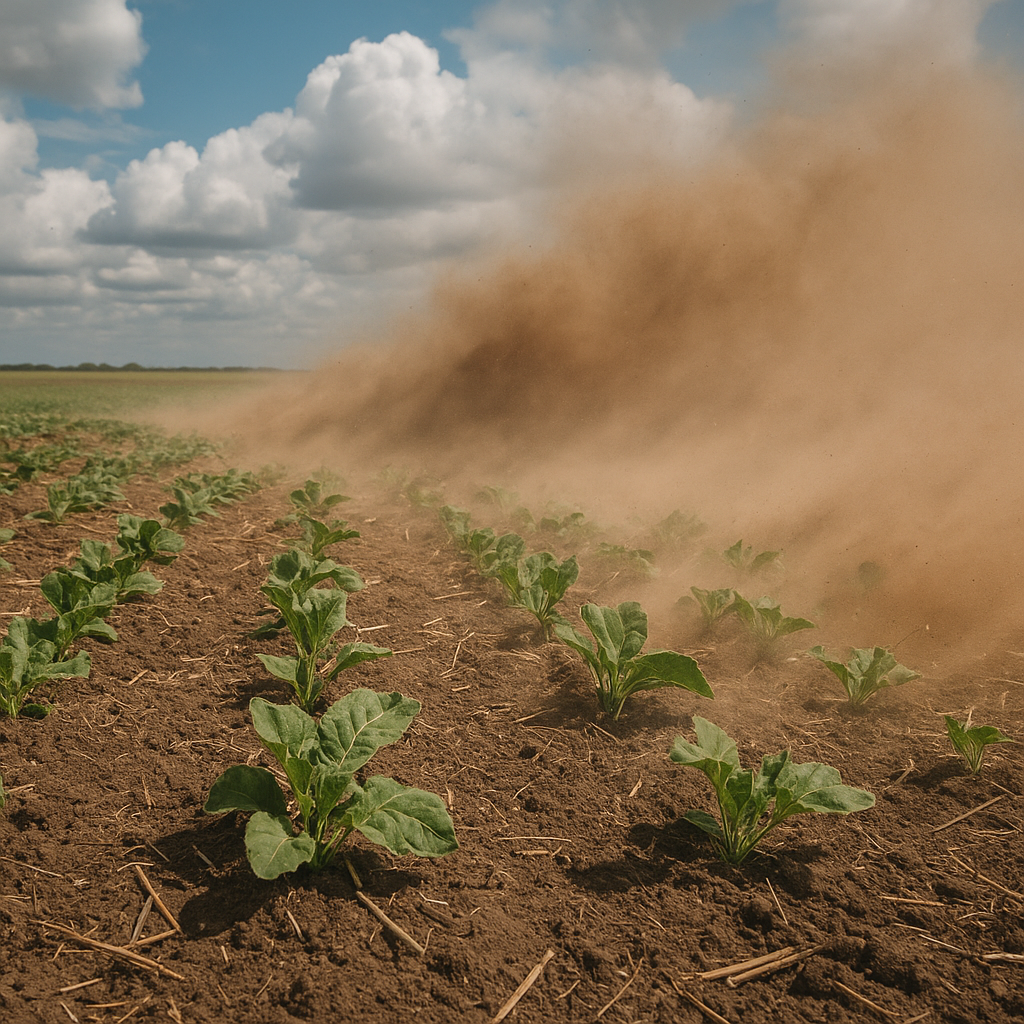
Preventing soil loss under high winds is a critical concern for farmers looking to maintain soil fertility and long-term sustainability. Effective plowing techniques combined with supplementary practices can dramatically cut down on wind erosion and preserve valuable topsoil. This article explores practical methods and tips tailored to windy conditions, offering insights into tillage timing, equipment adjustments, and protective measures.
Understanding Wind-Driven Soil Loss
Wind erosion occurs when loose, dry soil particles are detached and carried away by moving air. This process can be exacerbated by improper plowing, leaving fields exposed during critical periods. Farmers must recognize factors contributing to soil detachment:
- Soil Texture: Sandy or silty soils with fine particles are particularly susceptible to wind transport.
- Soil Moisture: Dry soils lack cohesion, making particle detachment easier. Maintaining adequate moisture reduces vulnerability.
- Surface Roughness: Smooth, freshly plowed fields provide little resistance; rough surfaces disrupt wind flow.
- Vegetation Cover: Absence of plant residues or living roots leaves soil unprotected against erosive forces.
By understanding these underlying conditions, growers can plan plowing operations that minimize exposure and soil loss.
Optimal Plowing Strategies for Windy Conditions
Adopting the right plowing strategies is the first line of defense. Attention to timing, depth, and pattern can significantly curb wind-driven erosion.
Timing Tillages to Minimize Exposure
- Weather Monitoring: Plan primary tillage when forecasts predict calmer winds. Even a single day of reduced wind can make a difference.
- Moisture Timing: Schedule tillage shortly after rainfall or irrigation. Increased soil moisture helps particles bind together, reducing detachment.
- Combine operations: Where feasible, perform multiple tasks (e.g., plowing and harrowing) on the same day to limit the window of exposed soil.
Adjusting Plow Depth and Angle
- Moderate depth: Avoid excessively deep plows that bury too much residue. Instead, aim for a depth that loosens soil while retaining some organic matter on the surface.
- Steeper moldboard angle: A sharper angle flips residue onto the surface, creating a protective mulch layer.
- Use of chisel plows: These tools reduce soil inversion, leaving more crop residue intact, which improves residue management against wind uprooting.
Creating Surface Roughness Patterns
- Rolling or tine harrowing: After plowing, lightly harrow the field to create ridges and furrows that interrupt wind flow at ground level.
- Cross-harrowing: Apply harrow passes at different angles (e.g., 45° to the plow line) to generate irregular surfaces that trap drifting soil.
- Strip tillage: Leave unplowed strips every few feet. These anchored strips act as micro-windbreaks for adjacent bare zones.
Incorporating Living and Structural Barriers
Beyond plowing tactics, combining mechanical measures with natural and man-made barriers can greatly reduce erosion.
Planting Cover Crops for Continuous Protection
- Cover crops like rye, oats, or vetch establish a living shield over soil during fallow or offseason periods.
- Deep-rooted species, such as radishes, improve soil structure and reduce compaction beneath the tilled layer.
- Timing: Broadcast seeds immediately after harvest, or integrate them during the last tillage pass, ensuring rapid establishment.
Establishing Windbreaks and Shelterbelts
- Tree and shrub rows: Position perennial windbreaks perpendicular to prevailing winds to reduce wind speed across fields.
- Shrub rows: Fast-growing, multi-species hedgerows can be installed along field edges for interim protection.
- Flexible fencing: Temporary snow- or wind-fence fabric can be erected to create immediate barriers during peak erosion windows.
Supplementary Practices for Enhanced Soil Conservation
Complementing plowing and barriers with additional cultural practices maximizes protection.
Residue Retention and Mulching
- Incorporate crop residues: Rather than burying all residues, leave a portion on the surface to shield soil and trap moving particles.
- Straw or wood-chip mulch: Apply organic mulches on newly plowed areas to create an immediate protective layer.
- Mulch anchoring: Use light tackifiers or netting to keep mulch in place under windy conditions.
Reduced and No-Till Options
Transitioning to conservation tillage can effectively eliminate soil exposure by minimizing soil disturbance.
- No-till systems: Residue cover remains intact, drastically cutting down soil loss and improving water infiltration.
- Strip-till: Targeted disturbance only where seeds are placed; balances the need for seedbed preparation with surface protection.
- Vertical tillage: Shallow tillage tools that slice residue and soil without inversion, maintaining surface cover.
Managing Soil Compaction
Compacted subsoils can impair root growth and water infiltration, indirectly increasing erosion risk. To address compaction:
- Cultivate during optimal moisture: Too wet or too dry soils risk creating plow pans. Aim for moisture near field capacity.
- Use deep ripper or subsoiler: Break up restrictive layers without complete inversion, improving drainage and reducing runoff.
- Controlled Traffic Farming (CTF): Maintain consistent wheel paths to confine compaction zones and preserve the majority of the field in good condition.
Key Considerations for Long-Term Success
Implementing a combination of these strategies fosters resilience against wind erosion. Keep these factors in mind:
- Crop Rotation: Diverse rotations—including cereals, legumes, and cover crops—enhance organic matter and soil aggregate stability.
- Equipment Selection: Choose implements designed for residue retention and minimal disturbance in windy landscapes.
- Field Monitoring: Regularly inspect vulnerable areas after high winds and adapt strategies as needed.
- Cost-Benefit Analysis: While some measures require upfront investment, the reduction in soil loss and yield preservation often justify the expense.