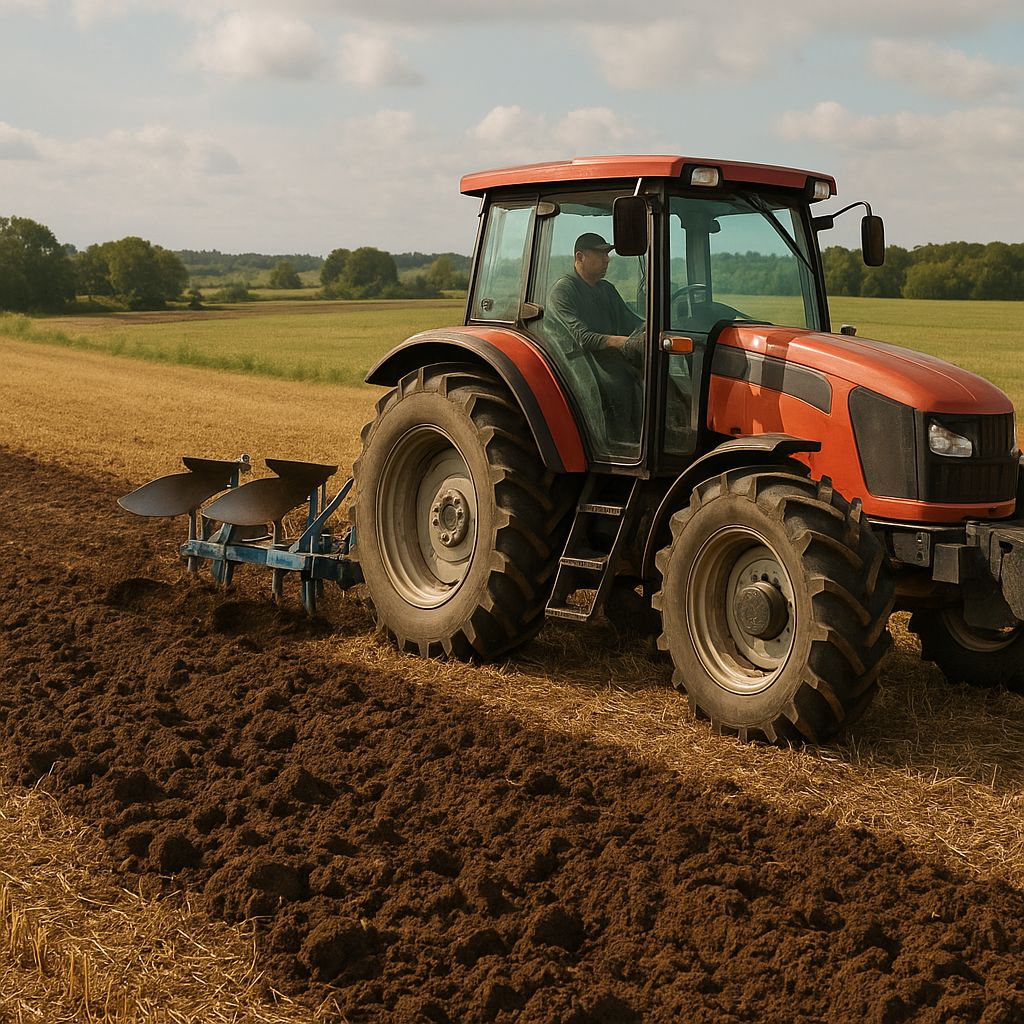
Plowing stands as a fundamental practice in modern farming, shaping fields and influencing overall crop performance. By breaking up soil layers, farmers can manage residue, improve seedbed conditions, and set the stage for robust plant growth. Throughout this article, you will discover practical tips and strategies to optimize plowing operations, boost long-term fertility, and align tillage with the principles of sustainable agriculture.
Fundamentals of Plowing: Soil Health and Preparation
Understanding Soil Structure
Successful plowing begins with a clear grasp of soil composition. Soil is a complex matrix of mineral particles, organic debris, water, and air. When you disturb the top layer, you enhance aeration but also risk disrupting natural aggregation. Maintaining soil health means balancing the benefits of aeration with preservation of pore spaces that allow roots to access oxygen and microorganisms to thrive. Regularly sampling your fields for texture, pH, and nutrient content will guide plow depth and implement choice.
Timing and Moisture Conditions
Moisture content at the time of tillage is critical. Overly wet soils tend to smear and form clods, leading to poorer seed contact and potential surface crusting. Conversely, extremely dry soils can shatter into fine dust, losing precious moisture to evaporation. Aim to plow when moisture approximates the field’s plastic limit—enough to hold shape under gentle pressure but not stick to tools. Proper timing enhances moisture retention and reduces the need for re‐working clods later.
Recommended Plow Settings
Adjust plow depth between 10 and 20 centimeters in most cases, though heavy residue or compaction layers may require deeper cuts. Modern adjustable skimmers can manage surface trash, balancing residue coverage with seedbed clarity. Ensure correct angle of attack: a too–steep shear angle wastes horsepower, while too–shallow an approach may leave uncut strips. Fine–tune individual share and moldboard alignment for uniform turnover and reduced drag.
Advanced Plowing Techniques: Tips for Optimal Tillage
Moldboard versus Chisel Plows
Choosing between a moldboard and chisel plow depends on field objectives. Moldboards fully invert soil, burying surface residue and controlling deep weed seeds, but they can accelerate erosion if left bare. Chisel plows fracture compacted horizons while leaving about 30–50% residue on the surface, enhancing protection against wind and water runoff.
- Use moldboards to correct severe compaction layers and incorporate heavy manure applications.
- Opt for chisel plows in conservation systems, where residue cover supports soil aggregation and moisture control.
- Combine with harrow attachments to break clods and level ridges in a single pass.
Managing Plow Wear and Calibration
Worn shares and points reduce cutting efficiency, increase fuel consumption, and degrade finish. Inspect tools every 200 operating hours. Replace or resharpen cutting edges at the first sign of rounded tips. Maintain hydraulic pressures and linkage geometries to guarantee steady depth control across uneven terrain. A well‐calibrated plow saves time, power, and enhances tillage intensity where needed.
Contour Tillage and Erosion Control
On sloped lands, follow the natural contours to slow water flow and conserve topsoil. Contour plowing reduces channelization of runoff and forms small ridges that encourage infiltration. Combine with grass buffer strips at low‐lying edges for added sediment trapping. These practices are essential to curbing erosion and protecting downstream water quality.
Integrating Plowing into Sustainable Systems: Crop Rotation and Conservation Practices
Crop Rotation Synergies
Rotating deep‐rooted and shallow‐rooted crops helps break disease cycles and alleviates soil compaction. Integrate cereals, legumes, and cover crops in a planned sequence to optimize nutrient cycling and organic residue distribution. For example, follow corn with a winter legume cover crop to boost organic matter, then plant wheat to scavenge residual nitrogen before soybeans.
Cover Crops and Residue Management
Planting cover crops immediately after plowing minimizes bare ground exposure. Species like rye, clover, or radish can scavenge nutrients, reduce compaction with their root structures, and protect against erosion. Terminate covers at the right growth stage—often early flowering—to maximize biomass and nitrogen fixation. Leaving a diverse mulch layer at seeding time enhances moisture retention and provides habitat for beneficial insects.
Reducing Tillage Frequency
Transitioning from intensive plowing to reduced or no-till regimes can dramatically improve soil structure over time. Experiment with a one–pass system combining a vertical tillage tool with a planter to inject seed directly into residue. Monitor soil organic carbon annually; even partial reduction of inversion tillage can yield significant gains in soil biodiversity and water‐holding capacity.
Innovations and Future Perspectives in Plowing
Precision Agriculture Integration
Advancements in GPS and variable–rate technology allow operators to adjust plow depth and width on the fly, matching soil variability across the field. Soil sensor arrays can detect compaction zones and relay data to the tractor, triggering deeper cuts where necessary and shallower passes on friable ground. This targeted approach conserves diesel, reduces unnecessary disturbance, and preserves fragile soil biota.
Robotics and Autonomous Plowing
Autonomous implements are emerging, equipped with onboard vision systems to identify field obstacles and adjust tillage patterns. Robotic plowing units can operate overnight, reducing labor constraints and enabling more timely fieldwork. Early adopters report enhanced consistency in furrow depth and improved safety by minimizing operator fatigue in long shifts.
Soil Carbon Sequestration Strategies
Research indicates that low–disturbance plowing combined with strategic residue retention can augment organic matter and trap atmospheric carbon. Fields managed under conservation tillage protocols show higher microbial activity and aggregate stability. Integrating plowing within a broader carbon management plan may open new revenue streams via carbon credits, aligning farm economics with environmental stewardship.
Looking Ahead
Future tillage tools will likely focus on even greater customization, minimal soil inversion, and maximal energy efficiency. Continued collaboration between agronomists, engineers, and environmental scientists is essential to refine plowing as a practice that supports productivity without compromising ecological integrity. By combining time-tested principles with emerging technologies, farmers can ensure that plowing remains a cornerstone of resilient and sustainable agriculture.