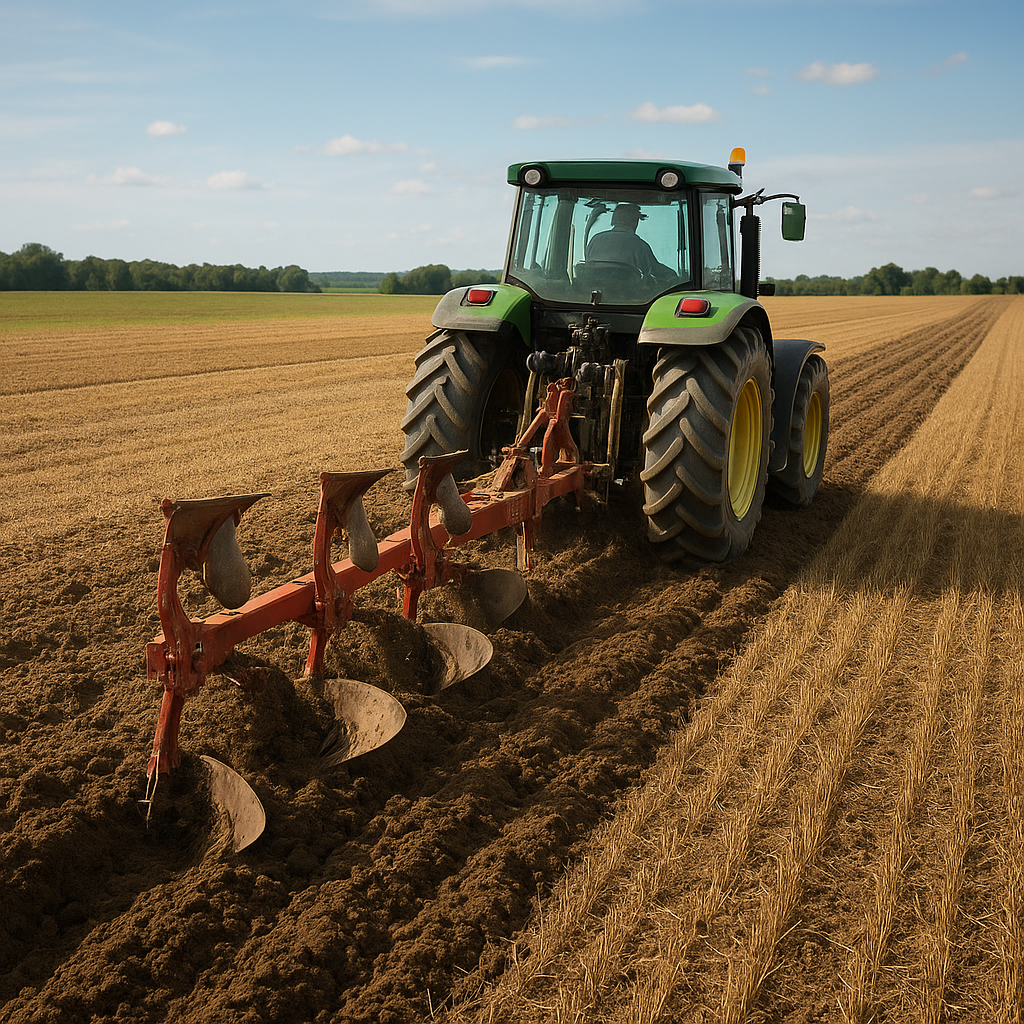
Choosing the right plowing strategy is one of the most powerful ways to improve soil health and yield stability. Modern farmers combine tradition with precise field observation, machinery settings and data-based decisions. On agro-world.com you can find practical guidance on machinery, soil care and crop rotations, but understanding the core principles of plowing remains essential. Well-planned tillage affects how roots grow, how water infiltrates and how nutrients circulate in the field. At the same time, excessive or poorly executed plowing can destroy soil structure and increase erosion. This article explains how to match plowing depth, timing, tools and field conditions so that every pass of the plow contributes to **higher** and more **stable** yields.
To follow these ideas in practice, farmers need to look beyond tradition and adjust their methods to soil type, climate, machinery and crop rotation. The goal is to create a loose but stable top layer, preserve organic matter, limit compaction and protect the soil surface against wind and water. Well executed plowing strategies must also save fuel and time, because profit margins in farming are under constant pressure. The techniques described here are designed to support both **productivity** and long-term **sustainability**, helping you turn a necessary field operation into a real agronomic advantage.
Understanding soil structure before plowing
Effective plowing always starts with a clear diagnosis of the soil. The same depth and tool setting will work differently in a light sandy field and in a heavy clay field. Farmers should regularly dig inspection pits to examine horizons, rooting depth and possible compacted layers. A simple spade test reveals if the soil crumbles into stable aggregates or breaks into large plates, which often indicates compaction. Checking how easily roots penetrate the profile tells you whether deeper loosening is required or if shallow plowing is sufficient.
Soil organic matter is another key factor. Fields rich in residues and humus generally respond better to reduced tillage, because biological activity keeps the surface open and permeable. In low humus soils, a carefully chosen plowing technique can help incorporate residues and stimulate biological life, but aggressive inversion may burn organic matter too quickly. Measuring bulk density, observing worm activity and monitoring water infiltration after heavy rain are practical field indicators. The aim is to maintain a balance between looseness and stability, allowing both machinery and plant roots to move without damaging the underlying structure.
Choosing the right plow and implements
Several types of plows are available, each suited to specific conditions and yield goals. The classic moldboard plow inverts the soil and buries crop residues, weeds and shallow compaction. This is effective where disease pressure or weed seed banks are high, or where straw and stubble would otherwise interfere with sowing. However, full inversion exposes organic matter to rapid mineralization, which can reduce long-term soil fertility if used excessively. For this reason many farmers alternate moldboard plowing with non-inversion techniques.
Chisel plows, subsoilers and paraplows loosen the soil without turning the profile completely. They are particularly useful for breaking compact layers while keeping residues near the surface, where they protect against erosion and feed soil organisms. Disc plows and heavy disc harrows can manage large amounts of residues on lighter soils, though they may smear wet clays. Matching tractor power to the chosen tool is critical: underpowered combinations lead to uneven depth and missed compacted spots, while oversized machinery increases fuel use and the risk of deep compaction. Proper maintenance, including sharpening shares and adjusting skimmers, directly affects working quality and the uniformity of the plowed layer.
Setting optimal plowing depth
Plowing too shallow leaves compaction untouched and may create a dense traffic pan just below the worked layer. Plowing too deep wastes fuel, brings poor, low fertility soil to the surface and may disturb stable subsoil structure. An effective rule is to match depth to the active root zone of the crop and the location of compacted layers. Cereals and oilseeds with moderate rooting needs often perform well with a depth of 18–25 cm, while deep-rooted crops such as sugar beet or some forage species may benefit from deeper loosening every few years.
Depth should never be chosen only by habit. Penetrometer readings, spade tests and yield maps can indicate where deeper work is justified. On sandy or very shallow soils, plowing may be limited to avoid mixing the thin fertile horizon with sterile subsoil. Rotating the plowing depth from year to year helps avoid the creation of a fixed plow pan. In practice this means alternating between somewhat deeper and shallower passes, depending on the rotation and seasonal conditions. The target is to keep the main root zone well structured, with enough fines for germination and stable aggregates that resist crusting.
Timing plowing operations for best results
Correct timing is often more important than the exact choice of implement. Working soil when it is too wet leads to smearing, clods and long-lasting compaction. On clay soils in particular, the window for ideal moisture conditions can be short. A simple field test is to squeeze a handful of soil; it should form a weak ball that breaks easily when pressed or dropped. If the mass sticks to your hand, it is too wet; if it breaks into dust, the field is too dry and vulnerable to erosion and structural collapse.
Autumn plowing can be favorable for heavy soils because natural freezing and thawing complete the breakdown of clods, producing a finer seedbed in spring. However, autumn operations also leave the surface open for winter erosion if residues are fully buried and slopes are steep. Spring plowing is often preferred on light soils, where frost has already loosened the profile and the risk of structural damage is lower. Farmers also need to consider labor peaks: aligning plowing with other tasks such as harvesting, fertilization and sowing can reduce unnecessary machinery movements and fuel consumption.
Managing crop residues and organic matter
Residue management is central to both yield potential and long-term fertility. Incorporating residues with the plow adds carbon and nutrients to the soil and feeds soil organisms. However, large amounts of long straw or stalks can cause blockages and uneven mixing, especially when using high speeds or narrow plows. Pre-chopping residues at harvest and distributing them evenly across the header width help create uniform conditions. Proper skimmer adjustment on the moldboard plow ensures that residues are covered but not pushed too deep, which could slow their decomposition.
Leaving a portion of the residues on or near the surface reduces erosion by intercepting raindrops and slowing water flow. This is particularly important on sloping fields or regions exposed to strong winds. In some rotations, farmers choose partial or no residue incorporation combined with shallow looseners to maintain a protective mulch. When using such systems, nitrogen management must be adapted, because residues with a high carbon to nitrogen ratio can temporarily immobilize available nitrogen. Careful balancing of mineral and organic fertilization, together with periodic deeper plowing or subsoiling, keeps the system functional and productive.
Reducing compaction and optimizing traffic
Soil compaction is one of the most serious hidden yield reducers. Even the best designed plowing operation cannot fully repair deep ruts caused by heavy tractors or harvesters working on wet ground. To limit damage, field traffic should be planned in advance, ideally using fixed traffic lanes where all machinery passes in the same tracks. This concentrates compaction into narrow zones and keeps the remaining area loose for root growth. Matching tire size and inflation pressure to the load and conditions further reduces harmful pressure on the subsoil.
When compaction has already occurred, deep loosening tools such as subsoilers or paraplows can restore porosity, but only if the soil is dry enough to fracture. Working too wet simply cuts slots that close again under subsequent traffic. Combining deep loosening with organic matter inputs, cover crops and reduced axle loads helps rebuild a resilient structure. Over time, management that favors biological activity, including earthworms and root systems, will maintain a naturally **aerated** and **well-drained** profile, reducing the need for repeated heavy mechanical interventions.
Integrating plowing into crop rotation strategies
Effective plowing techniques must be considered in the context of crop rotation, not as isolated operations. Different crops leave different root structures and residue qualities, influence soil biology and have distinct sensitivity to compaction or waterlogging. For example, deep-rooted species such as lucerne or fodder radish act as biological loosening agents, often reducing the need for very deep mechanical tillage. Plowing after such crops can be shallower or even replaced by non-inversion tools, saving fuel and protecting soil structure.
On the other hand, rotations that include root or tuber crops harvested under wet conditions may periodically require more intensive restructuring of the profile. In such cases, moldboard plowing followed by carefully chosen secondary tillage creates a clean and level surface for precision planting. Alternating crops with dense canopy cover and those that leave the soil relatively bare helps control erosion risk associated with plowing. By mapping typical problem areas, such as headlands or compacted zones near field entrances, farmers can adapt plowing intensity locally rather than treating the entire field in the same way.
Conservation tillage and reduced inversion systems
Many farmers are moving towards conservation tillage, which minimizes soil disturbance while still addressing key agronomic needs. Reduced inversion systems rely more on chisels, discs and strip-till equipment and use the plow only occasionally. The purpose is to maintain a permanent or semi-permanent mulch layer, which protects the soil surface, builds organic matter and stabilizes yields under erratic weather conditions. In these systems, plowing becomes a strategic tool used every few years to reset the profile, manage persistent weeds or incorporate large residue loads.
Transitioning from conventional plowing to conservation methods requires patience. Weed flora may change, and nutrient dynamics will adjust as residue distribution evolves. Careful observation of soil moisture, aggregate stability and biological indicators during the first seasons guides fine-tuning of depth, speed and residue handling. Where done correctly, reduced disturbance combined with correctly timed occasional plowing can lower production costs, improve water use efficiency and enhance resilience against droughts and heavy rains, all while sustaining or increasing yields.
Fine-tuning seedbed preparation after plowing
Even the best plowing pass still needs complementary seedbed preparation. The goal is to create a firm but not compacted base with a fine upper layer where seeds can make close contact with the soil. Overworking the surface with aggressive harrows or rotavators may create dust, which later forms crusts after rain and limits emergence. Instead, farmers should choose the lightest possible combination of tools that finishes clods, levels the surface and preserves residue cover where desired.
Rolling or pressing after plowing, especially on lighter soils, helps restore capillary connections and improves moisture supply to germinating seeds. On heavy soils, this must be done cautiously to avoid sealing the surface. Adjusting working speed and overlapping patterns ensures uniform microrelief and prevents ridges or hollows that may collect water. When seedbed preparation is harmonized with well executed plowing, crops establish faster and more uniformly, leading to stronger competition against weeds and more efficient use of fertilizers and water.
Monitoring results and continuous improvement
Improving yields through better plowing is an ongoing process rather than a single decision. Farmers should regularly evaluate the effects of their methods using yield maps, soil analyses and visual field inspections. Differences in crop growth between tracks, headlands and center areas often reveal how traffic and plowing interact. By recording depth, speed, tire pressure and soil moisture at the time of each operation, it becomes possible to link management choices to observed results in the following season.
Continuous improvement relies on small, well documented adjustments rather than radical annual changes. Trying different depths or tools on test strips within the same field provides practical data without risking the whole harvest. Over several years, this approach identifies combinations that reliably support high **yield**, stable **soil** structure and acceptable operating costs. When plowing is treated as a precise agronomic tool, and not just a routine chore, it contributes significantly to long-term farm profitability and the resilience of production systems in changing climate conditions.