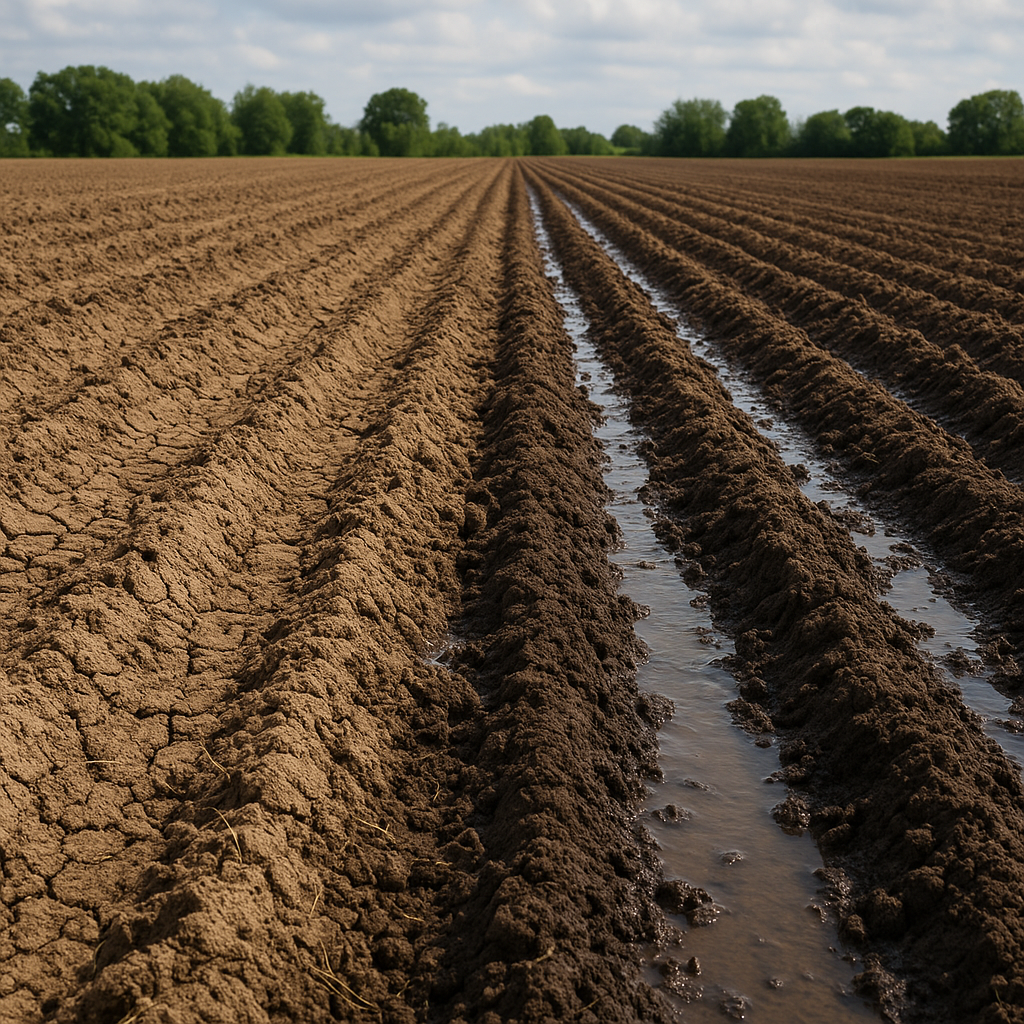
Effective management of soil moisture in plowed fields is a critical factor for maximizing crop yields and ensuring sustainable land use. By understanding the fundamentals of water movement, employing precise tillage practices, and leveraging modern monitoring tools, farmers can strike the right balance between aeration and water retention. This article explores proven strategies and practical tips to help you maintain optimal moisture levels in your plowed fields.
Understanding Soil Moisture Dynamics
Water Movement in the Root Zone
The journey of water through the soil begins at the surface and travels downward to the root zone, driven by gravity and capillary forces. During rainfall or irrigation, water infiltrates through pore spaces. Soil with a balanced texture and structure fosters uniform distribution, preventing excessive runoff or deep percolation beyond the reach of plant roots.
Key Soil Moisture Concepts
- Field Capacity: The maximum amount of water soil can hold after excess drains.
- Permanent Wilting Point: The moisture level below which plants cannot extract water.
- Available Water Capacity: The difference between field capacity and wilting point.
- Hydraulic Conductivity: A measure of how easily water moves through soil.
Understanding these concepts allows farmers to tailor their tillage and irrigation schedules to the unique demands of their soil type.
Influence of Soil Texture and Structure
Soil texture—defined by the proportion of sand, silt, and clay—directly affects water retention and drainage. Clay-rich soils hold water tenaciously but may suffer from poor aeration and slow infiltration. Sandy soils drain quickly but often require more frequent irrigation. Ideal field conditions arise in loam soils, which balance retention and percolation. Proper tillage enhances soil aggregates, improving pore continuity for both air and water movement.
Preparing Fields for Optimal Moisture Retention
Timing of Primary Tillage
Executing plowing at the right moment can significantly influence moisture levels. Aim to work soil when it is moist but not saturated. Overly wet fields risk compaction, while overly dry soils may crumble and lose structure. Conduct a simple squeeze test: a handful of soil should form a loose ball that breaks apart with slight pressure.
Tillage Depth and Method Selection
Choosing the correct depth and type of plow impacts compaction and moisture distribution. Deep inversion plowing can bury crop residues and break hardpans, enhancing water infiltration. Conversely, shallow tillage preserves organic matter on the surface, reducing evaporation and stabilizing moisture.
- Chisel plow: Minimizes residue disturbance and improves subsoil water movement.
- Disc harrow: Quick to implement but may leave compacted layers if overused.
- Moldboard plow: Ideal for burying weeds and residues, yet requires careful moisture monitoring.
Residue Management and Cover Crops
Crop residue left on the surface acts as a mulch, reducing evaporation and moderating temperature fluctuations. Incorporating cover crops—such as rye, clover, or vetch—between maincrop seasons enhances soil organic matter and root channels. These channels improve infiltration and reduce crust formation, ensuring more uniform moisture distribution after plowing.
Techniques to Manage Moisture Post-Plowing
Installing Effective Drainage Systems
Fields with poor natural drainage benefit from tile drains or open ditches. Proper drainage prevents waterlogging and promotes healthy root development. When designing drainage:
- Map low-lying areas prone to pooling.
- Determine tile spacing based on soil permeability.
- Maintain outlets to avoid blockages and ensure runoff control.
Adopting Controlled Traffic Farming
Repetitive wheel paths can compact soil, restricting both air and water flow. Controlled traffic farming confines machinery to permanent lanes, preserving the structure of crop-growing zones. This practice enhances percolation in the uncrossed areas and reduces maintenance costs over time.
Utilizing Organic Amendments
Adding organic materials—such as compost, manure, or biochar—improves soil tilth and increases water-holding capacity. Organic matter absorbs moisture like a sponge, releasing it slowly during dry periods. For best results, apply amendments:
- At least six months before plowing for thorough decomposition.
- In conjunction with lime if pH adjustment is needed.
- Based on soil tests to avoid nutrient overload.
Regular Soil Moisture Monitoring
Proactive monitoring ensures timely interventions. Tools include:
- Soil moisture probes for real-time data.
- Tensiometers to measure soil water tension.
- Remote sensing via drones or satellite imagery.
By combining field observations with data-driven insights, farmers can adjust irrigation rates, postpone plowing, or modify equipment settings to match current moisture conditions.
Continuous Improvement Through Observation
Record-Keeping and Field Trials
Maintain logs that detail weather patterns, tillage dates, moisture readings, and yields. Conduct small-scale field trials to test new techniques, such as varying plow depth or experimenting with different cover crops. Comparing outcomes helps refine practices for larger areas.
Adapting to Climate Variability
With changing weather patterns, flexibility is paramount. Develop contingency plans for unseasonal rainfall or drought. Diversify crop rotations to include drought-tolerant varieties or deep-rooted species that can access subsoil moisture.
Collaborative Learning
Engage with local agricultural extension services, cooperatives, and fellow farmers. Sharing experiences and data accelerates adoption of successful moisture-management strategies. Workshops and field days offer hands-on learning opportunities to evaluate new equipment and techniques.