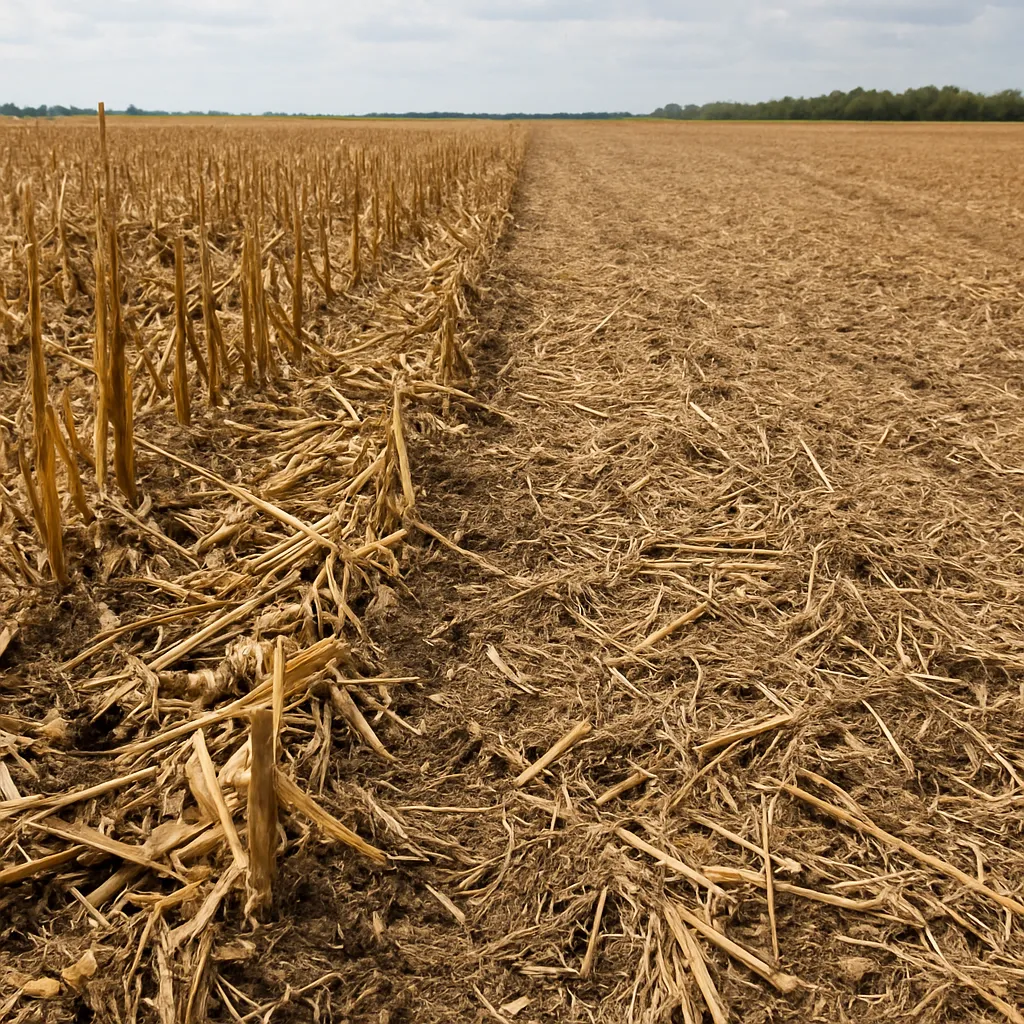
Managing residue from corn and soybeans can make a significant difference in long-term soil productivity and farm profitability. Proper handling of post-harvest debris not only reduces the risk of erosion and nutrient loss but also builds soil health by enhancing microbial activity and conserving moisture. This article offers practical plowing tips and related strategies to turn crop residue into an asset rather than a liability.
Understanding Crop Residue and Its Benefits
The Role of Residue in Soil Conservation
Leaving residue in the field is a fundamental conservation practice. Corn stalks and soybean stubble act as a protective cover that shields the soil surface from the impact of raindrops, reducing erosion and compaction. The residue layer moderates soil temperature fluctuations, helping to preserve moisture during dry spells and preventing crust formation that can impede seedling emergence.
Residue Decomposition and Nutrient Cycling
As residue breaks down, it releases bound-up nutrients back into the soil, especially nitrogen, phosphorus, and potassium. The rate of decomposition is influenced by factors such as ambient temperature, soil moisture, and the carbon-to-nitrogen (C:N) ratio of the material. Corn residue, with its higher C:N ratio, decomposes more slowly than soybean stalks, potentially immobilizing nitrogen if not managed properly.
Balancing Residue Levels
Too much residue can impede proper seed-to-soil contact, leading to uneven germination. Conversely, too little residue may expose soil to the elements, increasing erosion risk. Aim for a mid-range coverage of 30–50% soil surface residue after plowing or tillage to strike the ideal balance for both conservation and crop establishment.
Strategic Tillage Practices for Residue Management
Conventional vs. Reduced Tillage
While conventional tillage incorporates residue into the soil profile, it can also accelerate organic matter decomposition and disrupt soil structure. Reduced-till or no-till systems, on the other hand, leave more residue on the surface, promoting soil aggregation and minimizing disturbance. Evaluate your operation’s goals to determine the most suitable approach:
- Full inversion plow: Quickly buries residue but may lead to greater moisture loss.
- Chisel plow: Provides deep loosening with moderate residue incorporation.
- Strip-till: Targets only the seed row, preserving residue between rows.
Timing and Soil Conditions
Optimal tillage timing is critical. Perform primary tillage when soil moisture is at field capacity but not waterlogged to avoid smearing. Aim for soil temperatures above 50°F to encourage residue breakdown and microbial activity. Plowing too early in cold, wet soils can lead to clod formation and slow residue decomposition, whereas overly dry conditions can hinder effective residue mixing.
Residue Distribution Techniques
Using residue managers, row cleaners, or residue spreaders enables uniform distribution across the field. This prevents clumping, which can trap air pockets and create anaerobic zones. Uniform spread also helps to ensure consistent seed placement and emergence across the field.
Enhancing Soil Health Through Residue Management
Promoting Microbial Communities
Residue left on the soil surface serves as a food source for bacteria, fungi, and earthworms. These organisms break down organic matter, releasing nutrients and improving soil structure. Encouraging a diverse microbial population enhances nutrient cycling and suppresses disease-causing pathogens through natural competition.
Maintaining Organic Matter Levels
Regular incorporation of residue contributes to stable soil organic matter (SOM). Elevated SOM levels improve water infiltration, increase cation exchange capacity (CEC), and boost fertility. Aim to maintain or increase SOM by combining residue management with cover cropping and judicious organic amendments.
Monitoring Soil Health Indicators
Track soil health improvements by sampling for:
- Bulk density changes to assess compaction relief.
- Organic matter content increases over multiple seasons.
- Aggregate stability tests to gauge structural improvements.
- Microbial biomass and respiration rates for biological activity.
Integrating Cover Crops with Residue Management
Benefits of Cover Cropping
Cover crops, such as cereal rye or radish, can be sown into standing corn or post-harvest residue to extend the period of living plant cover. They scavenge residual nitrogen, reduce leaching, and provide additional biomass for soil building. Combined with plowing tips, cover crops can make residue management more sustainable.
Termination Strategies
Terminate cover crops via rolling, mowing, or chemical means before planting your main crop. Effective termination integrates residue and killed cover crop material, creating a uniform mulch layer. This layer conserves moisture and suppresses weeds, further reducing the need for tillage.
Key Considerations for Corn and Soybean Rotations
In corn-on-corn or soybean-on-soybean fields, residue accumulation can be more pronounced, and disease pressure may increase. Rotate cover crop species to diversify residue inputs and break pest cycles. When transitioning from corn to soybean, consider cover crops that assist with nitrogen fixation, such as clover, to offset the high C:N ratio of corn residue.
Advanced Tips for Residue Management
Precision Application of Nutrients
Combine residue knowledge with precision nutrient application. Band fertilizers beneath the residue line to prevent immobilization and ensure that young seedlings have access to key nutrients. This practice reduces waste and enhances nutrient use efficiency.
Mechanical Residue Breakdown
Residue choppers or stalk shredders mounted on combines can reduce the size of corn stalks, accelerating decomposition. Smaller residue particles mix more easily with soil and provide more surface area for microbial colonization.
Equipment Maintenance and Calibration
Keep plows, disks, and coulters in good working order. Sharp, properly aligned tools penetrate residue and soil more effectively, reducing fuel consumption and improving the uniformity of tillage. Regularly calibrate depth controls to maintain consistent working depths across varying field conditions.