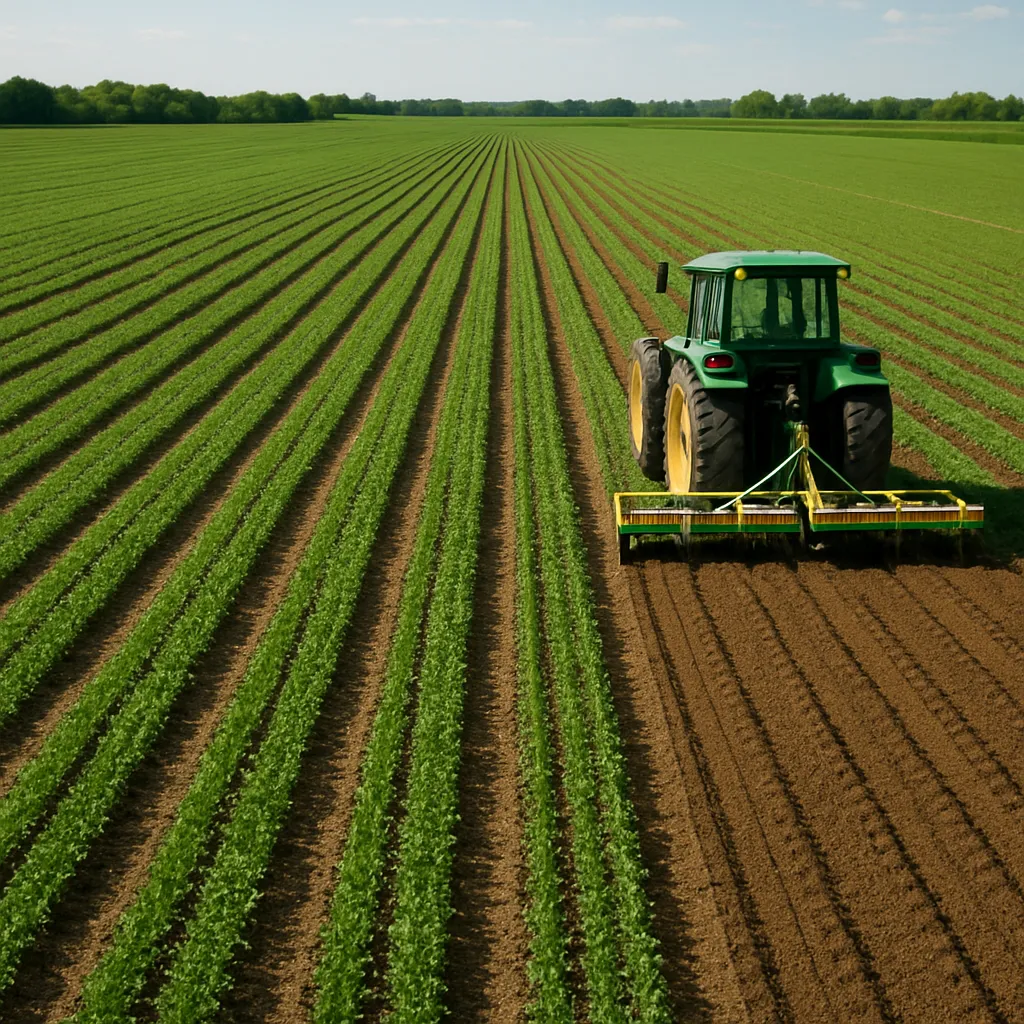
Maintaining precision across vast acres transforms routine plowing into a strategic practice that maximizes efficiency, reduces wear on equipment, and ensures uniform crop establishment. Straight furrows not only facilitate irrigation and subsequent field operations but also cut down on fuel consumption and operator fatigue. This guide delves into the art and science of keeping lines true from start to finish, combining tried-and-tested methods with the latest in technology and field management.
Selecting the Right Equipment
Match Tractor Size to Field
Choosing a tractor that balances power and agility is the first step toward flawless plowing. An underpowered machine strains when pulling a wide plow, leading to drift and curved furrows. Conversely, an oversized tractor can be unwieldy, especially near boundaries or irregular sections. Evaluate soil type, average field width, and desired plow depth before selecting a model.
Choosing a High-Precision Plow
Not all plows are built equally. Opt for designs engineered for uniform depth and consistent turnover. Moldboard plows with adjustable shares and wings allow on-the-go fine-tuning, while chisel or disc plows offer lower draft force in tougher soils. Ensure all plow components are in good repair—worn points or bent shanks compromise guidance and cause wavy lines.
Calibrating Guidance Systems
Modern GPS and auto-steering units require meticulous calibration to maintain alignment. Follow manufacturer protocols for sensor leveling, antenna placement, and initial satellite lock. Incorrect setup can introduce cumulative drift over long passes. Test your configuration on a short, straight run and make incremental adjustments until deviation is negligible.
Establishing Accurate Field Boundaries
Using GPS and Satellite Imagery
Pre-mapping your field with high-resolution imagery provides a detailed blueprint of edge lines, waterways, and obstacles. Overlay GPS waypoints to mark corners and entry points. Many mapping platforms enable you to draw virtual fence lines so that your tractor’s guidance system can alert you before you stray off course.
Marking Start and End Points
Physically marking the first and last furrow lines with stakes or spray paint helps operators align the plow at each run’s outset. Place markers every 50–100 meters along the boundary so that even in low visibility, you have clear reference points. For very large fields, consider installing permanent boundary posts with reflective collars for night or early-morning work.
Creating Visual Reference Lines
Beyond fixed markers, draw faint chalk or lime lines on the soil surface to guide initial passes. These lines can be refreshed as you progress. A taut string line stretched between two boundary posts offers a manual method for short sections, ensuring the tractor travels in a straight path without relying solely on electronic aids.
Implementing Effective Plowing Techniques
Correct Hitching and Weight Distribution
Ensure the plow is hitched at the manufacturer’s recommended height and angle. A hitch set too high causes the rear of the tractor to lift slightly, making it prone to wandering. Too low and the plow bites excessively, leading to speed fluctuations. Adjust ballast weights front and rear to maintain even traction across all wheels.
Maintaining Consistency in Speed
Fluctuating ground speed is a common culprit behind crooked furrows. Designate a target RPM and gear that match your soil conditions—usually, a moderate engine load with stable throttle input yields the straightest lines. Use cruise control where available, or develop a smooth foot technique for manual throttle adjustments.
Managing Soil Conditions
Soil moisture and texture have a direct impact on plow performance. Too wet, and the furrow walls collapse; too dry, and the plow may skid or deflect off hardpan layers. Aim for a moisture range that allows clean cutting and turnover. If parts of the field vary in moisture, make sequential passes from driest to wettest to maintain uniform ground resistance.
Leveraging Technology for Precision
Auto-Steer Systems
Auto-steer modules dramatically reduce operator error and fatigue by controlling the tractor’s steering based on pre-set guidance lines. Once activated, these systems keep the tractor on course within a few centimeters, even over long distances. Train operators to trust the system while still monitoring for obstacles and system alerts.
RTK and DGPS
Real-Time Kinematic (RTK) and Differential GPS (DGPS) enhance positioning accuracy to under 2.5 centimeters. An RTK base station on-site transmits correction data to the tractor unit, compensating for satellite orbit errors and atmospheric delays. This level of precision guarantees nearly perfectly straight passes and is especially valuable for operations requiring close tolerance, such as no-till strip farming.
Field Mapping Software
Post-plowing, use mapping tools to analyze your furrow straightness and coverage. Software can highlight areas of deviation, enabling you to fine-tune your setup before the next season. Some platforms even suggest new guidance lines to better conform to field shape, factoring in curves, terraces, and existing drainage channels.
Overcoming Common Challenges
Dealing with Uneven Terrain
Slopes and undulations introduce lateral forces that can push the tractor off line. Employ front-wheel assist or four-wheel drive to maintain traction on inclines. Reducing plow width on steep slopes reduces draft force and helps the tractor track straighter. In extreme cases, consider terracing or contour plowing to align furrows with the natural lay of the land.
Adjusting for Obstacles
Rocks, roots, and stumps can jolt the plow, causing the tractor to veer. Scout fields before plowing, removing known hazards. When encountering unexpected obstacles, slow down before impact, lift the plow briefly, and realign before resuming. Frequent scanning of the tractor’s path helps avoid surprise jolts.
Maintaining Lines on Irregular Shaped Fields
Odd geometries—curves, indentations, or insets—require strategic planning. Break the field into manageable sections and assign distinct baseline lines for each. Transition between sections at designated crossover points. Use narrower passes when navigating tight corners, then resume full-width plowing on straight segments.
Building Operator Skill
Training and Practice
Even with advanced aids, human oversight is critical. Hold regular training sessions that cover equipment setup, system calibration, and troubleshooting. Conduct supervised practice runs on less critical plots until operators can reliably maintain straight lines.
Routine Maintenance
Consistent upkeep of the tractor and plow extends component life and preserves precision. Check tire pressures, linkage pins, and sensor alignment daily. Replace worn tips and blades promptly to avoid uneven cut depths that can mislead guidance systems.
Record Keeping
Document each field’s performance, noting ideal speed, hitch settings, and any unique quirks. Over time, this repository of data becomes an invaluable reference, enabling quick, accurate setups season after season.