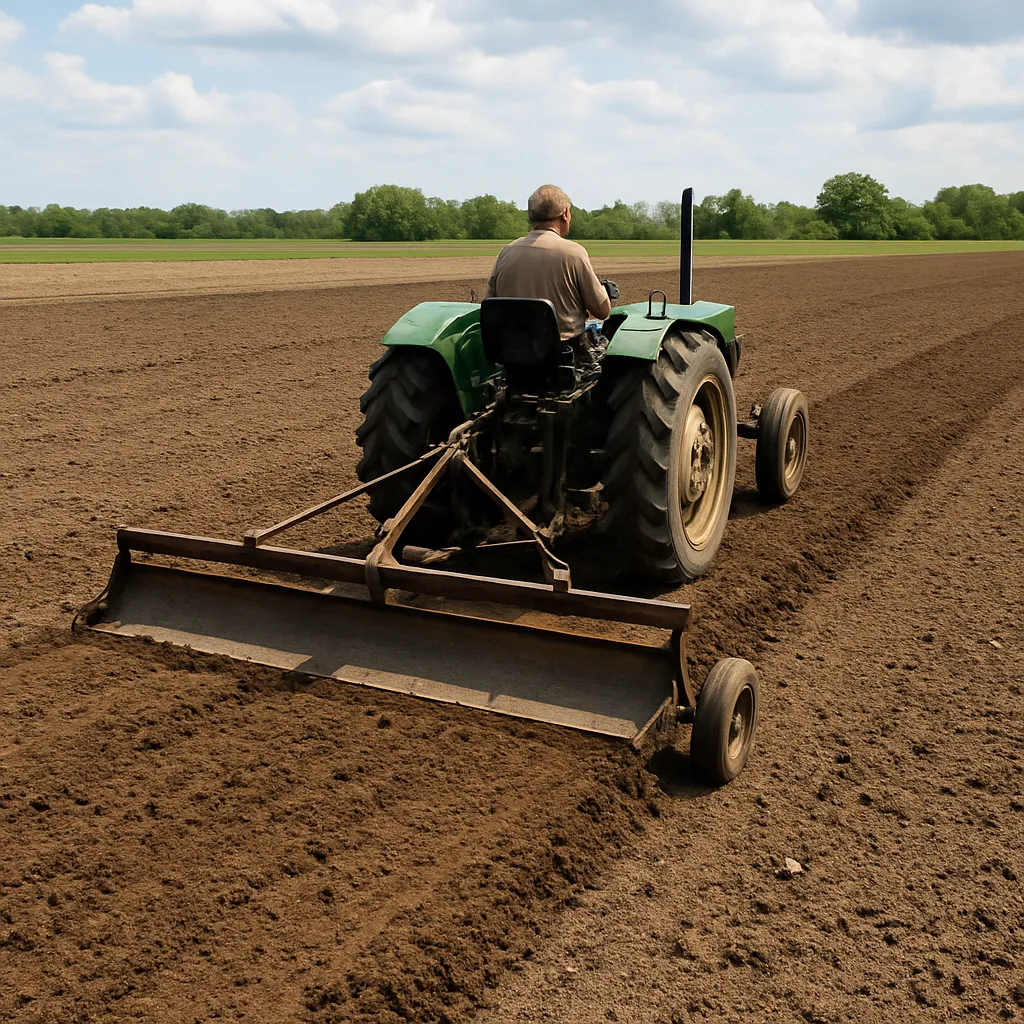
Plowing a field marks the first step toward preparing land for planting, but the real challenge lies in creating an even surface that supports healthy crop growth. An unlevel field can lead to pooled water, uneven seed germination, and equipment damage. This guide offers practical insights, from initial assessment to advanced technology, ensuring your land achieves the proper gradient and uniformity for optimal yields.
Pre-Assessment and Preparation
Before leveling begins, conduct a thorough site inspection. Map out high and low points using stakes, strings, or laser levels. Understanding soil moisture content is crucial; overly wet fields can cause irregular cuts and fills, while too-dry soil increases compaction risks. Consider a preliminary harrowing to break large clods, then let the soil rest until it reaches an ideal moisture level—one that allows easy manipulation without clinging to tools.
- Use a handheld laser or simple transit level to mark elevation changes.
- Check for hidden obstacles like stones or old roots that could damage equipment.
- Create a sketch of high spots and depressions for reference during leveling.
Mechanical Leveling Techniques
Mechanical methods provide efficiency on larger acreage. Popular implements include leveling blades, land planes, and drag harrows.
Land Planes and Blades
Attach a rear-mounted land plane to your tractor to cut high spots and fill low areas. Adjust the angle of the blade for more aggressive cuts or gentle smoothing. Always work in overlapping passes to avoid leaving ridges between passes.
Drag Harrows and Graders
Drag harrows excel at breaking clods and lightly redistributing soil. Use heavier harrows for deeper smoothing. Graders, often pulled by tractors, give more precise control over precision adjustments but require careful calibration to avoid overcutting.
- Maintain a steady forward speed—too fast results in uneven cut, too slow can cause soil tearing.
- Cross-drum reels on harrows help level small ridges after primary grading.
- Monitor workflow to ensure consistent overlap and avoid missed strips.
Manual and Low-Tech Approaches
On smaller plots or when machinery isn’t available, manual methods can still achieve decent results. Tools like box scrapers, straightedges, and long boards make it possible to fine-tune the leveling.
- Use a wooden board and a line level to establish a straight reference between two stakes.
- Move soil with shovels and rakes, focusing on filling the lowest areas first.
- Smooth the top layer with a metal rake, finishing with a brush or broom to remove loose debris.
While labor-intensive, this approach allows close attention to critical spots and is ideal for garden beds or small hobby farms.
Advanced Laser and GPS Assisted Leveling
High-tech solutions deliver optimization at scale. Laser-guided systems can automatically adjust blade heights in real time, ensuring precision grading across large fields.
- Laser transmitters set up at field edges project a beam; receivers on the grading implement maintain a constant cut depth.
- GPS-based auto-steering tractors follow pre-loaded digital elevation models, cutting and filling according to a precise gradient.
- Data from soil surveys and satellite imagery can integrate with leveling plans for the most accurate results.
Investment in these systems pays off through reduced waterlogging, improved uniformity, and less rework. Always train operators on system calibration and routine maintenance for best performance.
Best Practices to Prevent Erosion and Ensure Drainage
Proper field drainage depends on gentle slopes that channel excess water without causing erosion. Follow these guidelines:
- Design drainage furrows along natural contours to slow runoff and minimize soil loss.
- Incorporate grassed waterways or cover crops on steeper sections to stabilize soil.
- Maintain a slope of at least 0.3 percent to 1 percent—enough to move water but not so steep that it erodes the soil.
- Use check dams or small berms in furrows to control flow velocity.
Regularly inspect the field after heavy rains. Fill any new rills or gullies promptly to maintain field integrity.
Maintenance and Post-Leveling Checks
After achieving a smooth field, ongoing care is essential. A few simple steps will preserve the level and prepare for planting:
- Conduct a final pass with a light drag harrow to remove minor imperfections.
- Monitor soil compaction: use a penetrometer to ensure roots can penetrate easily.
- Test soil for nutrient uniformity and amend as needed for consistent fertility.
- Plan irrigation or drainage schedules based on field surface uniformity to avoid waterlogging or drought stress points.
Document each leveling session and note weather conditions, equipment settings, and soil moisture. This log becomes an invaluable reference for future operations and helps refine your approach season after season.