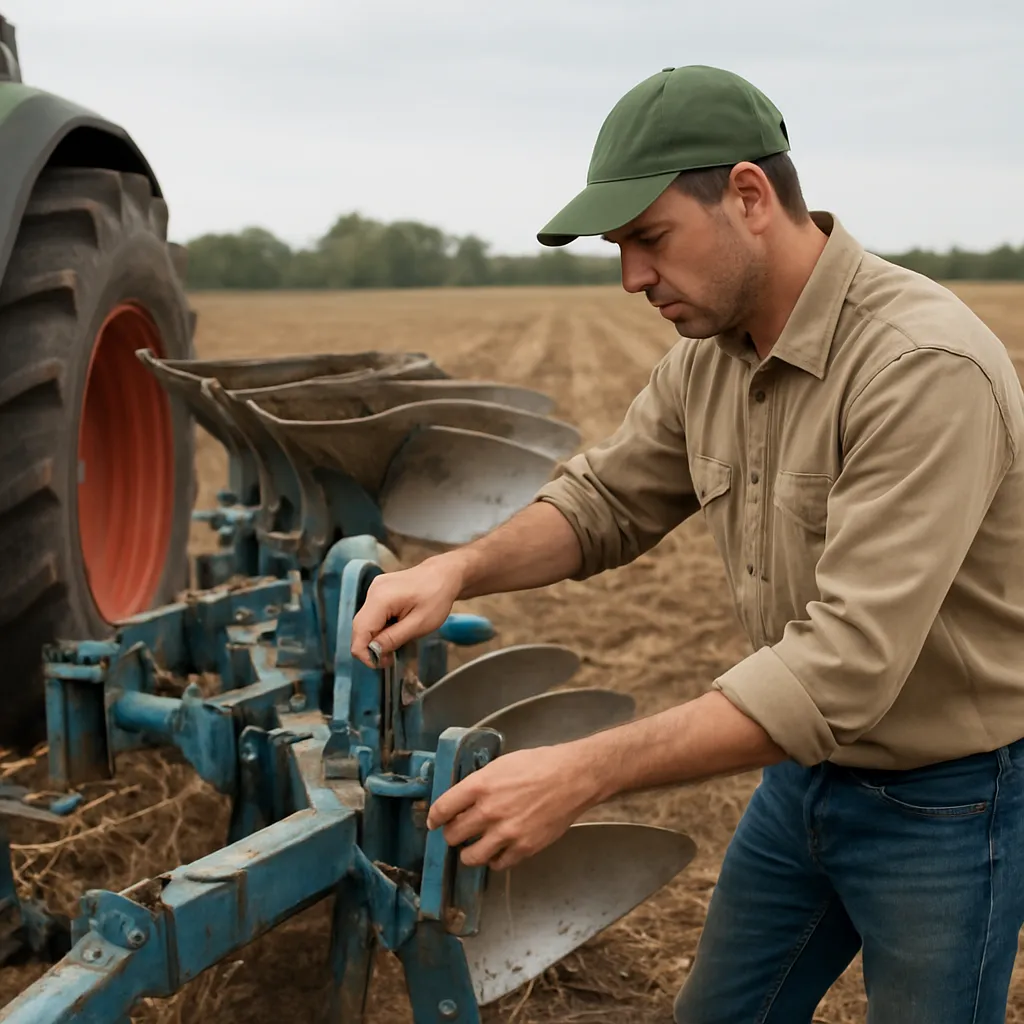
Proper plowing requires more than simply driving across a field; it demands a thorough understanding of changing field conditions and precise adjustments to your equipment. Whether you’re dealing with heavy clay, sandy soils or unexpected rocky patches, making the right adjustment ensures consistent performance and helps avoid costly downtime. This guide covers key strategies to recalibrate plow settings after notable field changes and enhance overall efficiency in the process.
Field Assessment and Understanding Soil Variability
Before touching any levers or dials, you must first assess the field. Soil composition can vary dramatically across a single plot, and recognizing these differences will inform the appropriate plow configuration.
Testing Soil Hardness
- Use a penetrometer to gauge compacted zones.
- Collect samples from multiple locations—corners, center, low-lying spots.
- Record readings to identify areas with higher resistance.
Compacted soil demands greater draft force and may require deeper plow settings, while loose or sandy patches can benefit from shallower passes to prevent drift and maintain firm seedbeds.
Identifying Debris and Rocks
- Inspect the surface for stones, roots, and old fence posts.
- Use flags or spray paint to mark hazard zones.
Frequent contact with debris can bend or break plow blades, so consider raising the skimmers or installing stone shields in affected areas.
Precise Plow Setup and Calibration
With field data in hand, turn your attention to the plow. Proper calibration of depth, angle and alignment is crucial to achieve uniform furrows and reduce mechanical strain.
Calibrating Depth Settings
- Lower the plow to the desired depth on a level test strip.
- Measure the furrow depth at multiple points to confirm consistency.
- Adjust the top link and lift arms to refine the setting.
Target a depth that matches your soil assessment: 5–7 inches for light soils, 7–9 inches for medium, and up to 11 inches in heavy clay zones. Excessive depth increases draft requirements and fuel consumption.
Ensuring Proper Alignment
- Use a straightedge across the moldboards to check for twist.
- Tighten frame bolts and check linkage geometry.
- Confirm that each share is level side-to-side.
Misalignment leads to uneven wear and undermines overall performance. Regularly verifying blade orientation prevents one-sided loading and enhances traction.
Operational Best Practices During Recalibrated Plowing
Even with perfect setup, real-time monitoring is vital to maintain optimal results throughout the job. Keep an eye on both machine and ground conditions to adapt on the fly.
Monitoring Tire Pressure and Ballast
- Check tractor tire pressure to ensure consistent traction.
- Add front or rear ballast as necessary to balance draft load.
Inadequate ballast can cause wheel slip and reduce draft control, while over-ballasting wears tires prematurely.
Tracking Fuel and Engine Load
- Note engine RPM and load percentage via onboard display.
- Adjust ground speed or depth to keep the engine in its optimal power band.
Running at peak engine load may save time but risks overheating. Instead, aim for moderate speeds and proper monitoring to protect both tractor and plow.
Maintenance, Troubleshooting and Long-Term Adjustments
After completing initial passes, inspect equipment and make any necessary tweaks. Regular maintenance extends tool life and prepares you for future field variations.
Inspecting Wear Points
- Examine moldboards, shares, and landslides for wear patterns.
- Replace or rotate worn parts to maintain consistent blade geometry.
Uneven wear indicates misalignment or improper depth; correcting these issues promptly prevents accelerated damage.
Hydraulic and Linkage Checks
- Look for oil leaks around pivot points and hoses.
- Lubricate bushings and greasing points to reduce friction.
- Tighten any loose nuts or bolts in the three-point hitch assembly.
Hydraulic drift or linkage slack can alter depth settings mid-operation. Regular service ensures reliable adjustment and precise control.
Documenting Field Changes
- Maintain a field journal outlining soil tests and plow configurations.
- Record date, weather conditions, and tractor/plow settings.
Having a detailed log helps you recreate successful setups in similar conditions and allows for data-driven decisions in future seasons.
Enhancing Efficiency Through Technology
Adopting digital tools can streamline recalibration and raise overall operational quality. Precision ag solutions are increasingly accessible to producers of all scales.
GPS-Guided Depth Control
- Use auto-depth features to maintain consistent furrow depth across undulating terrain.
- Integrate yield maps to adjust for soil productivity zones.
Automated controls reduce operator fatigue and help sustain uniform depth even as topography changes.
Real-Time Soil Moisture Sensors
- Install coulter-mounted probes to measure moisture ahead of the plow.
- Modify speed or settings if moisture deviates from target levels.
Knowing moisture variability in real time allows on-the-go calibration, improving seedbed quality and reducing post-planting compaction issues.
Conclusion of Best Practices
Adapting plow settings after significant field changes requires a blend of careful assessment, precise setup, vigilant operation and routine maintenance. By focusing on soil variability, aligning equipment, leveraging technology and documenting every step, you’ll maximize the efficiency and performance of your plowing operations season after season.