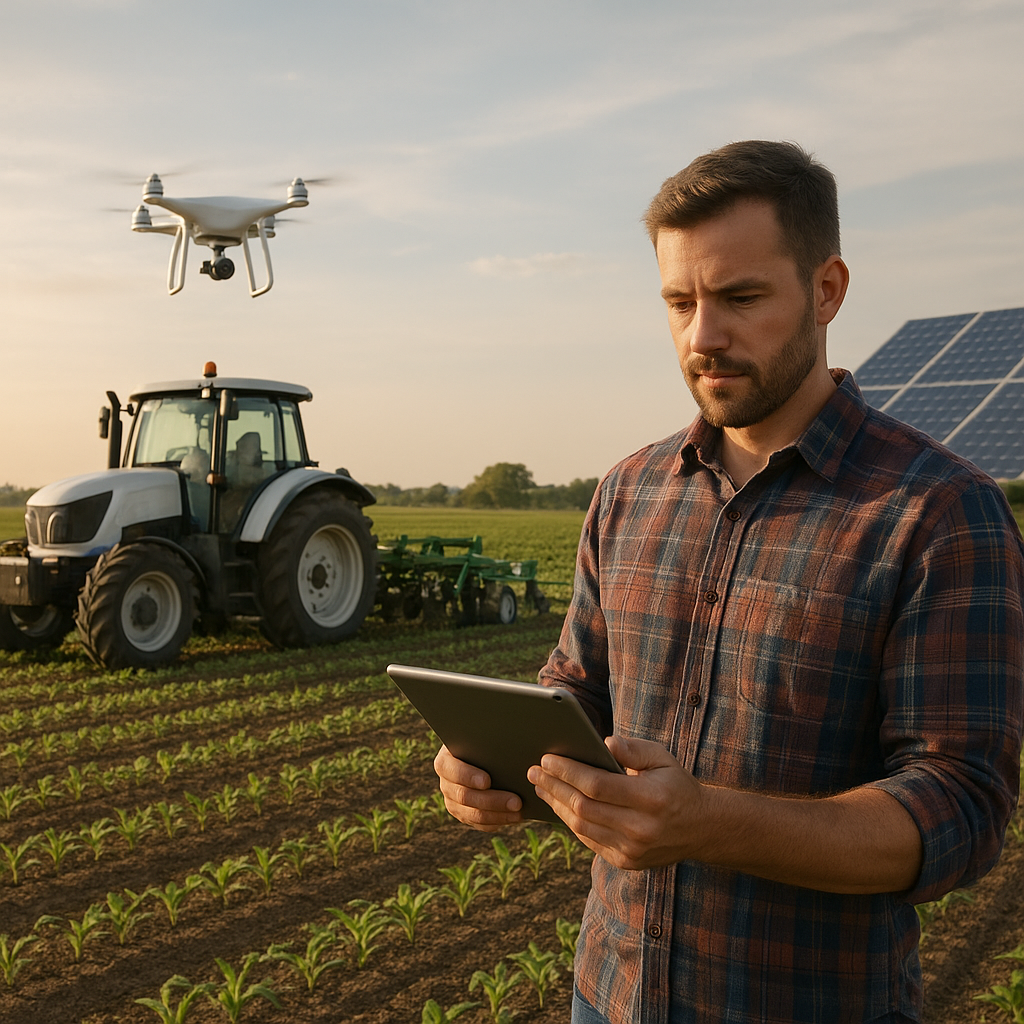
Across the globe, agriculture is undergoing a profound transformation. From satellite-guided tractors to climate-resilient seeds, a new generation of tools is helping farmers produce more food with fewer resources. Platforms like agro-world.com connect innovators, growers and advisors, accelerating the spread of practical solutions. These changes are not only about higher yields: they also aim to protect soils, reduce emissions, save water and improve rural livelihoods. As the world’s population continues to grow and the climate becomes less predictable, farming innovations are emerging as one of the most powerful levers for a safer, more sustainable future. Below are some of the most important breakthroughs that are already reshaping how food is grown, traded and consumed.
Precision agriculture and data‑driven farming
One of the most influential changes in modern farming is the rise of precision agriculture. At its core, precision agriculture is about giving each plant what it needs, exactly when it needs it, and in exactly the right place. Instead of treating a field as a single uniform area, farmers gather detailed data on soil, moisture, plant health and yield variations.
Today, satellites, drones and on‑field sensors continually measure factors such as soil moisture, leaf color, plant height and temperature. This information is integrated into farm management software that creates high‑resolution maps. With these maps, farmers can adjust fertilizer, seed density and irrigation rates on a square‑meter basis, rather than applying a single rate across the whole field.
Variable‑rate application technology allows machinery to change input levels automatically while moving across the field. In practice, that means less fertilizer in areas that naturally yield well, and more where the soil is weaker. The result is higher efficiency, lower costs and reduced environmental impact from nutrient losses. Data‑driven farming also helps growers anticipate pest outbreaks or disease pressure, enabling targeted action instead of blanket treatments.
As artificial intelligence and machine learning tools mature, they can analyze years of field data alongside weather and market information. These systems generate recommendations for optimal planting dates, crop rotations and harvest times, tailored to each farm’s conditions. What used to be guesswork is increasingly supported by real‑time, evidence‑based decision making.
Smart machinery, robotics and automation
Modern farms are becoming more mechanized and automated, especially where labor is scarce or expensive. GPS‑guided tractors can drive along perfectly straight lines, reducing overlaps and missed strips that waste fuel and inputs. Auto‑steer systems free the operator to focus on monitoring the implement, rather than constantly correcting the steering wheel.
Robotics is moving from experimental plots to commercial fields. Autonomous weeders use cameras and machine vision to distinguish weeds from crops, then remove the weeds mechanically or with precise micro‑doses of herbicide. This innovation can significantly cut chemical use while saving countless hours of manual labor.
In specialty crops like fruits and vegetables, harvest is often the most labor‑intensive and costly phase. Robotic harvesters, equipped with sensitive grippers and advanced sensors, are improving their ability to pick ripe produce without damage. While still developing, these machines already supplement human crews in some orchards and greenhouse operations.
On dairy farms, automated milking systems allow cows to choose when to be milked, reducing stress and giving farmers continuous data on milk yield, quality and animal health. Feeding robots and manure‑handling systems further reduce workload and enable more precise nutrition and environmental control. Together, these machines help maintain consistent performance and animal welfare, even on very large farms.
Climate‑smart and regenerative practices
With climate change intensifying droughts, floods and heat waves, farming innovations must also strengthen resilience. Climate‑smart agriculture aims to boost productivity, enhance adaptation and lower emissions at the same time. A key aspect is the shift toward regenerative farming practices that restore soil health rather than depleting it.
Cover crops, reduced tillage and diverse crop rotations protect soil from erosion, increase organic matter and improve water retention. Healthier soils act like a sponge, absorbing rainfall and releasing it gradually to plants. They also store more carbon, helping to offset greenhouse gas emissions. Farmers are experimenting with multispecies cover crop blends that support beneficial insects, suppress weeds and feed soil microbes.
Agroforestry systems, which integrate trees with crops or livestock, provide shade, wind protection and additional products such as fruit, timber or fodder. Trees help moderate microclimates, capture carbon and stabilize slopes. In many regions, combining trees with grazing animals or perennial crops has become an effective buffer against weather extremes.
Another important innovation is improved water management. Drip irrigation delivers water directly to plant roots, reducing evaporation and runoff. Sensors track soil moisture in real time, so irrigation is activated only when necessary. In arid and semi‑arid areas, these techniques can double water‑use efficiency while maintaining or increasing yields.
New genetics, seeds and biological solutions
Advances in plant breeding and genetics are giving rise to new varieties that are more resilient, nutritious and productive. Traditional breeding techniques have been greatly accelerated by genomic tools that identify useful traits, such as drought tolerance or disease resistance, with unprecedented speed and precision.
In many crops, shorter growth cycles enable farmers to harvest earlier, avoid late‑season heat or fit an additional crop into the year. Some varieties are tailored for low‑input systems, thriving with reduced fertilizer or limited irrigation. Others are enriched with vitamins, minerals or healthier fats, addressing both productivity and nutrition.
Beyond genetics, biological inputs are gaining ground as alternatives or complements to chemical fertilizers and pesticides. Microbial inoculants can help plants access nutrients, fix nitrogen or fend off soil‑borne diseases. Biostimulants made from seaweed extracts, beneficial fungi or plant compounds support root growth and stress tolerance.
Biocontrol agents, such as predatory insects, parasitic wasps and microbial pesticides, provide targeted pest suppression. They fit well within integrated pest management strategies that rely on monitoring and thresholds rather than routine spraying. While not a complete replacement for synthetic products, biologicals are expanding the toolbox for sustainable crop protection.
Digital platforms, marketplaces and farm management
Alongside physical technologies, digital platforms are transforming how farmers access information, services and markets. Farm management software centralizes data on fields, inputs, machinery, employees and finances. With all records in one place, producers can track costs per hectare, compare performance between fields and document practices for certification schemes.
Mobile applications offer localized weather forecasts, pest alerts and agronomic advice, tailored to crop and region. Smallholder farmers benefit from simple tools that work on basic smartphones and function even in low‑bandwidth environments. These apps shorten the feedback loop between research, extension services and farmers’ daily decisions.
Online marketplaces connect producers directly with buyers, from food processors to restaurants and consumers. Transparent listings of quantity, quality and price reduce information asymmetry and can improve farmgate prices. Some platforms also coordinate logistics, providing shared storage, aggregation and transport services that were previously out of reach for smaller farms.
Digital traceability systems, using barcodes or QR codes, allow end buyers to see where and how food was grown. This builds trust and supports differentiated products such as organic, fair‑trade or low‑carbon foods. For farmers who meet these standards, traceability can unlock premium markets and long‑term relationships with conscious consumers.
Indoor farming, greenhouses and vertical systems
In many regions, arable land and clean water are limited, while urban populations keep growing. Indoor farming technologies, including advanced greenhouses and vertical farms, offer one response to these pressures. By tightly controlling temperature, humidity, light and nutrients, growers can produce high‑value crops year‑round, close to where people live.
Modern greenhouses use climate computers to adjust ventilation, heating, shading and irrigation based on sensor data. Combined with hydroponic or aeroponic systems, they deliver nutrients directly in water, minimizing soil‑borne diseases and enabling extremely efficient water use. Yields per square meter far exceed those of open‑field production for many vegetables and herbs.
Vertical farming takes this concept further by stacking growing layers in tall structures or warehouses. LED lighting tuned to specific wavelengths supports photosynthesis with less energy. While energy use remains a challenge, improvements in lighting efficiency and integration with renewable power are gradually improving the economics.
Indoor systems are particularly valuable in harsh climates, polluted environments or dense cities. They can shorten supply chains, reduce food waste and ensure a steady supply of fresh produce. In combination with traditional agriculture, they diversify production and enhance food system resilience.
Innovations in livestock and animal welfare
Livestock farming is also evolving through new technologies and management approaches. One major trend is the use of sensors and monitoring systems to support animal welfare and productivity. Wearable devices on cows, sheep or goats track activity, rumination, temperature and location. Algorithms interpret these signals to detect heat, illness or stress earlier than visual observation alone.
Precision feeding systems deliver customized rations to individual animals or groups, optimizing growth, milk production and feed conversion. By adjusting feed composition based on performance data, farmers can reduce waste and minimize nutrient losses to the environment. Improved nutrition also contributes to lower methane emissions per unit of meat or milk.
Genetic selection tools help breeders focus simultaneously on productivity, health and robustness. Selecting animals with better disease resistance, fertility and longevity reduces the need for antibiotics and replacement stock. In many cases, this leads to more stable herds and lower overall costs.
There is also rising interest in alternative proteins, such as plant‑based meat analogues and fermentation‑derived ingredients. While these products do not replace traditional livestock entirely, they diversify protein sources and can reduce pressure on land and water. Together, these developments point towards more efficient and welfare‑oriented animal production systems.
Social innovation, cooperation and knowledge sharing
Technological breakthroughs alone do not guarantee change; social innovation and collaboration are equally important. Farmer cooperatives and producer organizations help members share machinery, inputs and knowledge. By aggregating demand, they negotiate better prices and access credit or insurance that would be unavailable to individuals.
Participatory research and on‑farm trials bring farmers into the innovation process, ensuring that new practices are practical and context‑appropriate. Peer‑to‑peer learning groups, field schools and demonstration farms accelerate adoption by allowing farmers to observe results first‑hand.
Education and training are essential for making full use of new tools. Digital literacy, basic data skills and an understanding of agronomy help producers interpret information rather than relying solely on external advisors. As younger generations return to or remain in rural areas, they often become drivers of change, introducing fresh ideas and entrepreneurial models.
Public policies that support experimentation, risk‑sharing and infrastructure investment can amplify the impact of innovation. When governments, private companies, researchers and farmers align their efforts, they create ecosystems where promising ideas can scale rapidly and sustainably.
Looking ahead: building a sustainable farming future
Farming innovations are not isolated gadgets; they are interconnected pieces of a broader transformation. Precision tools, robotics, regenerative methods, new genetics, digital platforms, indoor systems and social cooperation all reinforce each other when thoughtfully combined. The most successful farms of the future are likely to be those that integrate technology with ecological principles and local knowledge.
As climate risks intensify and markets evolve, adaptability becomes a crucial asset. Continuous learning, experimentation and collaboration will be needed to refine and spread solutions that work in diverse environments. By embracing these innovations, agriculture can move toward a model that is more productive, more resilient and more respectful of natural resources.
Ultimately, the way food is grown affects everyone, from farmers and rural communities to urban consumers. Supporting and adopting effective farming innovations offers a path toward secure harvests, healthier diets and thriving landscapes. The choices made today in fields, barns and greenhouses around the world will shape the stability and prosperity of tomorrow’s global food system.