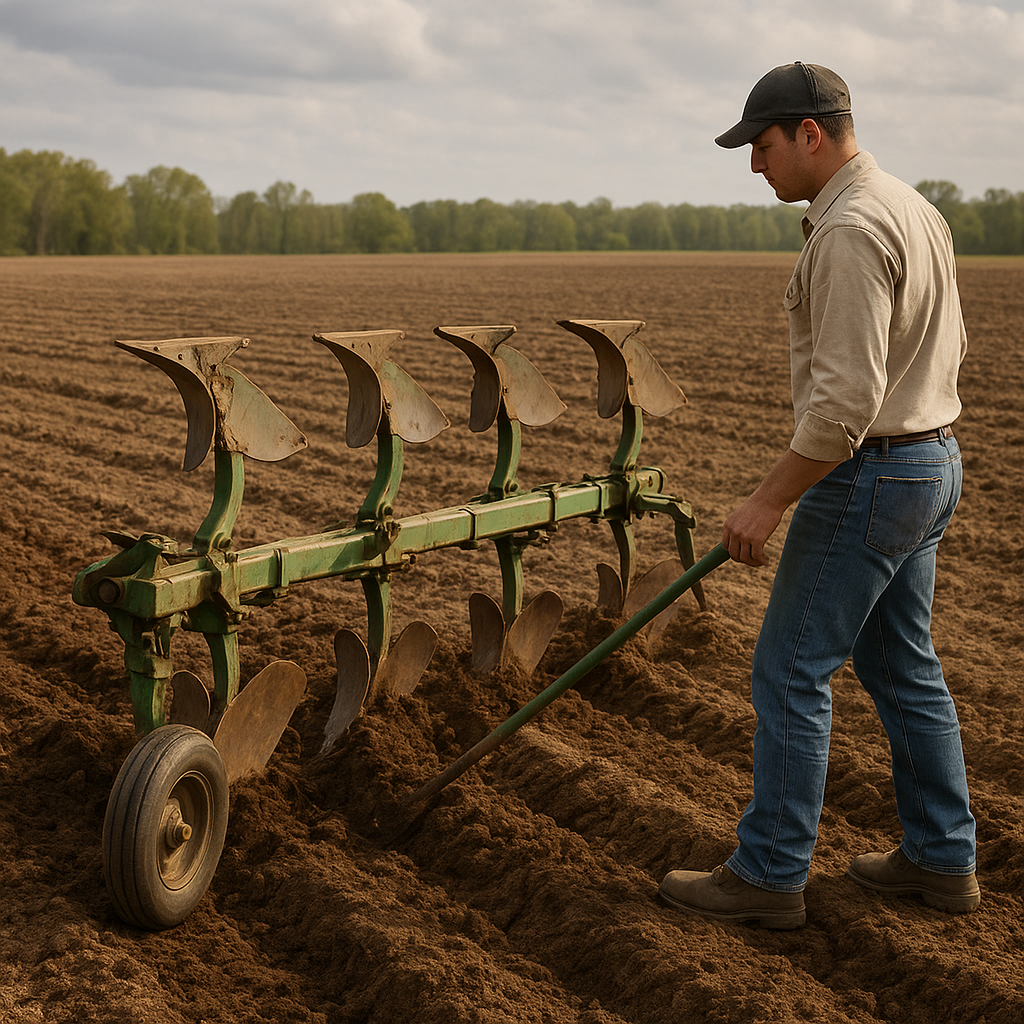
Mastering the art of plowing requires more than raw power; it demands a precise approach to ensure each furrow is cut at a consistent depth. Whether you operate a two-bottom or multi-furrow plow, achieving even depth control can improve soil health, reduce fuel consumption and protect equipment longevity.
Understanding Weight Distribution
Proper weight distribution plays a pivotal role in maintaining a uniform plowing depth. An imbalanced plow can cause one side to ride too high, leading to shallow furrows, while the other side cuts too deep, which may compact lower layers or overstrain mechanical parts.
Center of Gravity
- Locate the plow’s center of gravity: It should align with the tractor’s drawbar pivot point to minimize pitching.
- Adjust side-to-side balance: If one wing of a multi-furrow plow carries excessive weight, use the adjustment bolts on the coulter bracket or frame shims to level the machine.
Front-to-Back Balance
- Check the hitch height: A high hitch point lifts the front, reducing cutting depth; a low hitch may cause the plow to dive.
- Use tractor ballast: Front or rear ballast weights can shift the tractor’s axle load to help keep the plow blade stable.
Adjusting the Plow Frame
After establishing basic balance, fine-tune the plow frame to respond uniformly across all furrows. This process involves mechanical adjustments and careful measurement.
Frame Gauge Wheels
- Set gauge wheels to ride at equal heights: This provides a reference point to control plow depth accurately.
- Verify vertical travel: The wheels should move freely but not bottom out under full load.
Depth Adjustment Mechanisms
- Inspect the depth control lever: Ensure it engages smoothly without slack or jump.
- Use graduated settings: Many plows offer numbered holes for incremental depth changes. Record each setting to replicate optimal performance on similar soil types.
Testing and Fine-Tuning Depth Control
Once your plow appears balanced and the frame is adjusted, field-testing is essential. Conduct a systematic trial to identify inconsistencies and make final tweaks.
Trial Run on a Test Strip
- Mark a straight reference line: Drive the tractor along this line to assess plow performance side-to-side.
- Measure furrow depth: A simple depth gauge or a ruler can reveal unevenness greater than 1–2 centimeters, which may require correction.
Evaluating Soil Conditions
- Account for soil variance: Clay, loam and sandy soils each exert different resistance on the moldboard.
- Adjust wing angles: In heavier soils, close the wing angle slightly to reduce draft force and stabilize depth.
Maintenance and Troubleshooting
Consistent performance depends on regular maintenance and prompt troubleshooting of any emerging issues. A neglected plow is more likely to wander in depth and cause uneven furrows.
Blade and Moldboard Care
- Sharpen or replace share points: Worn points increase draft and can lift one side of the plow.
- Inspect moldboards: Cracks or dents can disturb the soil flow and disrupt depth consistency.
Hydraulic System Check
- Scan for leaks: Low hydraulic pressure will affect depth control cylinders, leading to unpredictable plow movement.
- Bleed air from lines: Entrapped air can cause jerky adjustments, making depth control unreliable.
Frame and Hitch Wear
- Examine hitch pins and bushings: Excessive play can shift the plow under load, altering the cutting angle.
- Tighten hardware: Loose bolts or worn brackets often go unnoticed until uneven depth becomes a chronic issue.
Advanced Techniques for Expert Operators
Seasoned plow operators can apply specialized methods to gain further control and efficiency.
Spring-Loaded Wing Assist
- Install tension springs: They help counteract the natural tendency of plow wings to rise in heavier soils.
- Adjust spring preload: Fine-tune the tension so the spring engagement is smooth and matches field conditions.
Use of GPS and Auto-Steer Systems
- Implement GPS guidance: Precise tracking ensures each pass overlaps correctly, maintaining constant plow angle and depth.
- Auto-depth control modules: Advanced systems use hydraulic feedback to keep the plow at a preset depth automatically.
Soil Moisture Sensors
- Monitor real-time moisture: Dry soil is less resistant, allowing deeper cuts; wetter soil increases drag and may require shallower settings.
- Adapt on the go: Some sensor arrays can interface with your tractor’s control system to dynamically adjust depth as moisture changes.
Maximizing Productivity with Consistent Depth
Achieving consistent plow depth enhances seedbed preparation, improves moisture retention and reduces the need for reworking fields. By focusing on balance, adjustment, testing and maintenance, you’ll maintain an efficient plowing operation and extend the life of your equipment.
Key takeaways:
- Check and adjust weight distribution before every season.
- Use mechanical frame adjustments and gauge wheels for accurate depth setting.
- Perform test strips and measure furrow depth systematically.
- Maintain plow components and keep hydraulics in top condition.
- Explore advanced aids like GPS, springs and moisture sensors for peak performance.