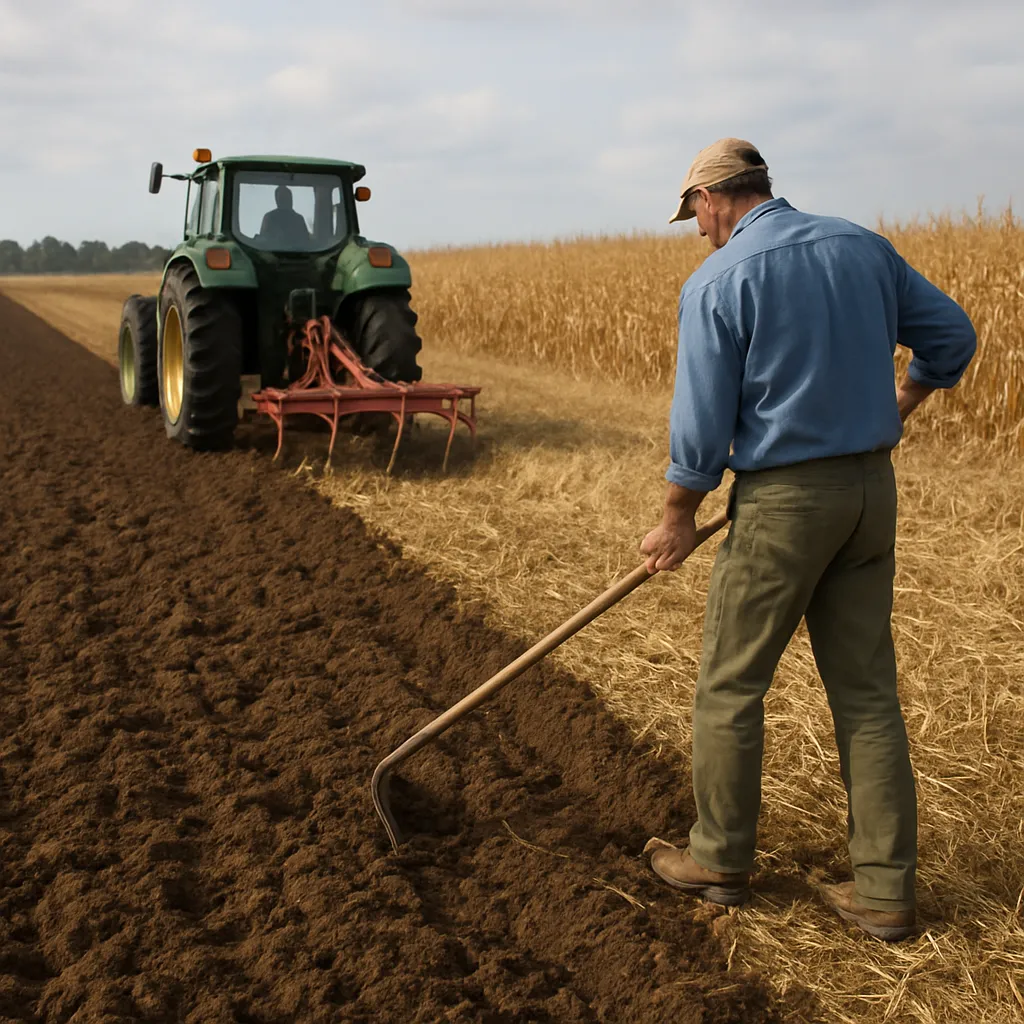
Effective management of field edges is essential for any operator aiming to maximize productivity and preserve soil health. Precise attention to boundary lines not only reduces the risk of equipment damage but also safeguards adjacent properties and prevents losses caused by soil erosion. This guide presents actionable insights, practical tips, and technological solutions designed to help you maintain clear demarcations and optimize every pass of the plow.
Understanding Boundary Issues Around Plowed Fields
When you plow too close or too shallow at the edge, several problems can arise. First, uneven soil turnover on the border strip can lead to water run-off, accelerating soil erosion and degrading soil structure in critical areas. Second, slipping wheels or contact between plow parts and boundary markers often results in costly equipment damage. Third, weed seeds and crop residues from adjacent land may invade your field if buffer zones aren’t maintained. Finally, inaccurate plowing lines can reduce overall crop yield by leaving unplowed strips or by creating overly compacted edges that hamper root growth. Recognizing these challenges is the first step toward implementing reliable solutions.
Pre-Plowing Preparations for Accurate Edges
Conducting Detailed Boundary Mapping
Before the season begins, invest time in boundary mapping. Walk the perimeter with flags or stakes at consistent intervals—ideally every 10 to 20 meters. Record these points using a handheld device or a smartphone app that supports high-resolution mapping. Ensure every marker is visible and secured deep enough to withstand weather events.
Utilizing GPS Guidance Systems
Modern tractors can integrate with GPS guidance systems to maintain a constant offset from boundary lines. Calibrate your auto-steer equipment to recognize the flagged coordinates. With a virtual fence set up in the tractor’s control unit, you’ll receive visual or audible alerts if you venture too close to a boundary or skip a swath.
Inspecting and Calibrating Equipment
Before you start plowing, conduct a thorough inspection of the plow blades, coulters, and hitch points. A well-adjusted blade angle ensures uniform soil turnover along the edge. Check hydraulic lines, tire pressures, and hitch alignment to guarantee the implement tracks accurately behind the tractor. Document any adjustments in your maintenance schedule log.
Field Techniques for Managing Borders
Establishing Headland Management Practices
Using headland management techniques helps you maintain clean, straight edges. Begin by plowing a wider outer pass—commonly called the headland—around the entire field perimeter. This extra buffer makes it easier to turn the tractor and line up subsequent passes without compromising the edge.
Edge Trimming and Cleanup
After completing the main passes, use a light cultivator or a finishing harrow to trim any unturned strips near fences or hedgerows. This second pass should remove large clods and smooth the soil surface. Be cautious not to over-cultivate—excessive passes can lead to crop yield penalties from overworked soil near boundary zones.
Implementing Double Pass Strategies
For fields with irregular shapes, a double pass strategy can offer more precision. First, plow along the inner edge of the boundary marker at a shallow depth to establish a guide furrow. Then, reposition the plow to the desired working width and complete the primary tillage. The guide furrow will help align the implement and prevent drift into non-target areas.
Leveraging Technology for Better Results
Precision Farming Platforms
Connect your equipment to a precision farming platform that aggregates data on soil conditions, machine performance, and boundary adherence. Analyze satellite imagery to detect potential erosion hotspots or compaction zones near borders. Use these insights to adjust plowing depth and speed accordingly.
Drones and Aerial Scouting
Deploy drones to perform aerial surveys, creating orthomosaic maps of your fields. This bird’s-eye view highlights irregularities in your plowing pattern and reveals areas where buffer zones may be too narrow. By combining drone imagery with on-the-ground observations, you can refine your boundary management plan for the next operation.
Automated Alerts and Geo-Fencing
With geo-fencing technology, you can set up virtual barriers that trigger alerts whenever your machinery crosses a predefined boundary. These real-time notifications reduce the risk of unintended encroachment onto neighboring property and help you stay compliant with local environmental compliance regulations.
Post-Plowing Maintenance and Care
Proper attention to borderline areas after plowing ensures long-term field health. Immediately pack and level the edge strips to retain moisture and reduce evaporation. Apply a light cover of organic mulch or incorporate cover crop seeds along the perimeter to prevent soil erosion until the next planting season. Regularly inspect fence lines, hedgerows, and markers to ensure they remain intact and visible.
Developing a Sustainable Boundary Management Plan
Integrating these best practices into a formal plan can streamline field operations year after year. Document your steps—from boundary mapping to post-plowing care—and review performance metrics such as fuel consumption, soil loss estimates, and equipment upkeep costs. Embrace principles of precision farming and continuous improvement to protect your land, optimize resource usage, and enhance profitability.