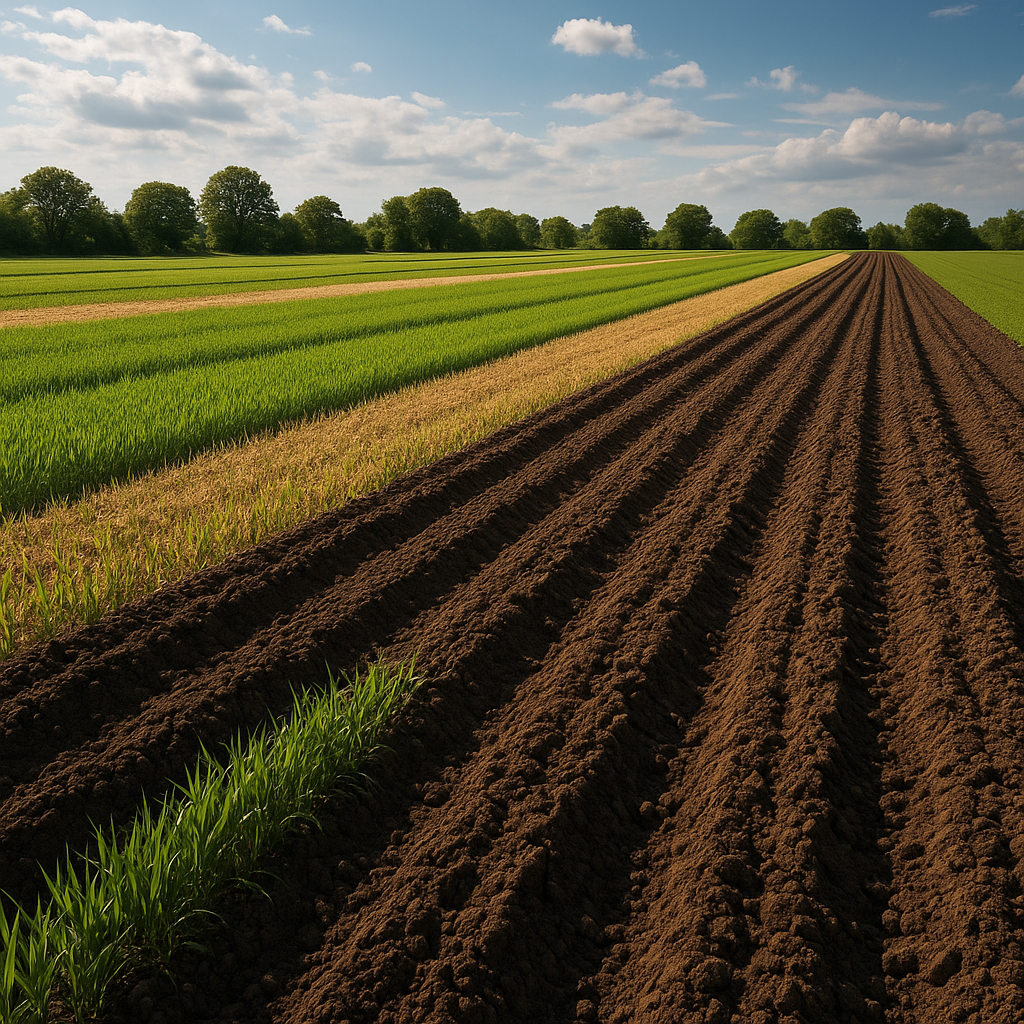
Plowing in strips is a time-tested agricultural practice that involves dividing a field into alternating zones of plowed and unplowed land. By combining traditional methods with modern insights, farmers can optimize soil health, conserve critical resources, and boost overall productivity. This article explores the fundamental principles, practical methods, and compelling benefits of strip plowing, offering tips to enhance long-term farm performance.
Understanding the Concept of Strip Plowing
Strip plowing, also known as contour or slot plowing in certain contexts, refers to tilling specific bands or strips of a field while leaving adjacent strips undisturbed. Unlike full-field plowing, which disrupts the entire surface, this approach carefully balances cultivated and protected areas.
Origins and Evolution
Historically, farmers observed that constant tillage led to severe erosion and loss of fertility. Early innovations in contour farming and terracing evolved into strip plowing as a practical compromise between complete cultivation and total conservation. Modern machinery and precision GPS technology now allow for greater accuracy in strip width, placement, and depth, refining the process beyond its humble beginnings.
Main Objectives
- Soil conservation: Reducing topsoil loss on slopes.
- Water management: Improving infiltration and reducing runoff.
- Resource efficiency: Lowering fuel use and labor requirements.
- Yield optimization: Balancing aeration benefits with moisture retention.
Techniques and Best Practices for Strip Plowing
A successful strip plowing operation depends on meticulous planning, proper equipment, and adaptive techniques. Below are key considerations to achieve consistent results and long-term benefits.
Field Assessment and Planning
- Topography mapping: Use GPS and drone imagery to identify slope angles and natural drainage paths.
- Soil sampling: Test nutrient levels and organic matter content in both planned plow and non-plow strips.
- Crop rotation strategy: Align strip orientation with crop sequences to maximize moisture retention and minimize pest migration.
Choosing Strip Dimensions
Optimal strip width typically ranges from 10 to 30 meters, but factors such as equipment size, field shape, and rainfall patterns may dictate adjustments. Narrower strips enhance water control on steep slopes, while wider strips reduce boundary complexity in flatter areas.
- Steep terrain: 10–15 meters per strip.
- Gentle slopes: 20–25 meters.
- Level ground: up to 30 meters to streamline operations.
Equipment and Calibration
Selecting the right plow type and ensuring accurate setup is crucial for uniform strip depths and minimal overlap.
- Moldboard vs. chisel plow: Moldboard provides deeper inversion, while chisel conserves surface residue.
- Hydraulic markers: Establish clear boundaries to guide each pass.
- GPS auto-steer systems: Maintain precision and reduce operator fatigue.
Operational Tips
- Start along contours: Follow elevation lines to reduce erosion risk and enhance structure formation.
- Alternate strip direction annually: Prevent compaction and promote uniform nutrient distribution.
- Monitor weather forecasts: Avoid plowing wet fields, which can lead to smearing and reduced efficiency.
Environmental and Financial Advantages
When applied correctly, strip plowing delivers a dual payoff: improved environmental stewardship and solid economic returns.
Enhanced Conservation
- Reduced runoff: Unplowed strips act as buffer zones, slowing water flow and trapping sediment.
- Increased infiltration: Plowed strips absorb moisture while adjacent areas retain organic mulch.
- Habitat preservation: Undisturbed strips provide corridors for beneficial insects and microfauna.
Soil Health and Sustainability
Maintaining alternating plowed and residue-covered strips fosters a balanced ecosystem within the field. The unplowed zones protect microbial communities and fertility, while tilled areas encourage root penetration and aeration. Over time, this synergy enhances long-term sustainability and reduces reliance on chemical amendments.
Economic Gains
- Lower fuel consumption: Less ground to cover equals significant diesel savings.
- Reduced labor costs: Faster completion times and fewer equipment passes.
- Higher yields: Better moisture management and soil quality lead to improved crop performance.
Risk Mitigation
By diversifying ground conditions within each field, strip plowing reduces the impact of extreme weather events. In drought seasons, plowed zones capture limited rainfall efficiently, while during heavy rains, unplowed belts buffer against flooding and topsoil loss.
Advanced Strategies and Future Trends
As technology evolves, so do methods to refine strip plowing for greater precision and adaptability.
Data-Driven Management
- Yield mapping: Analyze harvest data to adjust strip widths based on productivity hotspots.
- Soil moisture sensors: Deploy in both strip types to optimize plowing schedules and prevent over- or under-tillage.
- Machine learning models: Predict optimal strip patterns by integrating weather, topography, and soil health metrics.
Integration with Conservation Practices
Combining strip plowing with cover crops, no-till zones, or agroforestry belts amplifies environmental benefits. Cover crops in unplowed strips can fix nitrogen, suppress weeds, and boost organic matter, creating a multi-layered approach to field management.
Community and Policy Support
Governments and agricultural organizations increasingly recognize strip plowing as a best practice for sustainable farming. Incentive programs and cost-share initiatives help farmers invest in precision equipment and training, fostering wider adoption and collective gains in soil conservation.
Implementing strip plowing requires planning and commitment, but the payoff in productivity, conservation, and cost savings makes it a compelling choice for modern agriculture. By integrating proven techniques with emerging technologies, farmers can cultivate resilient, high-yield systems that stand the test of time.