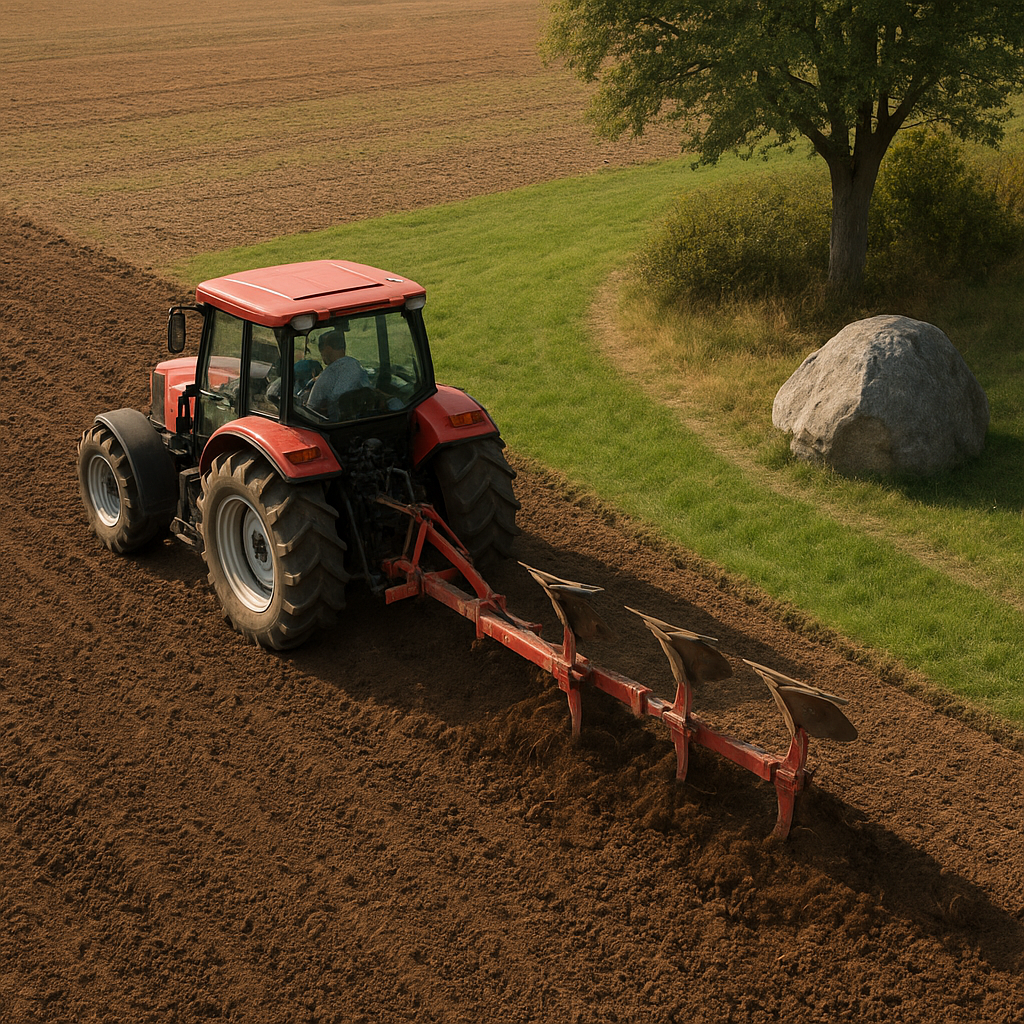
Plowing around obstacles and boundaries demands a combination of skill, proper equipment, and careful planning. Whether you’re working on a residential driveway, a rural field, or a roadside right-of-way, mastering these techniques will help you achieve uniform passes, avoid damage, and maintain precision in every maneuver. This guide dives deep into selecting the right gear, refining your approach, and adopting best practices for safe, efficient plowing.
Selecting the Right Equipment for Obstacle Navigation
Choosing the proper combination of tractor and plow is the foundation of successful obstacle management. A mismatch can result in uneven performance, excessive wear, and potential safety hazards. Consider these factors when equipping your operation:
Plow Design and Features
- Plow blade curvature: A medium moldboard profile works well for standard soil, but sharper curvature helps throw material farther from obstacles.
- Adjustable wing width: Allows you to reduce cut size when working next to boundaries.
- Hydraulics: Quick wing-folding capabilities enable rapid width changes when approaching tight spots.
- Skid shoes and clearance skids: Prevent blade-to-ground contact on uneven surfaces.
- Replaceable wear edges: Keeps your cutting edge sharp without replacing the entire blade.
Tractor Considerations
- Horsepower: Ensure the tractor can handle peak loads, especially in heavy or frozen material.
- Four-wheel drive or tracks: Increase traction on slippery, sloping, or uneven terrain.
- Weight distribution: Correct ballast balances front and rear axles, reducing nose-lift when turning.
- Three-point hitch vs. front-mount: A front-mount blade provides better visibility when approaching obstacles at the rear.
Techniques for Plowing Around Immovable Obstacles
Immovable objects like trees, utility poles, and concrete barriers require strategic planning to avoid damage and ensure operator safety. Master these methods to glide around obstacles with confidence:
Approach and Angle Adjustment
- Pre-mark obstacles with fluorescent flags or paint for clear visibility in low light.
- Gradually reduce the wing angle as you near an obstacle, limiting the blade’s lateral spread.
- Engage hydraulic float mode briefly to follow subtle ground contours without gouging.
- Apply slight reverse thrust if material begins to pack near the obstacle; this precision move prevents blockages.
Working in Tight Spaces
- Perform a “skim pass” with minimal depth and width to clear a path before full-depth plowing.
- Use a shorter wing extension or telescoping feature to match the exact gap between obstacles.
- Leverage a rearview camera or spotter to maintain safe clearance and avoid collisions.
- Backing and forward-backward sequences help you inch closer to tight boundaries while maintaining control.
Establishing and Respecting Boundaries
Boundaries—such as property lines, driveways edges, and sidewalks—must be respected both to avoid legal issues and to maintain a clean finish. Implement these best practices for boundary management:
Marking and Mapping
- Use survey stakes or permanent markers to delineate edges before the plowing season.
- GPS-guided systems can store boundary maps and automatically limit blade extension beyond property lines.
- Color-code stakes with durable vinyl flags—emphasizing boundary points to avoid accidental removal.
Maintaining Edge Consistency
- Sidehill plowing techniques: Tilt the blade slightly uphill or downhill to maintain a uniform cut along slopes.
- Feather the hydraulic controls to smooth transitions near edges, preventing abrupt material drop-offs.
- Deploy a marker wheel or edge guide attachment to automatically follow fence lines or curbs.
- Regularly check edges after each pass; small corrections are easier than large reworks.
Advanced Maneuvers and Safety Practices
Once you’ve mastered basic navigation, these advanced strategies will elevate your plowing efficiency and keep your operation safe:
Reverse Plowing Techniques
In some scenarios—such as narrow alleys or loading docks—it’s safer to plow in reverse. Adopt these tips:
- Install rear-mounted lighting and mirrors to improve rear visibility.
- Slow, controlled movement reduces risk of sudden impacts.
- Alternate forward and reverse strokes to prevent rut formation and tip-over hazards on slopes.
Communication and Signaling
Working near pedestrians, co-workers, or vehicles demands clear communication:
- Use two-way radios or hand signals to coordinate with spotters.
- Fit your tractor with audible alerts and a beeper when reversing.
- High-visibility clothing and safety cones around work zones reinforce safe boundaries.
Maintaining Efficiency and Reducing Wear
Long-term productivity hinges on good maintenance and smart operation. Follow these recommendations to minimize downtime and prolong equipment life:
Routine Inspections
- Check hydraulic hoses and fittings for leaks; replace any showing wear to prevent sudden failures.
- Examine blade welds and mounting bolts—tighten or replace as needed to avoid mid-season breakdowns.
- Assess skid shoe wear and adjust shoe height to preserve clearance and protect the moldboard.
Optimizing Work Patterns
- Plan your passes to minimize overlap and wasted time when repositioning around obstacles.
- Combine plowing with light grading or scraping in a single pass when soil conditions allow.
- Use weather forecasts to schedule plowing when ground moisture is ideal—too dry can cause dust, too wet leads to clods and compaction.
Environmentally Responsible Practices
Consider the impact on local flora, fauna, and waterways when plowing near natural boundaries:
- Maintain buffer zones around wetlands and streams to prevent sediment runoff.
- Use biodegradable hydraulic fluids and lubricants to reduce chemical hazards.
- Plan routes to avoid nesting sites and minimize disturbance to wildlife.
Developing expertise in plowing around obstacles and boundaries is a continuous process. By selecting the right equipment, mastering precise techniques, and emphasizing safety, you’ll achieve cleaner passes, fewer repairs, and maximum productivity on every job.