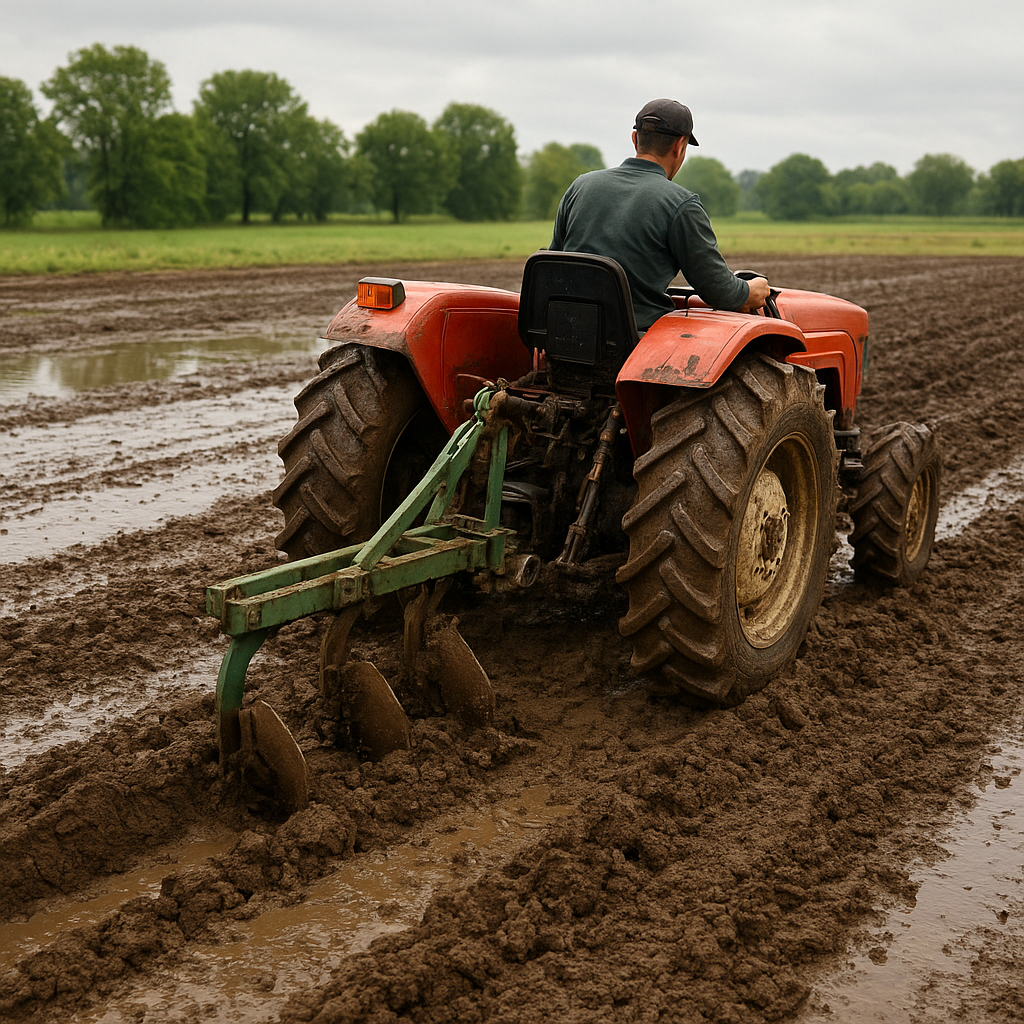
Replowing fields after rain presents both challenges and opportunities for optimizing soil structure and crop health. Proper timing, equipment selection, and technique ensure that waterlogged soils are turned efficiently without causing long-term damage. Implementing best practices can help farmers preserve soil integrity, boost productivity, and reduce the risk of erosion or compaction. This guide explores key considerations from assessing moisture levels to maintaining machinery post-operation.
Assessing Soil Moisture Levels
Before engaging in any field operations, it’s crucial to measure the moisture content of your soil accurately. Overly wet soils may smear or form clods, while too-dry conditions can result in poor seed-to-soil contact. Use a soil probe or a handheld moisture tester to record moisture readings at multiple depths and locations. Pay attention to:
- Rainfall distribution across the field
- Drainage patterns and low spots
- Recent irrigation or flood events
Look for signs of surface runoff or standing water that indicate saturated zones. Ideally, the moisture level should allow soil to crumble under light pressure rather than form sticky masses. This balance supports adequate aeration and reduces the risk of rutting once heavy machinery moves across the terrain.
Choosing the Right Equipment
Selecting the proper plow and attachments can make the difference between a successful pass and a damaging one. Modern plows offer adjustable features that help you adapt to varying field conditions. Key factors include:
- Plow type (moldboard, chisel, disk)
- Number and configuration of blades or tines
- Adjustable depth control mechanisms
- Compatibility with your tractor’s horsepower and traction capacity
For soils prone to heavy clays or high moisture, a chisel plow can break up dense layers without overturning large volumes. Disk plows handle residue well but may cause smearing if disks are dull or improperly aligned. Always verify that your tractor’s calibration settings match the plow’s requirements, ensuring consistent depth and angle across the entire frame.
Timing and Field Conditions
Deciding when to re-enter a field post-rain involves balancing soil workability with crop schedules. Early passes may interrupt microbial activity, while delays can delay planting windows. Consider these guidelines:
- Wait until water has infiltrated at least 4–6 inches below the surface
- Avoid replowing immediately after heavy downpours to prevent surface sealing
- Monitor weather forecasts for upcoming rain or frost events
- Plan operations during milder temperatures to reduce stress on both soil and equipment
Timing also affects weed germination. An early tillage pass can encourage weed emergence, allowing you to control sprouts before they establish. Conversely, waiting too long may necessitate additional herbicide applications or cultivation passes.
Proper Plowing Techniques
Maintaining Consistent Depth and Speed
Uniform plowing depth prevents uneven seedbeds and ensures balanced root development. Set your depth control to a level that addresses compaction layers without turning subsoil excessively. Operate at a stable forward speed—neither too fast nor too slow—to allow blades to cut cleanly and prevent undue wear. Key steps include:
- Engage cruise control or ground-speed management if available
- Monitor hitch settings and hydraulic flow to maintain consistent pressure
- Check rear wheel slip percentage to avoid rutting
Angle and Sequence Adjustments
Adjust the plow share angle so soil slices easily rather than smearing sideways. For multiple-bottom plows, stagger adjustments across the frame to reduce wheel track overlap. When covering large fields, plan your pass sequence to minimize travel time and fuel consumption. Working in a systematic “snake” pattern generally proves effective in avoiding unplowed strips.
Innovations and Advanced Strategies
Recent developments in precision agriculture offer tools that enhance replowing accuracy and environmental stewardship. Integrate GPS guidance systems to track every pass and avoid over-tilling. Variable-rate control can adjust depth in real time based on field mapping data, targeting compacted zones more aggressively while preserving healthy areas. Soil sensors embedded in the field can transmit moisture and temperature readings directly to your cab display, allowing on-the-fly modifications.
Maintenance After Replowing
Post-operation care ensures that your equipment remains in top condition for future work. Follow these maintenance steps:
- Clean off soil and residue from blades, frame, and hydraulic lines
- Inspect for bent or broken parts; replace worn-out components promptly
- Lubricate pivot points and bearings according to manufacturer guidelines
- Check tire pressure and drivetrain fluids on the tractor
Proper upkeep not only extends machinery life but also sustains safety and efficiency in subsequent passes. Storing gear under cover reduces corrosion and wear from environmental exposure.
Environmental Considerations
Replowing after rain affects more than just your immediate crop—it can influence runoff, nutrient leaching, and soil carbon content. Implement buffer strips or cover crops in low-lying areas to capture silt and nutrients. Contour plowing along natural land gradients reduces erosion risk. Aim to maintain organic matter by incorporating crop residues back into the soil, fostering long-term fertility and resilience.
Enhancing Long-Term Soil Health
Consistent implementation of best practices safeguards your fields against degradation. Rotate deep-tillage methods—alternating chisel passes with shallower disking—to balance soil structure improvement and organic retention. Monitor compaction zones annually using penetrometers to adjust your tillage regime. Combining strategic replowing with conservation measures builds a foundation for sustainable agriculture and reliable yields season after season.