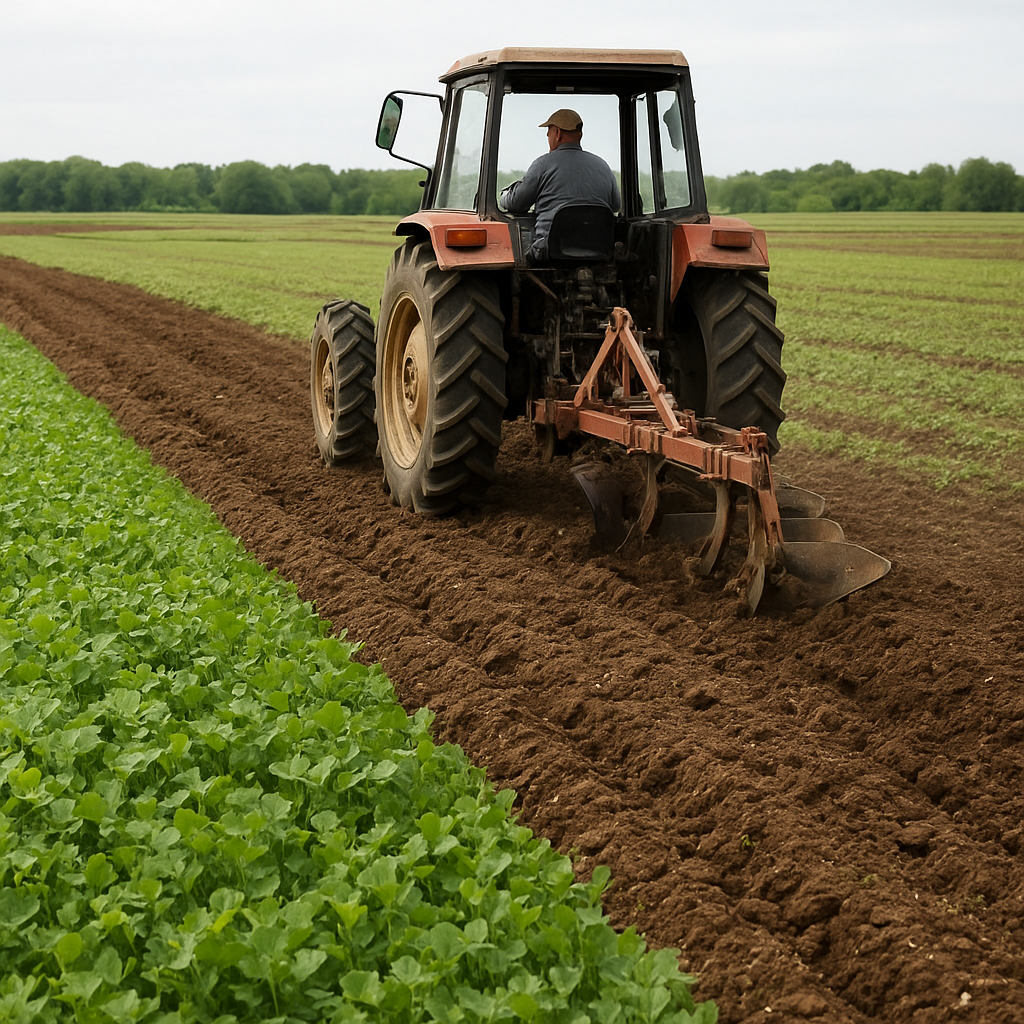
Integrating traditional plowing methods with effective crop cover management can significantly enhance soil health and long-term farm productivity. By carefully selecting cover crop species, timing plowing operations strategically, and managing residues, farmers can achieve a balance between immediate field preparation and sustainable soil conservation. The following chapters explore practical tips and techniques to help you harness the full potential of this combined approach.
Understanding the Benefits of Combining Plowing and Cover Crops
Plowing has long been recognized for its ability to break up compacted layers and prepare seedbeds. However, when integrated with cover crop management, it offers a suite of additional advantages:
- Fertility: Cover crops such as legumes fix atmospheric nitrogen, reducing fertilizer costs in subsequent cash crops.
- Structure: Root systems of cover plants enhance soil aggregation, improving aeration and root penetration.
- Moisture retention: Residue from cover crops acts as a mulch, slowing evaporation and conserving water.
- Erosion control: Living roots and surface residues protect against wind and water erosion, preserving topsoil.
- Biodiversity: Diverse root structures support beneficial soil organisms, boosting natural pest suppression.
By plowing under cover crops at the right stage, you can maximize nutrient release and organic matter incorporation, leading to improved crop yields and greater sustainability.
Choosing the Right Cover Crop Species
Selecting the most suitable cover crop requires an understanding of your field’s needs and climatic conditions. Common categories include:
- Legumes (e.g., clover, vetch) – excellent for nutrients via nitrogen fixation.
- Grasses (e.g., rye, oats) – strong root biomass that enhances soil structure and scavenges leftover nitrogen.
- Brassicas (e.g., radish, mustard) – deep taproots that alleviate compaction and suppress certain nematodes.
- Mixes – combining species delivers a broad spectrum of benefits, from moisture retention to pest control.
Consider the life cycle of your chosen species. For example, winter-hardy crops can protect soil over the dormant season, while summer covers make use of off-season moisture. Timing the planting immediately after harvest ensures optimal establishment and maximum biomass accumulation.
Timing and Techniques for Plowing with Cover Crops
Effective integration relies on synchronizing cover crop termination with plow operations:
- Termination stage: Plow when cover crops reach peak biomass but before seed set to prevent volunteer emergence.
- Depth settings: A plow depth of 15–20 cm is common, but adjust based on root depth and soil conditions. Excessive depth can disrupt beneficial layers, while shallow plowing may leave compaction zones intact.
- Equipment choice: Inversion plows bury residues, speeding decomposition but potentially exposing soil to erosion. Chisel or disc plows can mix residues more gently, maintaining some surface cover.
Always ensure your tractor and implement are correctly calibrated. Check for proper alignment and uniform depth across the field to avoid uneven seedbeds and potential drainage issues. Use GPS guidance if available to maintain straight passes and reduce overlaps.
Managing Residues and Nutrient Cycling
Residue from plowed-under cover crops serves as a vital source of organic matter and a slow-release nutrient bank:
- Decomposition rates: Warm, moist conditions accelerate breakdown. Monitor residue levels to avoid planting into excessive biomass, which can impede seed-to-soil contact.
- Nutrient release: Carbon-to-nitrogen ratios of cover species determine timing of nutrient availability. High C:N ratios (e.g., grasses) immobilize nitrogen initially, while low ratios (e.g., legumes) can release nitrogen rapidly.
- Supplemental fertilization: Adjust fertilizer applications based on expected nutrient contributions from cover crops. Soil testing helps quantify available nutrients and prevents over-application.
Proper residue management enhances organic matter content, supports soil microbial communities, and contributes to long-term productivity.
Field Equipment and Calibration
Guarding the efficiency of your combined plowing and cover cropping system requires well-maintained machinery:
- Tractor power and traction: Select a tractor with sufficient horsepower to handle heavy residue and plow depth without mechanical strain.
- Plow maintenance: Sharpen moldboards and shares regularly to ensure clean inversion and minimal soil disturbance.
- Calibration protocols: Before each season, test plow depth settings and gauge wheel pressures. Confirm that disc openers or coulters cut through residue effectively.
Regular maintenance reduces downtime, enhances profitability, and helps you meet narrow windows between cover crop termination and cash crop planting.
Seasonal Planning and Crop Rotation
Long-term success depends on integrating cover crops and plowing into a well-designed rotation:
- Sequence planning: Alternate deep-rooted species with shallow-rooted ones to address different soil layers and break pest cycles.
- Cover crop fallow periods: Use short-season covers where tight planting schedules demand rapid residue turnover.
- Weed management: Incorporate allelopathic species (e.g., mustard) to suppress weeds naturally, reducing herbicide dependence.
Effective rotation enhances weed management, reduces disease pressure, and maintains balanced nutrient cycling across years. Track performance indicators such as soil organic carbon, compaction levels, and crop yields to refine your strategy continuously.
Monitoring Soil Health and Adjusting Practices
Continuous assessment allows for adaptive management:
- Soil tests: Conduct annual tests for pH, organic matter, and macro- and micronutrients.
- Compaction checks: Use penetrometers before and after plowing to evaluate loosening effectiveness.
- Visual assessments: Observe residue distribution, seedling emergence, and early-season vigor as indicators of success.
With ongoing monitoring, you can fine-tune plow depth, cover crop species mix, and nutrient applications to achieve optimal results. Embrace innovation by trialing no-till versus inversion techniques on small strips before scaling up.