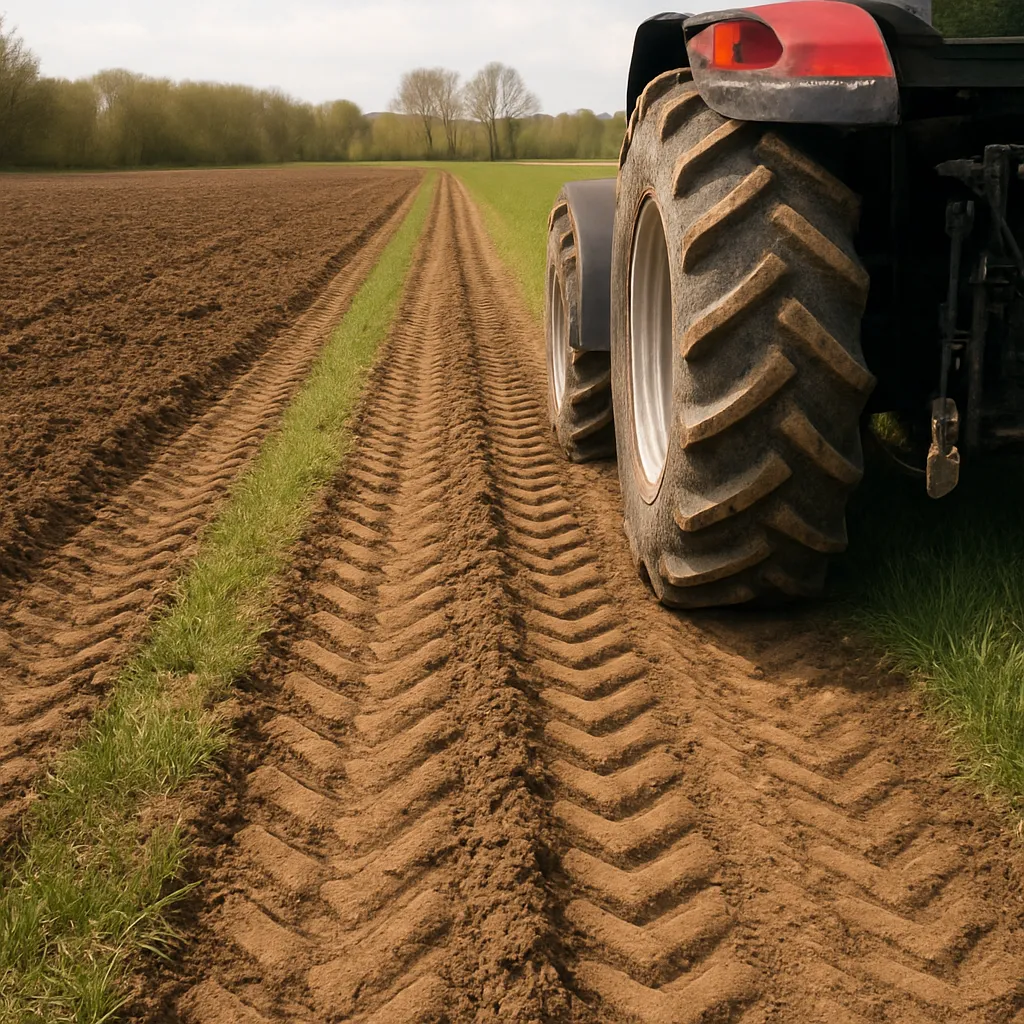
Managing heavy tractor traffic without compromising soil health is a critical challenge for modern farmers. Tire tracks can lead to persistent zones of hardpan, reducing water infiltration and root penetration. By applying targeted plowing methods and equipment choices, it’s possible to enhance long-term productivity and protect fragile fields from irreversible damage. The following guidance explores proven tactics and innovative approaches to help you safeguard your land from tire-induced soil degradation.
Understanding Soil Compaction on Tire Paths
When a tractor passes repeatedly over the same lane, the downward pressure can crush air-filled pores, destroying the natural structure of the soil. This harmful process hinders root growth and restricts gas exchange. Over time, fields with compacted tracks develop uneven moisture levels and become prone to surface runoff, erosion, and poor seed germination. Recognizing early warning signs—such as standing water in ruts after a light rain, stunted crop growth along wheel marks, or increased tractor slip—is essential to prevent lasting damage.
Compacted layers often occur within the top 5 to 20 centimeters, but in extreme cases can extend deeper, forming a plowpan. A firm below-surface horizon blocks roots and microorganisms, disrupting nutrient cycling. Hence, farmers must strive to maintain healthy pore connectivity and preserve soil aeration by adjusting field operations and machinery settings.
Identifying the Causes of Excessive Compaction
Diverse factors determine how severely soil compacts under tractor tires. Understanding these root causes allows for tailored mitigation strategies:
- Weight Load: High gross vehicle mass concentrates pressure on contact points, pressing particles tightly together.
- Soil Moisture Content: Both overly dry or saturated conditions increase susceptibility to compaction. Ideal tillage moisture is often near field capacity but without free water present.
- Tire Inflation and Flotation: Underinflated tires may reduce pressure per square centimeter, but can heat and degrade quickly. Overinflation concentrates force into narrow bands.
- Traffic Pattern: Repeated passes on identical tracks prevent natural recovery and exacerbate hardening.
- Plowing Depth and Frequency: Shallow or infrequent tillage may not break hardened layers, while too-frequent deep plowing can invert nutrient-rich horizons.
Evaluating these variables helps identify whether compaction is localized or widespread, and determines cost-effective countermeasures.
Effective Plowing Techniques to Minimize Compaction
Adopting precise plowing and tillage practices ensures tire paths remain permeable and resilient:
- Use controlled-traffic farming (CTF) to confine wheelings to permanent lanes, allowing the majority of the field to recover naturally.
- Implement strip-till in lieu of full-width tillage. This method disturbs only the seedbed zone, leaving inter-row soil structure intact.
- Adjust plowshare depth to match subsoil layering. Setting the blade just below compaction zones reopens pathways without unnecessary inversion.
- Alternate plowing direction seasonally. Rotating patterns distributes stress and prevents straight, deep ruts.
- Combine implements—such as cultivators with subsoilers—to simultaneously break compaction and incorporate residues, reducing passes.
- Maintain residue cover after harvest to protect against surface sealing and crust formation.
By refining these operations, you recover soil porosity efficiently and avoid creating a new hardened layer beneath the plow zone.
Selecting the Right Machinery and Tire Options
Equipment configuration significantly influences ground pressure and soil disturbance:
- Choose wide, high-flotation tires or dual wheels to spread axle load over a larger area, cutting down unit ground pressure.
- Consider tracks instead of tires on particularly wet or sensitive fields. Rubber tracks distribute weight more uniformly, reducing rut depth.
- Invest in variable ballast systems that let you adjust tractor weight according to soil conditions and tasks.
- Use tire pressure monitoring systems (TPMS) to ensure you’re operating within optimal PSI ranges. Adjust on-the-go to match changing soil moisture.
- Select implements engineered for reduced draft. Lower draft force means less wheel slip and reduced compaction risk.
Equipment choices tailored to specific soil types and cropping systems provide the foundation for sustainable traffic management.
Field Monitoring and Optimal Timing
Regular assessment of soil conditions guides precise intervention:
- Use penetrometers or cone testers to map compaction intensity and depth at multiple points along tire paths.
- Conduct soil moisture sampling before major fieldwork. Target operations when moisture levels are below problematic thresholds.
- Employ satellite imagery or drones equipped with multispectral cameras to identify stressed zones early in the season.
- Schedule primary tillage shortly before planting to reopen any crusted layers, but allow soil to settle for at least a week before seed placement.
- Adopt a seasonal maintenance calendar, balancing between fall subsoiling and spring shallow cultivations to optimize soil structure.
Timely interventions based on real-time data reduce the need for aggressive corrective measures later in the year.
Alternative Strategies and Advanced Practices
Innovative approaches can complement traditional plowing to further protect your fields:
- Implement cover crops with deep-rooting species like radish or chicory. Their taproots penetrate compacted layers, creating natural biopores.
- Deploy controlled traffic guided by GPS and auto-steer systems for centimeter-level accuracy, preserving permanent wheel tracks.
- Test biological soil amendments—such as mycorrhizal inoculants—to improve aggregate stability and water retention.
- Rotate heavy machinery routes annually, distributing compaction risk across different sectors.
- Use no-till or reduced-till systems in rotation with conventional tillage to maintain a balance between loosening and protecting the soil surface.
Combining mechanical, biological, and technological tactics maximizes resilience against wheel-induced stresses while supporting sustained yield growth.