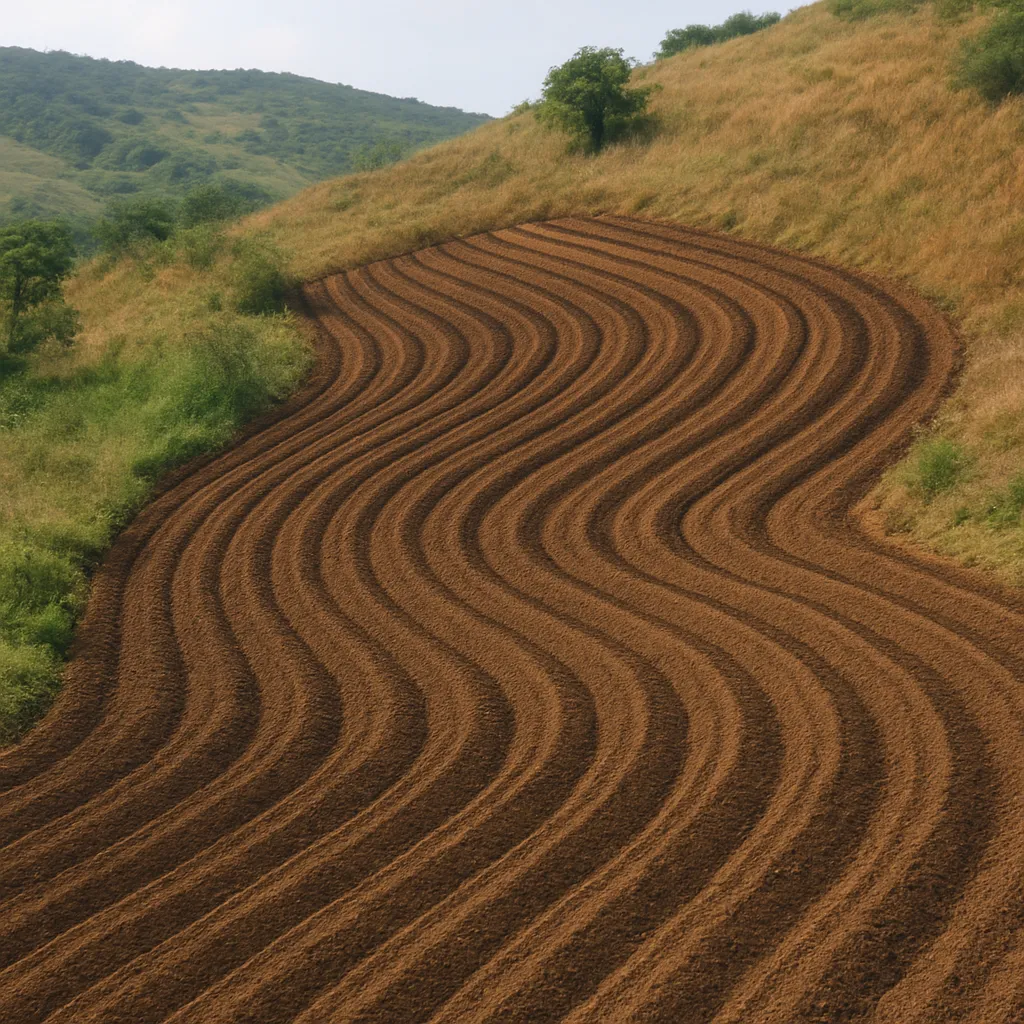
Contour plowing offers a practical strategy to **reduce soil erosion** and improve **water retention** on sloping terrain. By working with the natural topography, farmers can create ridges that run along elevation contours, effectively slowing down runoff and protecting the hillside environment. This article explores essential techniques, equipment considerations, and maintenance practices to help agricultural professionals and **sustainable agriculture** enthusiasts harness the full potential of contour plowing.
Benefits of Contour Plowing on Eroding Slopes
Implementing contour plowing on hillsides provides multiple advantages beyond mere surface aesthetics. This practice aligns with the land’s natural **water flow**, helping to intercept and redirect rainwater. As a result, contour plowing can:
- Minimize soil erosion: By slowing water velocity, the risk of topsoil displacement decreases substantially.
- Enhance moisture infiltration: Water has more time to seep into the ground rather than running off the slope.
- Boost soil fertility: Retaining organic matter and nutrients ups the chance for healthier crop growth.
- Support ecosystem health: Reduced sedimentation keeps nearby streams and waterways cleaner.
- Increase harvest yields: Even moisture distribution leads to more consistent plant development.
In addition, contour plowing can serve as part of a larger integrated system, such as combining cover crops or buffer strips to further stabilize the soil. Farmers who implement these measures often witness an overall improvement in land **resilience** against extreme weather events.
Implementing Contour Plowing Techniques
Before beginning, it’s crucial to perform a thorough site assessment. Identify the slope gradient, soil type, and existing drainage patterns. These factors determine the ideal plow orientation and ridge spacing.
Mapping and Planning
- Use a laser level or A-frame level to locate exact contour lines.
- Mark contour lines with colored flags or biodegradable paint.
- Plan the distance between ridges based on the slope’s steepness; typically **10–30 feet** apart.
Equipment Calibration
Properly adjusted machinery is key to creating uniform furrows. Check the following before beginning:
- Tilt settings on the plow beam to ensure furrows follow the contour lines precisely.
- Tire pressure on tractors to maintain consistent depth—and to avoid creating unintended gullies.
- Hitch height and drawbar alignment for smooth turning at the end of each pass.
Consider investing in GPS-guided systems if you manage large acreage. These **precision agriculture** tools can reduce human error and improve overall efficiency.
Working the Field
Follow these steps to execute contour plowing effectively:
- Drive slowly and steadily to maintain accurate tracking along contour marks.
- Complete each row without sudden turns; gradual, wide arcs prevent soil displacement at ridge ends.
- Adjust depth incrementally; deeper cuts may expose subsoil layers, while shallow cuts might not capture enough runoff.
After each pass, inspect the ridges visually to ensure uniform height and spacing. Inconsistent ridges can create low spots where water can channelize and cause erosion.
Maintenance and Best Practices for Long-Term Soil Conservation
Contour plowing is not a one-time solution. Continuous maintenance and adherence to best practices are essential to preserve the benefits and extend the life of your terraced ridges.
Regular Monitoring
Walk your fields periodically, especially after heavy rainfall, to look for signs of:
- Ridge collapse or weakening due to excessive moisture.
- Evidence of gully formation at the end of passes.
- Poor crop emergence in ridge troughs, indicating compaction or nutrient depletion.
Early detection of issues allows prompt corrective action, such as re-leveling the ridges or adding compost to nutrient-poor zones.
Complementary Conservation Measures
Enhance contour plowing with additional strategies:
- Cover cropping: Plant legumes or grasses during off-seasons to anchor soil and fix nitrogen.
- Crop rotation: Alternate deep-rooted and shallow-rooted plants to improve soil structure.
- Buffer strips: Establish grass or shrub barriers along the outer edge of fields to trap sediments.
Integrating these methods promotes a holistic approach to **soil health** and **water conservation**, delivering cumulative benefits over multiple seasons.
Adjusting to Changing Conditions
Climate variability and evolving land use can alter slope dynamics over time. Stay flexible by:
- Reassessing contour intervals if slopes become steeper due to land grading or other modifications.
- Upgrading equipment or adding sensors to improve precision under different weather patterns.
- Collaborating with agricultural extension services to adopt the latest research on hillside conservation.
By remaining proactive, land managers can protect soil integrity, maintain **ecosystem balance**, and sustain upward trends in productivity.