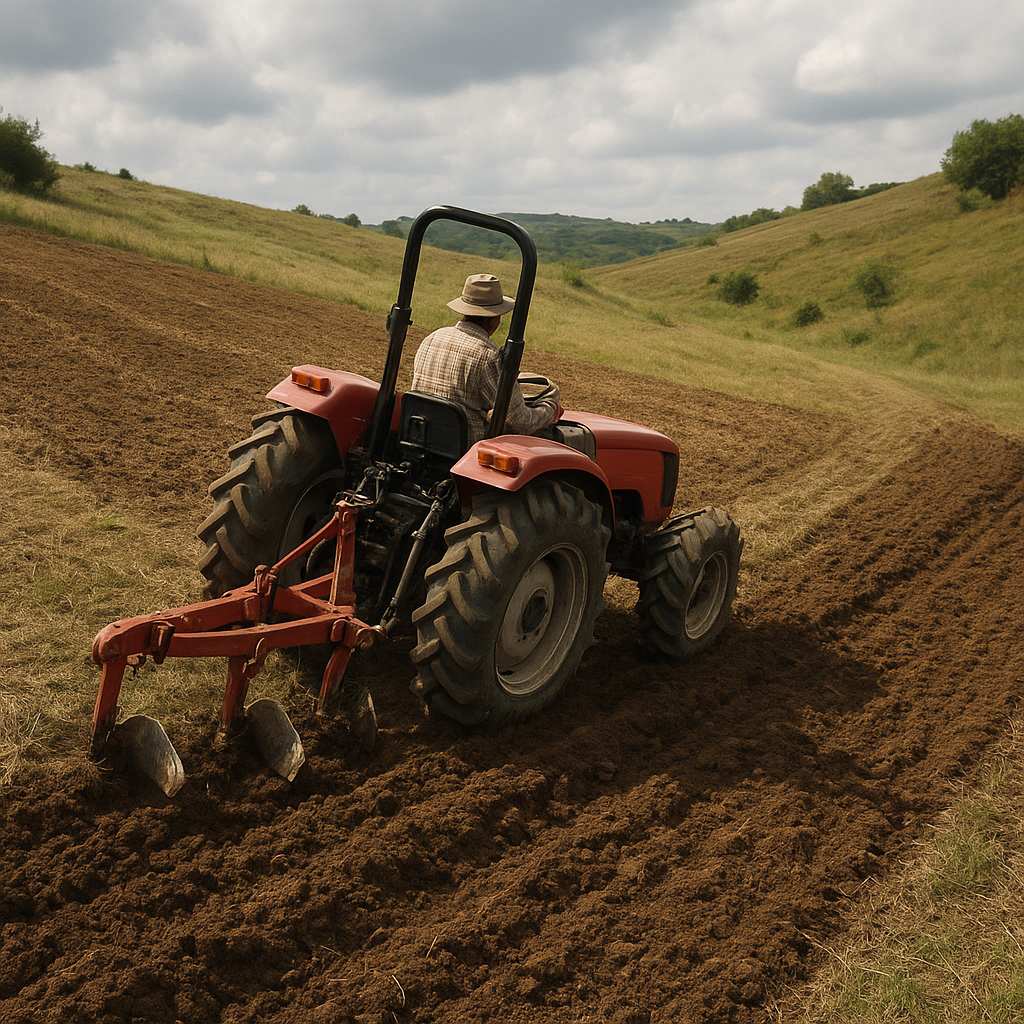
Plowing uneven or sloped land can be a demanding task that requires a combination of proper **equipment**, precise technique, and diligent planning. Mastering these elements not only ensures effective soil turnover but also maintains **safety**, reduces erosion, and preserves the natural **contours** of the field. This guide offers practical tips for tackling challenging terrain, focusing on field preparation, advanced plowing methods, equipment choices, and ongoing maintenance strategies.
Preparing Sloped Fields
Assessing Field Conditions
Begin with a thorough field inspection. Walk the land and mark any visible obstacles—rocks, stumps, and low spots where water pools. Understanding the field’s **terrain** helps you plan an efficient plowing path and avoid equipment damage. Take note of the soil type and moisture levels; overly wet soil can lead to uneven draft and increased slippage.
Creating Safe Access Points
Ensure you have clear entry and exit routes at the top and bottom of slopes. Use stakes or flags to demarcate the boundaries of your plowing area. This practice enhances **traction** and provides an escape path in case the tractor loses grip. Additionally, clear brush or debris from these zones to eliminate any unexpected hazards.
Minimizing Erosion Risk
Implement erosion control measures before you start. Planting cover crops or installing silt fences along the downhill edge prevents topsoil loss. Consider terracing or contour strips for extreme slopes; these practices create mini-level platforms that reduce water runoff and promote even **soil** distribution.
Plowing Techniques for Uneven Terrain
Contour Plowing
Contour plowing follows the natural **contours** of the land rather than strictly straight lines. This method helps slow water flow and decreases soil erosion. To practice contour plowing:
- Use a laser level or A-frame tool to map out contour lines.
- Mark these lines with flags or stakes for reference.
- Adjust furrow spacing to match slope steepness—closer on steeper slopes, wider on gentler inclines.
Cross-Slope Plowing
When slopes are moderate, cross-slope plowing can provide a good compromise between safety and efficiency. Drive perpendicular to the slope’s direction, maintaining a steady speed to prevent tipping. Watch for sudden grade changes and be prepared to shift gears smoothly.
Step Plowing
For highly irregular or terraced fields, step plowing—also known as bench or terrace plowing—works best. This involves creating flat steps or benches on the hillside:
- Start at the top and cut a level bench.
- Remove excess soil towards the downhill side, creating a safe work shelf.
- Repeat the process downward, ensuring each bench has a uniform **leveling**.
This approach enhances stability and minimizes the risk of slips or machine rollovers.
Choosing the Right Equipment
Tractor Selection and Modifications
Select a tractor with low center of gravity and adequate horsepower. Four-wheel drive (4WD) models generally offer superior **traction** on slopes. Consider the following modifications:
- Ballast weights: Add front and rear wheel weights to improve balance.
- Wide tires or dual wheels: Increase contact area and reduce soil compaction.
- Rollover Protective Structures (ROPS): Mandatory for operator safety on steep ground.
Plow Types and Adjustments
Different plow designs are better suited for sloped conditions:
- Moldboard plows: Excellent for deep cutting but require careful angle **adjustment** to avoid side-slipping.
- Chisel plows: Preserve more surface residue and reduce erosion risk, though they may not flip soil as cleanly.
- Disc plows: Ideal for rocky terrain, the rotating discs can handle uneven ground without stalling.
Always adjust the tilt and pitch of the plow to keep shares parallel to the slope, ensuring consistent depth and reducing wear.
Hydraulic and GPS Guidance Systems
Modern hydraulic controls allow on-the-fly adjustments of plow width and depth. Pair these with GPS guidance systems for **precision** steering. Automated guidance helps maintain consistent furrows even on irregular slopes, freeing the operator to focus on field obstacles.
Maintaining Optimal Performance
Regular Equipment Inspections
Frequent checks are critical when operating on demanding terrain. Inspect the following items before and after each session:
- Hydraulic lines: Look for leaks or abrasions.
- Mounting bolts: Ensure all fasteners are properly torqued.
- Plowshares and coulters: Sharpen or replace worn edges to maintain cutting **efficiency**.
Monitoring Soil Compaction
Uneven land is prone to variable compaction levels. Perform occasional soil core tests in both uphill and downhill furrows. If compaction is high, utilize subsoilers or deep tillage tools to restore healthy **soil** structure and root penetration.
Adapting to Seasonal Changes
Slopes can become significantly more hazardous after heavy rain or during freeze-thaw cycles. Adjust plow depth and speed to match current conditions. During dry periods, reduce travel speed to minimize dust and tractor wheel spin. In wetter conditions, increase spacing between furrows to allow quicker drying.
Enhancing Field Longevity and Yield
Implementing Cover Crops
After plowing, plant cover crops such as clover or ryegrass to stabilize the soil. Their root systems bind loose particles and enhance organic matter content. Cover cropping also improves moisture retention on slopes.
Rotational Strategies
Rotate plowing directions and crop types annually. Alternating the plowing pattern prevents persistent ruts and distributes traffic stress. Incorporate deep-rooted crops to break up compacted zones and maintain overall field **stability**.
Continuous Education and Training
Stay updated with the latest agricultural research and attend workshops on slope management. Hands-on training in real field conditions helps develop intuitive **safety** habits and refines technique over time.
Effective plowing of uneven or sloped land relies on a holistic approach: thorough preparation, adapted techniques, the right **equipment**, and vigilant maintenance. By following these guidelines, you can achieve consistent soil turnover, preserve field structure, and promote long-term productivity.