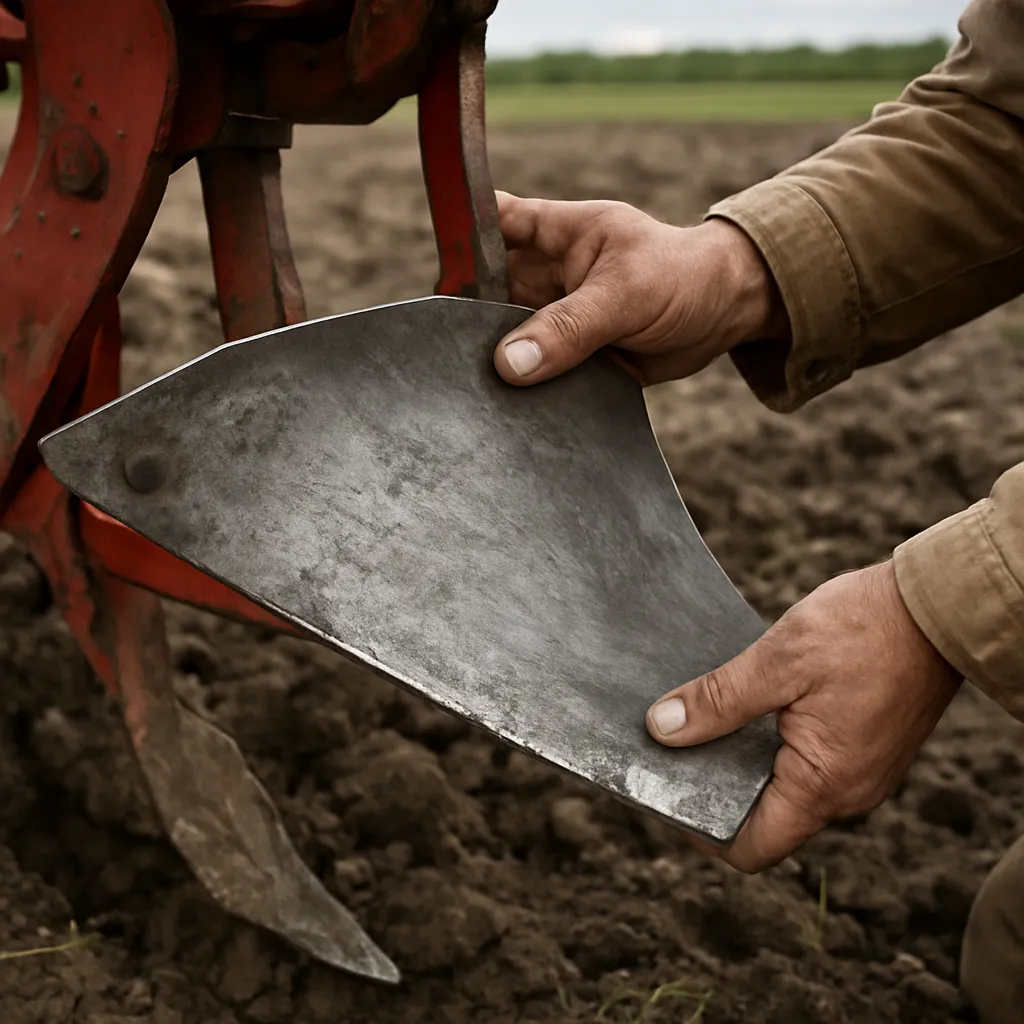
Properly maintaining plow shares is essential for any farmer seeking to maximize efficiency and minimize replacement costs. By understanding the factors that accelerate wear and implementing targeted strategies, you can significantly extend the service life of your plow’s cutting edges. The following sections offer practical insights on reducing abrasion, optimizing soil interaction, and leveraging modern technologies.
Understanding Wear on Plow Shares
Plow share wear results from repeated friction and impact against soil particles, rocks, and debris. To address this challenge, it is crucial to recognize the variables that influence the rate of deterioration:
- Soil Composition: Sandy or silty soils contain sharp particles that abrade metal surfaces rapidly.
- Presence of Rocks: Frequent contact with hard stones causes chipping and surface damage.
- Abrasive Minerals: High quartz content increases friction, leading to accelerated wear.
- Operating Speed: Higher forward speeds amplify impact force and heat generation.
By identifying the predominant wear mechanisms, farmers can apply more targeted countermeasures. For instance, in fields with a high concentration of silica, adjusting the plow’s angle can deflect abrasive particles rather than letting them dig directly into the share.
Optimizing Soil Conditions and Depth
Field preparation significantly influences share longevity. Implementing soil management practices can reduce abrasive forces and distribute load more evenly:
Pre-tilling and residue management
- Use a rotary tiller or disc harrow to break up large clods and crumbling soil.
- Remove surface debris such as sticks and stones before the main plowing pass.
- Adjust residue spreaders to minimize interference during coulter cuts.
Depth and draft settings
- Maintain a consistent plowing depth to avoid unexpected rock encounters.
- Shallower passes reduce strain on the share, especially in heavy soils.
- Calibrate the tractor’s draft control to match field conditions and plow requirements.
Correct depth not only mitigates wear but also enhances the quality of the furrow. In compacted soil, consider performing two shallow passes rather than one deep pass; this approach diminishes the energy transmitted to the share and spreads wear over time.
Equipment Maintenance and Adjustments
Proactive upkeep of the plow assembly and related components plays a crucial role in prolonging share life:
Regular Inspections
- Check for uneven wear patterns that indicate misalignment.
- Measure share thickness periodically to track material loss.
- Inspect bolt tightness to prevent share slippage and vibration.
Alignment and Angle Optimization
Fine-tuning plow geometry can reduce frictional losses. Key parameters include:
- Beam pitch: A steeper pitch increases penetration but can raise friction.
- Angle of attack: A more acute cutting angle lowers draft but may expose a larger share face to abrasion.
- Ensure that all moldboards follow the same curvature to exert uniform pressure on each share.
Lubrication and Surface Treatment
- Apply a thin film of high-temperature grease on sliding surfaces to diminish friction.
- Consider periodic grit blasting and re-coating with wear-resistant paint to inhibit rust and reduce surface roughness.
- Use specialized anti-friction polymers or wax-based sprays on share surfaces before heading into highly abrasive fields.
Innovations in Plow Share Materials and Coatings
Modern developments in metallurgy and surface engineering have delivered significant advancements in share durability:
High-Hardness Steels
Alloy steels with elevated carbon and chromium levels exhibit excellent resistance to both impact and abrasion. These materials maintain a hard cutting edge while retaining sufficient toughness to prevent cracking.
Carbide Tipped Shares
Embedding tungsten carbide inserts on the share’s leading edge can extend service life by three to five times compared to standard steel shares. These inserts, when properly seated, resist deformation and chipping under rocky conditions.
Thermal Spray Coatings
Applying a thermal spray layer of ceramic or metal-ceramic composites enhances hardness and reduces the coefficient of friction. Benefits include:
- Improved resistance to abrasive wear.
- Lower heat generation during cutting.
- Minimal impact on the share’s overall geometry and cutting performance.
Emerging Polymer Composites
Cutting-edge research explores polymer-metal hybrids that combine toughness with low friction. These composites promise:
- Self-lubricating surfaces to reduce maintenance intervals.
- Elastic resilience to absorb shock from hidden obstacles.
- Lightweight construction, decreasing tractor fuel consumption.
Best Practices for Field Implementation
Integrating the above strategies requires careful planning and monitoring. Follow these steps for successful adoption:
- Begin each season with a detailed assessment of soil composition and field history.
- Select the appropriate share design and material based on the identified wear factors.
- Implement a routine inspection schedule, documenting wear rates and adjusting settings accordingly.
- Train operators on optimal speed, depth control, and obstacle avoidance techniques.
- Evaluate new material or coating options on a small scale before full-field deployment.
By combining precise field management, diligent maintenance, and advanced material technologies, you can dramatically reduce plow share wear. Adopting these measures not only saves on replacement costs but also boosts overall plowing efficiency and field productivity.