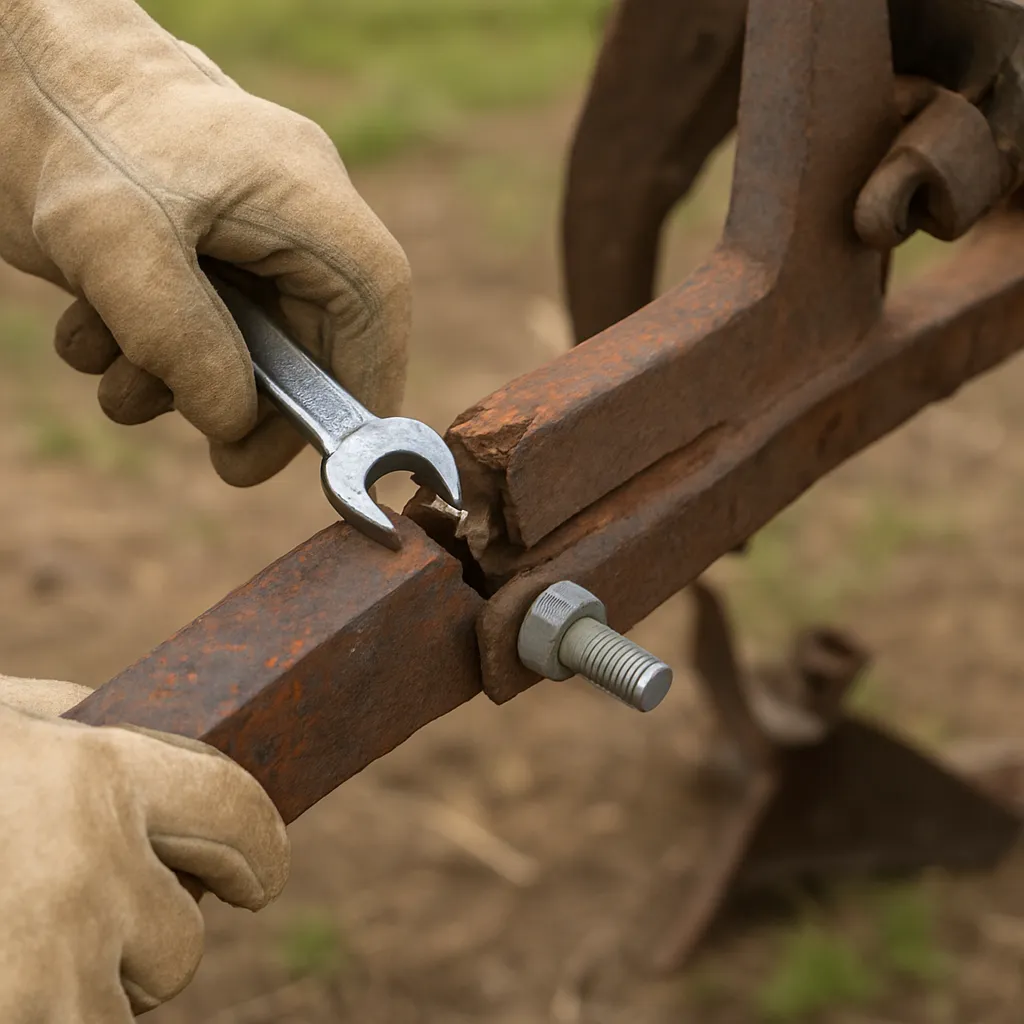
Repairing a broken plow beam is a task that demands both careful planning and precise execution. In this article, you will find practical tips and expert advice to help you restore the structural integrity of your plowing equipment. From understanding the nature of common fractures to executing a solid weld repair, each section covers essential steps to get your plow back in top working condition.
Understanding the Plow Beam and Common Causes of Breakage
Before you attempt any repair, it’s crucial to identify why the plow beam failed in the first place. A thorough inspection can reveal hidden issues that go beyond a visible crack or break. Here are the most frequent causes:
- Excessive stress at high loads, often due to rocky or uneven ground.
- Metal fatigue from repeated cycles of bending and vibration.
- Incorrect alignment during installation, leading to uneven force distribution.
- Improper maintenance, such as allowing components to corrode or wear out.
- Using the plow outside of its rated capacity, which can exceed the design torque.
Recognizing these factors allows you to address both the immediate damage and the root cause, ensuring a more reliable repair.
Preparing for the Repair: Tools and Safety Precautions
Having the right equipment and following stringent safety measures is paramount. A successful repair starts before you touch the metal.
Essential Tools
- Arc or MIG welder with proper shielding gas
- Angle grinder with cutting and grinding discs
- Heavy-duty clamps or a welding jig
- Replacement steel plate or gusset reinforcement
- Wire brush, acetone or degreaser
- Measuring tools: tape measure and protractor
- Torque wrench to check bolt tension after reassembly
Safety Precautions
- Wear a welding helmet with the correct shade lens and a flame-retardant jacket.
- Use gloves rated for welding to protect from sparks and hot metal.
- Ensure adequate ventilation to avoid inhaling harmful fumes.
- Keep a fire extinguisher close by in case of accidental sparks.
- Chock the plow securely and support it on blocks to prevent movement.
Step-by-Step Repair Guide
With tools at hand and safety measures in place, follow these steps to repair the beam reliably and efficiently.
1. Remove Damaged Section
- Mark the break boundaries using soapstone or a marker.
- Cut out all distorted or heavily cracked metal with the angle grinder.
- Deburr the cut edges to create a clean surface for welding.
2. Clean and Prepare the Weld Area
- Use a wire brush or flap disc to remove rust, paint, and scale.
- Degrease with acetone to ensure no oil or contaminants remain.
- Check fit-up by dry-clamping the replacement plate or reinforcement gusset.
3. Tack and Align Components
- Apply tack welds at both ends of the repair area to lock the parts in place.
- Verify the alignment with measuring tools and adjust as needed.
- Clamp securely to prevent any movement during the full weld pass.
4. Weld the Joint
- Select welding parameters suited to the plate thickness and steel grade.
- Perform multiple passes, starting with a root pass and filling gradually.
- Aim for uniform bead profile, avoiding undercut or excessive build-up.
5. Post-Weld Grinding and Inspection
- Grind the weld flush if necessary, but maintain adequate throat thickness.
- Visually inspect the weld for porosity, cracks, or incomplete fusion.
- Consider a magnetic particle or dye penetrant test for critical applications.
6. Reassemble and Torque Bolts
- Reinstall any brackets, blades, or linkage components onto the beam.
- Use a torque wrench to tighten fasteners to manufacturer specifications.
- Double-check connections for proper fit and smooth movement.
Preventive Maintenance and Best Practices
Once your plow beam is restored, ongoing care can prevent future failures and extend the life of your investment. Implement these strategies:
- Perform routine visual inspection before and after each season, looking for cracks or wear.
- Keep all pivot points well-lubricated to reduce lateral forces.
- Reinforce stress-prone areas with additional plates or gussets.
- Store the plow in a dry environment when not in use to prevent rust.
- Follow a service schedule for replacing wear parts such as shoes and bolts.
- Train operators on correct plowing depth and speed to minimize undue stress.
By combining careful repair techniques with disciplined maintenance, you can keep your plowing equipment in top condition, reducing downtime and avoiding costly structural failures.