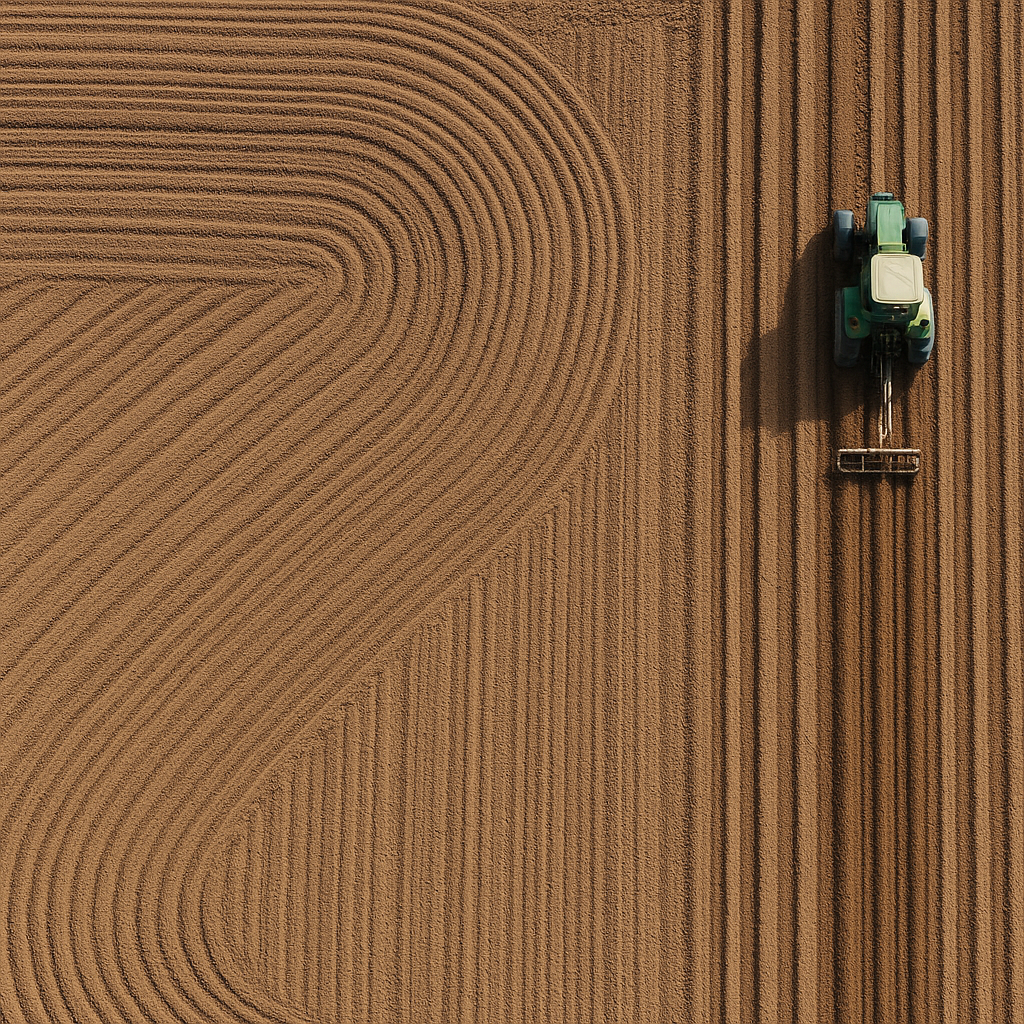
Mastering field preparation unlocks higher productivity and reduced operational costs. By analyzing different plowing arrangements and their specific benefits, farmers can select a pattern that maximizes fuel use and minimizes wear on equipment. Below, discover proven layouts designed to improve overall efficiency and ensure consistent soil turnover season after season.
Straight-Run Configurations for Maximum Simplicity
Straight-run plowing remains the backbone of many large-scale operations. This configuration involves driving the plow in parallel lines from one end of the field to the other without interruptions. When set up correctly, it offers predictable results and easy headland maneuvers.
- Uniform Shallow Depth – Adjust the plow depth to match field conditions, typically between 4–8 inches. Consistency in depth minimizes fuel waste and prevents overloading the tractor.
- Constant Speed – Maintain a stable forward rate to avoid irregular furrows. A speed of 4–6 mph is ideal for most modern plows.
- Straight Furrows – Use GPS guidance or simple mechanical row markers to ensure perfectly straight lines. This approach reduces unplowed patches and overlaps.
Although straightforward, straight-run plowing requires attention to the headland area. Turning maneuvers must be wide enough to protect soil structure and prevent slippage on end passes. When properly executed, this method delivers reliable seedbeds and lays a strong foundation for high yield.
Following the Land: Contour Plowing Benefits
Contour plowing adapts to the natural rise and fall of a field, offering significant erosion control benefits on sloped terrain. By following elevation lines, the technique reduces runoff and encourages water infiltration into the soil.
Key Advantages
- Erosion Reduction – Furrows act as small terraces that slow water flow, limiting nutrient loss.
- Moisture Conservation – Captured rainfall seeps into ridges, supporting root development during dry spells.
- Long-Term Soil Health – Less sediment displacement preserves the fertile top layer and lowers sedimentation in waterways.
Successful contour operations demand accurate slope mapping and sometimes require specialized GPS units calibrated for elevation data. Farmers must strike a balance between plow width and field curvature; overly wide plows may struggle to follow tight contours, while narrow implements could raise operational costs by increasing pass counts. With proper planning, this method transforms marginal slopes into productive acres by enhancing water management and reducing downstream maintenance.
Circle and Spiral Approaches for Irregular Fields
Fields with circular irrigation systems or irregular boundaries call for more creative strategies. Circle plowing originates from a pivot point, moving outward in expanding rings. Spiral patterns start at the edge and wind inward, avoiding headland turns altogether.
Design Considerations
- Center Pivot Coordination – Align the tractor with irrigation pivots to avoid interference. Calibration ensures that each ring complements the irrigation radius.
- Variable Width Adjustments – Implement hydraulic plow width controls for smooth transitions between inner and outer passes.
- Consistent Grade – Maintain a steady slope around the circle to prevent uneven water distribution.
These approaches reduce time lost on repetitive turning, enhance consistency across all passes, and extend equipment life. Spiral plowing, in particular, eliminates the need for headland furrows, cutting down on soil compaction zones that can impede root growth and water flow. The result is a uniform surface that supports precise planting operations and balanced nutrient uptake.
Advanced Techniques and Field Optimization
To fully capitalize on modern machinery and agronomic research, consider blending conventional plowing with innovative methods. Introducing elements like variable-depth shanks and integrated data analytics can drive next-level performance.
- Variable-Depth Control – Sensors detect soil hardness and automatically adjust plow depth for optimal optimization of fuel use and consistent furrows.
- GPS-Integrated Guidance – Satellite navigation systems track coverage in real time, ensuring no patches are missed.
- Subsoiling Inserts – Adding a deep-ripping component breaks compacted layers, improving drainage and root penetration.
- Automated Section Control – Reduce overlap by activating plow sections only when needed, preserving valuable field assets.
Combining these technologies with regular equipment checks enhances overall system reliability. A robust preventive maintenance schedule focuses on blade sharpening, hydraulic line inspection, and lubrication of moving parts. Such diligence minimizes downtime and preserves the high quality of plow performance.
Choosing the Right Method for Your Operation
Selecting an appropriate plowing arrangement depends on field shape, soil type, and long-term cropping goals. Sandy soils benefit from contour or spiral designs to retain moisture, while clay-rich fields often perform best under straight-run systems, which allow for predictable tillage and reduced compaction. Evaluating local weather patterns and water management needs also informs the decision-making process. Ultimately, the correct blend of tradition and innovation will deliver the durable seedbed structure required for maximum yield and sustainable farm economics.